

Fast Facts
-
Photon Properties: Photons, as fundamental packets of electromagnetic energy, can carry quantum information through properties like path, polarization, and frequency.
-
Hyperentanglement Advantage: Researchers at Oak Ridge National Laboratory (ORNL) discovered that hyperentangling multiple properties of photons enhances communication reliability in quantum networks.
-
New Quantum Gate: A novel quantum gate developed by ORNL integrates polarization and frequency of photons, mitigating errors in quantum communication.
-
Future Steps: The next phase involves deploying this technology on ORNL’s quantum network to further improve communication reliability.
Scientists Develop First Quantum Gate Linking Photonic Properties
Researchers at Oak Ridge National Laboratory (ORNL) have achieved a groundbreaking milestone. They created a unique quantum gate that operates between two photonic degrees—polarization and frequency. This innovation marks a significant leap in quantum communications.
Photons, the smallest units of light, can carry information over long distances. Each photon has multiple properties, such as path, polarization, and frequency, which can represent quantum information. When connected through a process called entanglement, photons enable techniques like quantum teleportation. However, environmental conditions can easily disrupt this connection, leading to errors in communication.
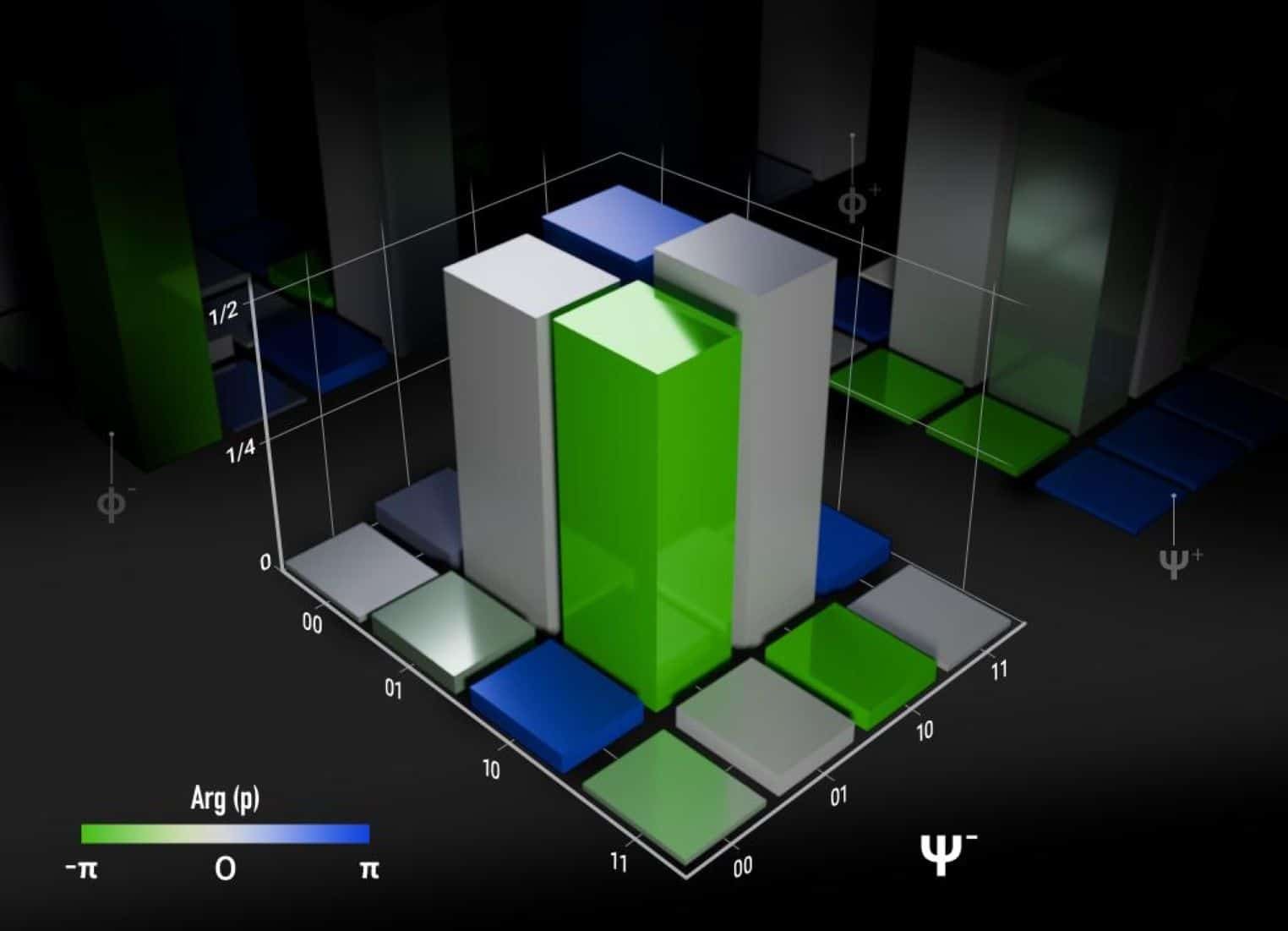
To combat these issues, ORNL researchers explored hyperentanglement, which involves entangling multiple properties of photons. By creating a new quantum gate that utilizes both polarization and frequency, the team aims to enhance communication reliability across quantum networks.
Hsuan-Hao Lu, a lead researcher, explained the mechanics. “Imagine a horizontally polarized photon represents a bit value of zero,” Lu said. “As it travels, its polarization might change randomly, leading to errors. Our hyperentanglement techniques can help suppress these errors.”
This new quantum gate offers a controlled method to manage hyperentanglement. As a result, it significantly improves communication within quantum networks. Lu expressed optimism about the project’s potential, stating, “I appreciate being on the top downloads list, but there’s more work to do.”
The next step for this pioneering technology involves deploying it on ORNL’s existing quantum network. This advancement could pave the way for more robust and efficient quantum communication systems in the future.
For further reading, researchers published their findings in the journal Optica Quantum. Their work opens new pathways for technology development in the quantum realm, promising a brighter future for quantum networks.
Journal Reference:
Hsuan-Hao Lu, Joseph M. Lukens, Muneer Alshowkan, Brian T. Kirby, and Nicholas A. Peters. “Building a controlled-NOT gate between polarization and frequency.” Optica Quantum. DOI: 10.1364/OPTICAQ.525837
Discover More Technology Insights
Stay informed on the revolutionary breakthroughs in Quantum Computing research.
Stay inspired by the vast knowledge available on Wikipedia.
QuantumV1
