

Essential Insights
Wildfires can produce pyroCbs that inject particles into the stratosphere.
These clouds can influence climate and impact ozone layers worldwide.
NASA scientists are studying pyroCbs using aircraft and satellite data.
Understanding pyroCbs is crucial for wildfire prediction and atmospheric effects.
Chasing Fire Clouds in Utah
Wildfires are a common sight in many parts of the world. But recent research shows they do more than just burn forests and grasslands. Sometimes, fires create massive, thunderstorm-like clouds called pyrocumulonimbus, or pyroCbs. These clouds can reach high into the atmosphere, carrying smoke and gases into the upper layers of the air. Understanding these “fire clouds” is crucial because they can affect weather, climate, and even the ozone layer.
This summer, a team of scientists is going after these fire clouds in Utah. The mission is part of NASA’s INSPYRE (Injected Smoke and PYRocumulonimbus Experiment). They use high-flying aircraft, ground sensors, and satellite images to study these powerful clouds. Their goal is to find out how wildfire smoke gets into the upper atmosphere and what effects it may cause.
Tracking and Sampling Pyrocumulonimbus Clouds
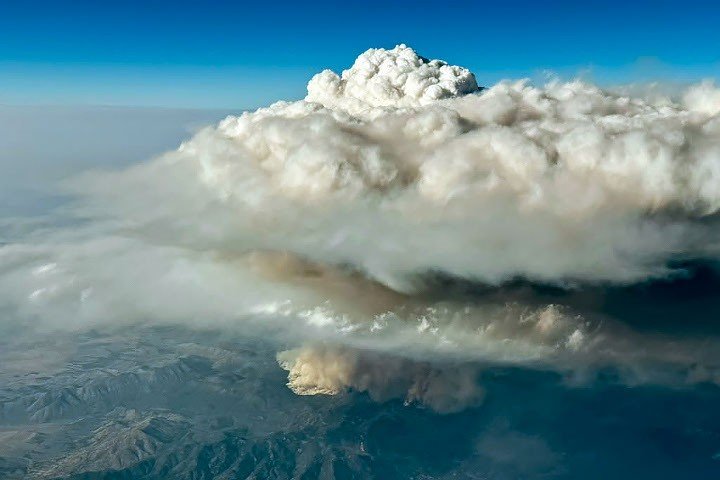
The Widemouth 2 fire in Utah is the focus of recent scientific efforts. It started with lightning in late July 2026 but grew quickly in early August. Strong winds and dry conditions fueled the fire, causing it to produce two major pyroCb bursts. These bursts created towering clouds that reached the upper troposphere and sometimes even entered the stratosphere. Satellite images from NASA’s Aqua satellite showed cloud tops colder than -40°C, a clear sign of pyroCbs forming high into the atmosphere.
One impactful event happened on August 3, 2026. NASA’s Gulfstream V aircraft, flying at about 12 kilometers above the ground, flew through a high-altitude smoke plume from the wildfire. This allowed scientists to collect data on the smoke’s composition and how it behaves at that altitude. The aircraft’s sensors captured images of a massive pyrocumulus cloud billowing above the fire. These precursor clouds, called pyroCus, are smaller but share many features with pyroCbs. They form when intense heat from the fire causes strong upward air currents.
Researchers have found that wildfires produce roughly 70 pyroCbs annually worldwide, especially in dense forests and grasslands across North America, Canada, Russia, and Australia. In 2026 alone, scientists have already detected 13 pyroCbs over the United States. These clouds are not just spectacular; they can inject black carbon and organic aerosols into the stratosphere. In fact, wildfire-related pyroCbs may contribute as much pollution to the upper atmosphere as volcanic eruptions.
The Science and Challenges of Understanding Fire Clouds
Scientists have been studying pyroCbs since the early 2000s. Over 700 events have been documented and linked to wildfire activity. They now know these clouds can have a significant impact on climate and air quality. PyroCbs can distribute particles that linger for months or years, circling the globe and affecting the ozone layer. One key mystery is why some fires produce these explosive clouds while others do not. Factors like the type of vegetation, weather conditions, and atmospheric stability seem to play roles.
Forecasting pyroCbs remains a challenge. These clouds can form unexpectedly and often generate lightning, which can ignite new fires. They’re also capable of producing hail and heavy rain, complicating firefighting efforts. Fire officials and forecasters worry about the unpredictability of pyroCbs during active wildfires. Better understanding and prediction methods could help save lives and property.
The ongoing research by teams like INSPYRE aims to fill these gaps. Using advanced aircraft, satellites, and ground sensors, scientists are learning how these dangerous fire clouds develop and how they influence the atmosphere. As the fires burn and the clouds form, data collection continues, revealing more about the dynamics of wildfire-induced weather patterns. Whether for safety, climate understanding, or pollution control, chasing these fire clouds offers vital insights into one of nature’s most powerful phenomena.
Continue Your Tech Journey
Stay informed on the revolutionary breakthroughs in Quantum Computing research.
Access comprehensive resources on technology by visiting Wikipedia.
Space
