

Summary Points
- NASA selected three companies for four lunar missions by late 2028.
- Nearly $600 million allocated to build a Moon Base infrastructure.
- Each mission will deliver three scientific payloads to the lunar surface.
- NASA aims for sustained human presence and exploration on the Moon.
NASA’s Moon Base Program: A New Era of Lunar Exploration
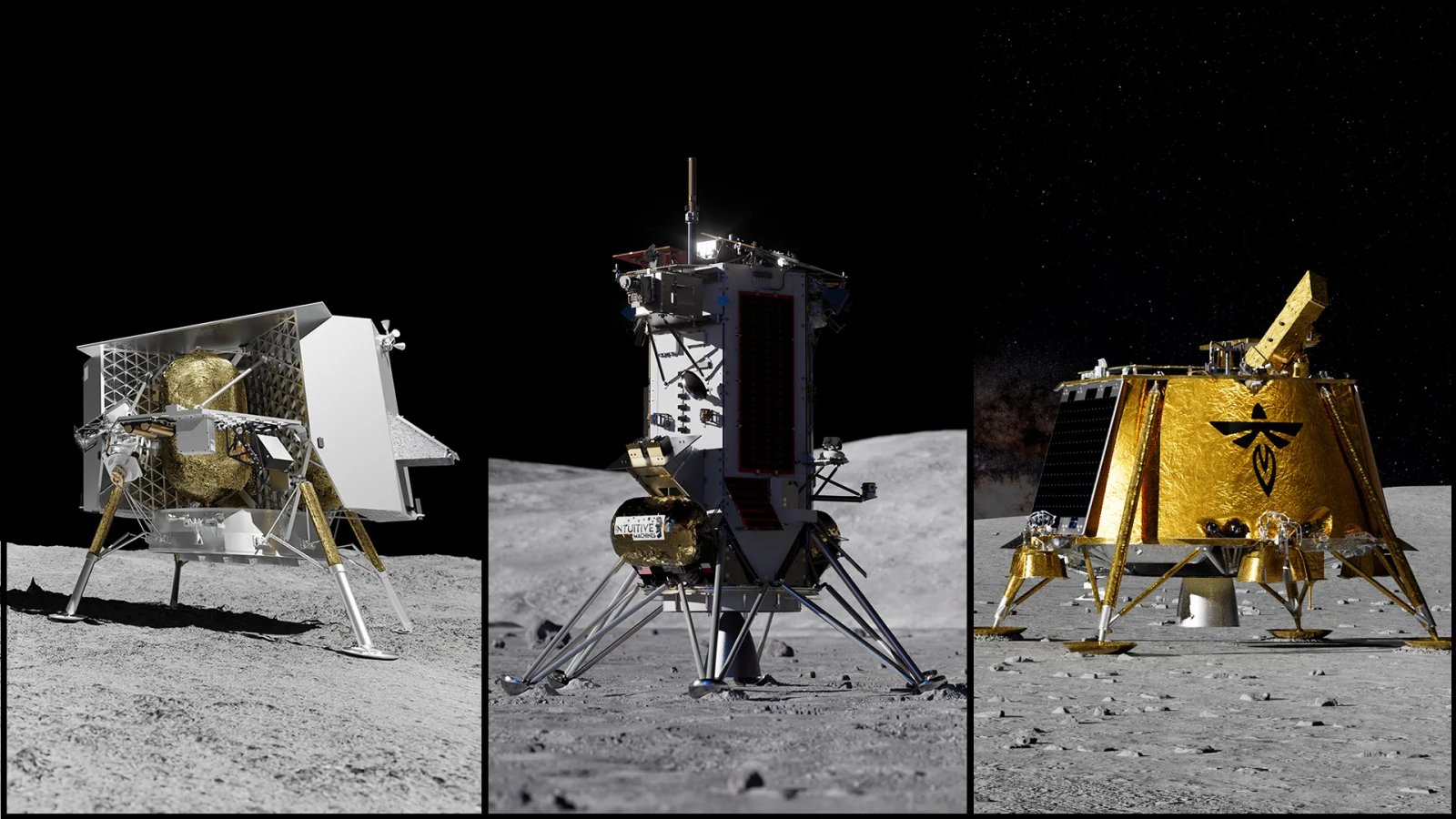
NASA has taken significant steps toward its Moon Base Program, announcing the selection of three companies to land four new missions on the lunar surface by late 2028. Astrobotic, Firefly Aerospace, and Intuitive Machines will deliver essential science payloads as part of this ambitious initiative. Together, these contracts total nearly $600 million and signal a serious commitment to establishing a long-term human presence on the Moon.
Lori Glaze, associate administrator for the Human Spaceflight Mission Directorate, emphasized the importance of these efforts. She stated, “These new awards to our commercial partners demonstrate our commitment to accelerating our effort to build a long-term presence on the lunar surface.” The missions will not only enhance scientific knowledge but will also serve as a proving ground for future lunar operations.
Astrobotic will receive $297.9 million for two deliveries. Firefly Aerospace and Intuitive Machines will get $144.2 million and $148.3 million, respectively, for one delivery each. These awards come under NASA’s Commercial Lunar Payload Services (CLPS) initiative, designed to boost the pace of lunar missions. Ryan Stephan, NASA’s acting director of cargo landers, remarked, “Accelerating our Moon mission ordering cadence and launch opportunities enables us to move quickly to learn, iterate, and improve.”
Scientific Payloads and Future Opportunities
Each lunar delivery will carry three critical NASA payloads: the Stereo Camera for Lunar Plume Surface Studies (SCALPSS), Laser Retroreflector Array (LRA), and Linear Energy Transfer Spectrometer (LETS).
SCALPSS is an array of four cameras that captures high-resolution images of lunar dust interacting with landing crafts. This information will be vital for predicting lunar dust erosion, especially as larger spacecraft are sent to the Moon. The LRA is a passive device that reflects laser beams to help spacecraft determine their position and navigate accurately. This array will contribute to a network of permanent location markers crucial for future explorations.
LETS, a radiation monitor, will measure the energy of incoming space radiation on the Moon. By gaining insights into the radiation environment, NASA will enhance astronaut safety during missions. Joel Kearns, deputy associate administrator for exploration, noted, “By flying the same science instruments on multiple landers, we will better understand potential hazards during landing.”
NASA is continuously reviewing options for additional lunar payloads, emphasizing its commitment to advancing the Moon Base. The agency’s plans include soliciting proposals for power and avionics technology demonstrations and establishing a lunar communication and navigation relay constellation.
NASA’s efforts align with the broader goal of making sustained human presence on the Moon a reality. This initiative is founded on exploration, scientific discovery, and potential economic benefits, serving as a stepping stone to ambitious missions to Mars. For more detailed information about NASA’s ongoing Moon Base plans, visit their official webpage.
Stay Ahead with the Latest Tech Trends
Dive deeper into the world of Cryptocurrency and its impact on global finance.
Access comprehensive resources on technology by visiting Wikipedia.
Space
