

Essential Insights
- Researchers developed shape-shifting, interactive structures using programmable metamaterials with embedded intelligence.
- Bifur-circuits enable complex, reconfigurable shapes that maintain electrical connectivity through mechanical bifurcation.
- The structures can sense their shape, communicate, and adapt without bulky moving parts.
- Potential applications include shape-changing robots, adaptive shelters, and interactive rehabilitation tools.
MIT Engineers Develop Shape-Shifting Smart Devices Using Metamaterials
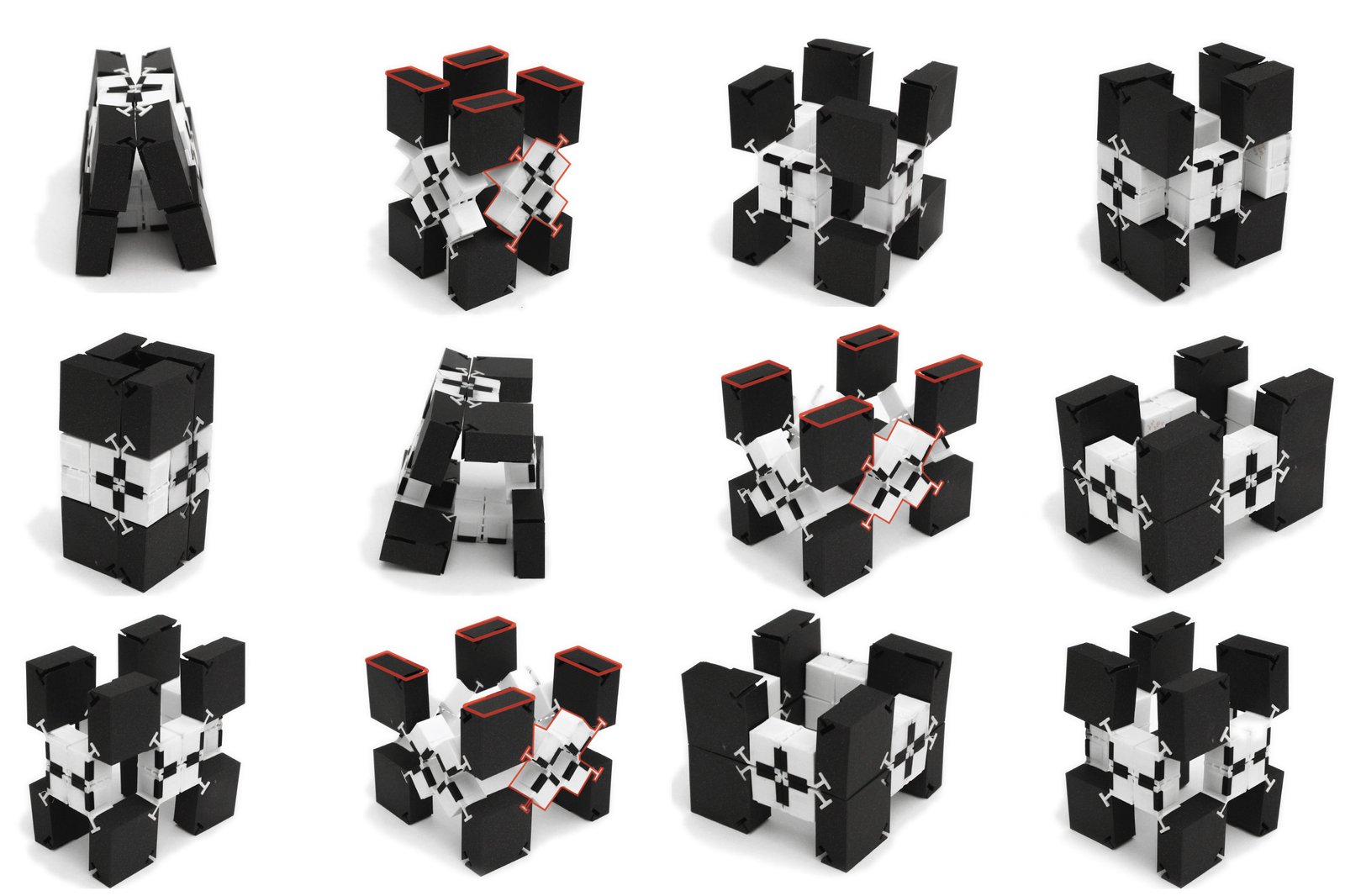
MIT engineers have created a new system that allows devices to change shape and communicate their status. The technology uses special materials called metamaterials, which are made of repeating units arranged in precise patterns. These structures can bend, twist, and form different shapes without needing bulky mechanical parts. An example shown in their recent study is a chair that transforms into a table with storage. The chair senses its shape change and displays messages on an electronic screen.
This innovation builds on previous work using auxetic metamaterials—structures that expand when stretched. Now, the team introduces “bifurc-circuits,” a type of metamaterial that can take many different shapes based on how the units are connected and rotated. These units are designed to be electrically modular, meaning they keep their electrical connections no matter how the structure is reshaped. This allows the devices to sense their configuration and send signals accordingly.
The key to their versatility is a property called mechanical bifurcation. It causes sudden changes when force is applied, allowing connected parts to switch between stable positions. Adding more bifur-circuits increases the number of possible configurations exponentially. By connecting and rotating units, structures can communicate internally and sense their shape. The research team also developed a user-friendly software tool that guides the fabrication process and generates instructions for 3D printing the structures in a single step.
These shape-changing devices could have many uses, including interactive rehabilitation tools, adaptable soft robots, or shelters that respond to environmental changes. The team plans to explore more applications and enhance the interactivity of these metamaterials. Their goal is to develop building blocks that are both flexible and stable, capable of creating any shape while maintaining durability and functionality.
Continue Your Tech Journey
Learn how the Internet of Things (IoT) is transforming everyday life.
Explore past and present digital transformations on the Internet Archive.
QuantumV1
