

Top Highlights
-
Mission Success and Extension: NASA’s TEMPO mission, launched in 2023, has successfully completed its initial 20-month mission and has been extended through at least September 2026 due to its valuable air quality measurements.
-
Innovative Data Collection: TEMPO is NASA’s first mission to use a spectrometer for hourly air quality data over North America, detecting trace gases like nitrogen dioxide and ozone with unprecedented detail.
-
Data Impact: The mission achieved a record of over two petabytes of data downloads in its first year and supports timely air quality warnings, benefiting over 800 unique users including scientists and health researchers.
- Collaborative Efforts: TEMPO’s success involves partnerships with over 20 agencies, enhancing datasets with new aerosol products to better inform the public about air quality and pollution sources using a comprehensive, community-driven approach.
NASA Extends TEMPO Mission to Monitor Air Quality from Space
NASA has announced that its Tropospheric Emissions: Monitoring of Pollution (TEMPO) mission will continue until at least September 2026. Since launching in 2023, TEMPO has been measuring air quality from an impressive 22,000 miles above the Earth. This extension comes after the mission successfully completed its initial 20-month prime phase on June 19.
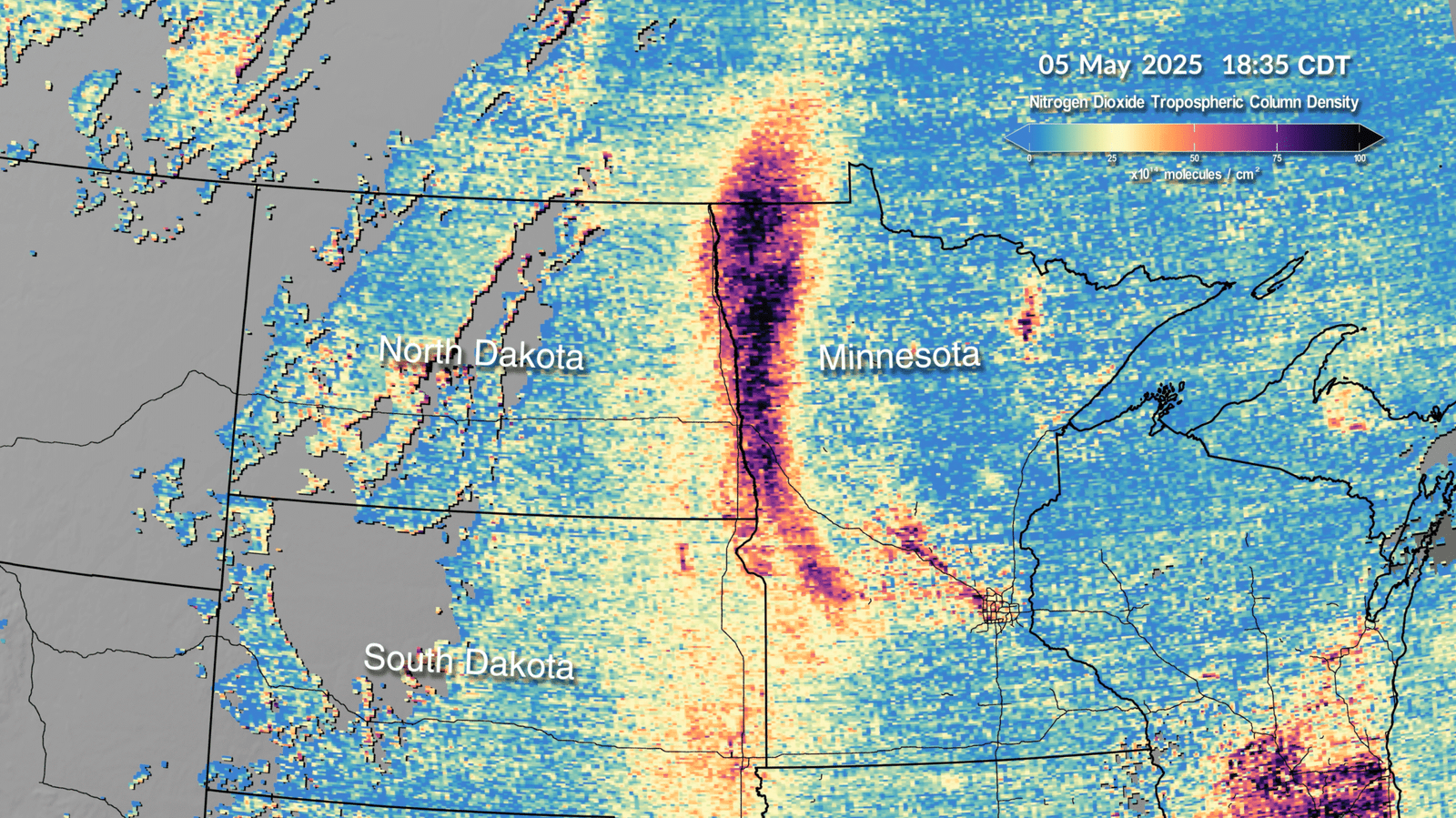
TEMPO stands out as NASA’s first mission to use a spectrometer for gathering hourly air quality data over North America during the day. This advancement allows scientists to observe air pollution details as small as a few square miles, a significant improvement compared to older satellites.
Laura Judd, a research scientist at NASA’s Langley Research Center, highlighted the mission’s achievements. She indicated, “We are continually learning how to use this data to interpret how emissions change over time.” TEMPO tracks various pollutants, including nitrogen dioxide and ozone, providing vital information about environmental health.
A major highlight of the TEMPO mission has been its capability to deliver data in under three hours. This quick turnaround supports decision-makers and first responders by enabling timely air quality warnings. Such responsiveness can help the public avoid hazardous conditions caused by smog or wildfire smoke.
The demand for TEMPO’s data is substantial. Over 800 unique users, including air quality forecasters and health researchers, have accessed this valuable resource. The mission has set a groundbreaking record by surpassing two petabytes of data downloads in a single year.
Moreover, TEMPO’s collaboration with the Smithsonian Astrophysical Observatory enhances its operational efficiency. Partnerships with agencies like the National Oceanic and Atmospheric Administration (NOAA) aim to provide further insights, such as distinguishing between smoke and dust particles.
Xiong Liu, TEMPO’s principal investigator, emphasized the mission’s broad impact, stating, “These datasets are being used to inform the public of rush-hour pollution, air quality alerts, and smoke movement from forest fires.” New aerosol products from NOAA will soon enhance these capabilities.
The validation of TEMPO’s data has involved over 20 federal and international agencies, along with more than 200 scientists. Judd noted the collaborative spirit, stating, “I look forward to seeing how TEMPO data will help close knowledge gaps about air pollution.”
As NASA prepares for a review in the fall, it will assess TEMPO’s achievements and set new mission goals. The TEMPO mission is part of NASA’s Earth Venture Instrument program, aimed at conducting targeted science investigations to supplement larger research missions.
For additional insights into the TEMPO mission, visit NASA’s official page.
Continue Your Tech Journey
Stay informed on the revolutionary breakthroughs in Quantum Computing research.
Access comprehensive resources on technology by visiting Wikipedia.
SciV1
