

Fast Facts
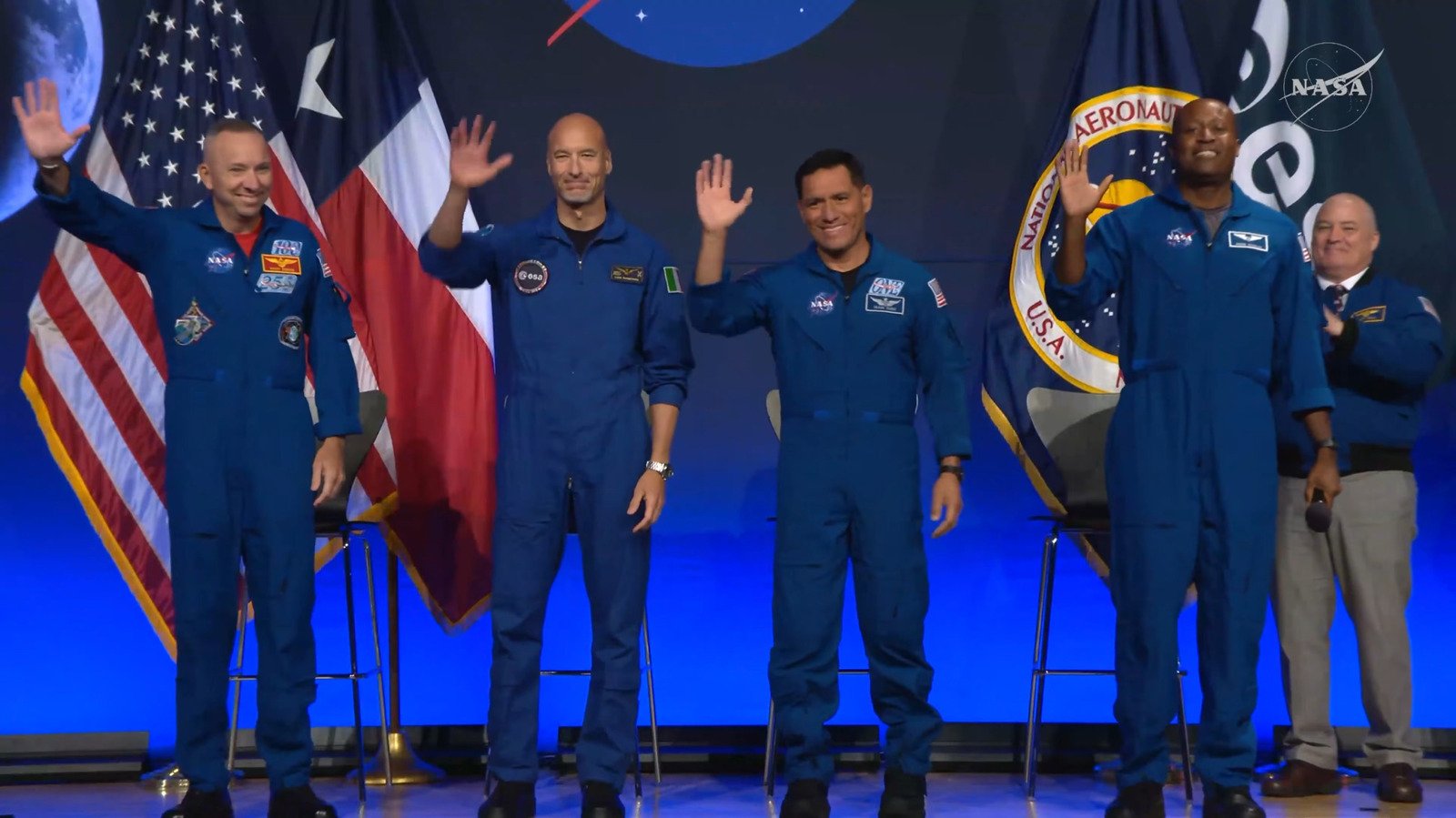
- NASA announced the crew for Artemis III, including three Americans (Andre Douglas, Frank Rubio, Randy Bresnik) and Italian astronaut Luca Parmitano, who will pilot the Orion spacecraft.
- The agency aims to launch Artemis III later this year, with preparations such as rocket stacking beginning this summer, indicating an aggressive timeline.
- Blue Origin will participate in the mission, despite recent setbacks with their New Glenn rocket, and their lunar lander is expected to be ready by 2027.
- NASA emphasizes that taking calculated risks with Artemis III is part of their strategy to ensure safer subsequent lunar missions.
The Crew of Artemis III: A Milestone for Space Exploration
NASA has announced the team that will lead the upcoming Artemis III mission. This is a big step for space exploration, as NASA aims to land astronauts on the Moon again. The crew includes four members. Three astronauts are from NASA: Andre Douglas, Frank Rubio, and Randy Bresnik. The fourth is Luca Parmitano, an Italian astronaut from the European Space Agency. They will fly aboard the Orion spacecraft, marking a historic moment. Their journey symbolizes international teamwork and advances in space travel technology. This team’s success will help NASA prepare for longer missions in the future.
Fast-Paced Timeline and New Developments
NASA plans to launch Artemis III sooner than many expected. The agency wants to begin fueling tests called “wet dress rehearsals” later this year. These tests are critical to ensure rockets are ready for launch. The assembly of the giant rocket that will carry the crew is set to start this summer. Meanwhile, NASA has also brought in new partners. Blue Origin, a private space company, will take part in this mission. This is notable because Blue Origin recently faced setbacks with its New Glenn rocket. Despite the challenges, NASA remains committed to moving forward quickly. The agency emphasizes that taking some risks now will improve safety for future missions.
Advancing Technology and Building Confidence
This mission shows how NASA is pushing the boundaries of space travel. The plans include testing new rocket and spacecraft features. These innovations are designed to make space missions safer and more efficient. NASA also remains focused on international collaboration, with Luca Parmitano representing the European Space Agency. Furthermore, private companies like Blue Origin are playing a bigger role. Their efforts could lead to more affordable and reliable transportation to the Moon and beyond. Overall, Artemis III represents a big step forward, not just for NASA, but for global space exploration. The mission’s success could inspire new technologies and open new doors for astronauts worldwide.
Continue Your Tech Journey
Explore the future of technology with our detailed insights on Artificial Intelligence.
Access comprehensive resources on technology by visiting Wikipedia.
CellphonesV1
