

Summary Points
- NASA and Blue Origin will conduct rocket testing at Stennis Space Center.
- This partnership supports future Artemis missions and U.S. space leadership.
- Testing aims to prepare for Moon landings and Mars missions.
- Blue Origin’s New Glenn will launch missions to establish a Moon Base.
NASA to Support Blue Origin New Glenn Rocket Testing, Advance Artemis
NASA and Blue Origin have recently enhanced their collaboration. The two organizations agreed to conduct second stage hot fire testing for the New Glenn rocket at NASA’s Stennis Space Center in Bay St. Louis, Mississippi. This announcement underpins NASA’s commitment to partner with commercial entities, crucial to achieving Artemis missions in 2027 and beyond.
“Our collaborations with commercial companies are key to advancing our national goals in space,” said NASA Administrator Jared Isaacman. This partnership is not just about testing rocket engines. It represents the broader push to return American astronauts to the Moon and eventually prepare for missions to Mars.
Impact of Testing at Stennis Space Center
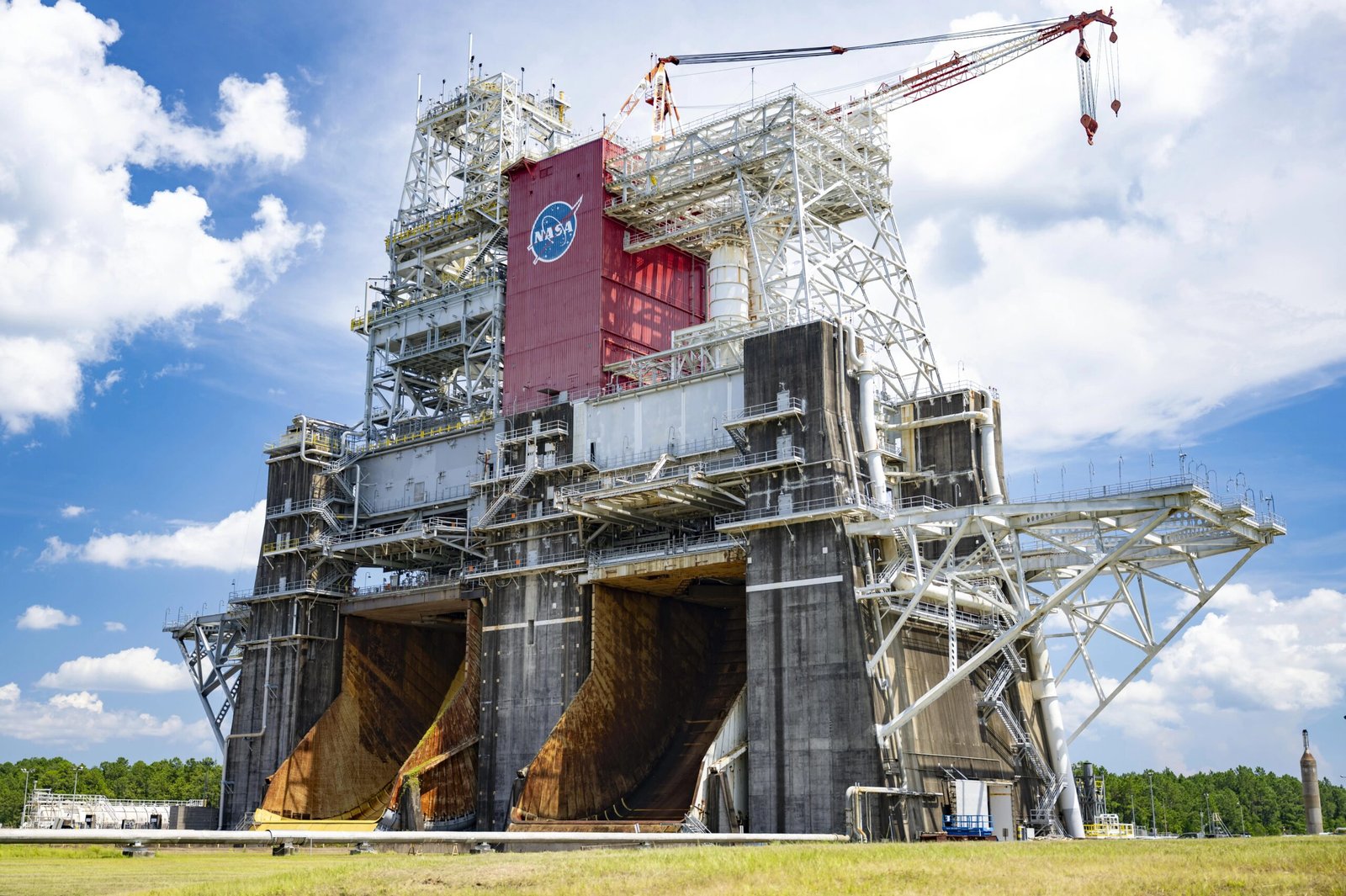
The B-2 test stand at Stennis has a deep history. It has played a vital role in space programs since the 1960s, including the testing of Saturn V rocket stages used during the Apollo missions. Now, it will be instrumental in Blue Origin’s efforts, particularly as the company’s New Glenn rocket gears up for second stage testing. Each BE-3 engine on the rocket generates 200,000 pounds of thrust, powered by liquid oxygen and hydrogen.
Senator Roger Wicker remarked, “Stennis continues to be a hub for the commercial space industry.” Local officials express confidence that this partnership will yield high-skilled jobs and foster innovation. Congressman Mike Ezell echoed this sentiment, stating, “This agreement is another major win for Stennis Space Center.”
Testing is slated to begin this fall. NASA will provide engineers, equipment, and expertise to facilitate the process. This collaboration aims to refine rocket propulsion technologies that are critical for future missions.
Advancing the Artemis Program
The Artemis program represents a major leap in U.S. space exploration. Building on the successful Artemis II flight from April, the upcoming Artemis III mission will involve multiple launches and complex operations. Four astronauts will test NASA’s Orion spacecraft, coordinating with commercial landing systems designed by Blue Origin and SpaceX.
Blue Origin is also set to launch missions targeting the Moon. The company’s Blue Moon Mark 1 Endurance lander will deliver payloads to the lunar South Pole, paving the way for human landings in subsequent Artemis missions.
“Through this partnership, [Stennis] will help take us back to the Moon,” stated Blue Origin CEO Dave Limp. The collaboration illustrates the importance of commercial partnerships in achieving ambitious space objectives. It showcases how shared resources can accelerate progress and enhance American leadership in space exploration.
In essence, this agreement not only lays the groundwork for Blue Origin’s operations but also reinforces NASA’s strategy to bolster collaboration with commercial partners. Such partnerships mark a significant shift towards a new era of space exploration and innovation. For more details on NASA’s Artemis program, visit NASA’s official Artemis page.
Expand Your Tech Knowledge
Learn how the Internet of Things (IoT) is transforming everyday life.
Discover archived knowledge and digital history on the Internet Archive.
Space
