

Summary Points
- NASA is developing cryocouplers for in-orbit spacecraft refueling missions.
- Cryocouplers will connect spacecraft to orbital propellant depots for fuel transfers.
- Testing focuses on handling super-cold propellants without losing performance or efficiency.
- Future missions depend on successful cryocoupler development for effective space exploration.
The Need for In-Space Refueling
As NASA gears up for the next generation of deep space exploration missions, the need for in-space refueling is becoming clear. Spacecraft may require refueling in Earth orbit before venturing deeper into the solar system. A crucial component of this upcoming technology is the cryocoupler, designed to enable spacecraft to connect to orbital propellant depots—the future gas stations of space.
Cryogenic propellants, such as liquid hydrogen and liquid oxygen, must be stored at extremely low temperatures, often hundreds of degrees below zero Fahrenheit. This requirement presents significant engineering challenges. Insulating materials and seals must effectively manage the absence of heat to prevent costly propellant loss and maintain performance. As Travis Belcher, project manager for the cryocoupler at NASA’s Marshall Space Flight Center, noted, “In-orbit cryogenic refueling between two spacecraft has yet to be done and remains one of the toughest engineering challenges in spaceflight.” Overcoming these hurdles is essential for the missions NASA envisions for the future.
Ground-based couplers, like those used in the Space Launch System (SLS) for Artemis missions, are unsuitable for this task. These couplers are designed for quick release and manual reattachment during launches, lacking the robustness needed for space conditions. They are larger and less adaptable than cryocouplers, which must fit more streamlined configurations for orbiting spacecraft.
Testing the Cryocoupler Technology
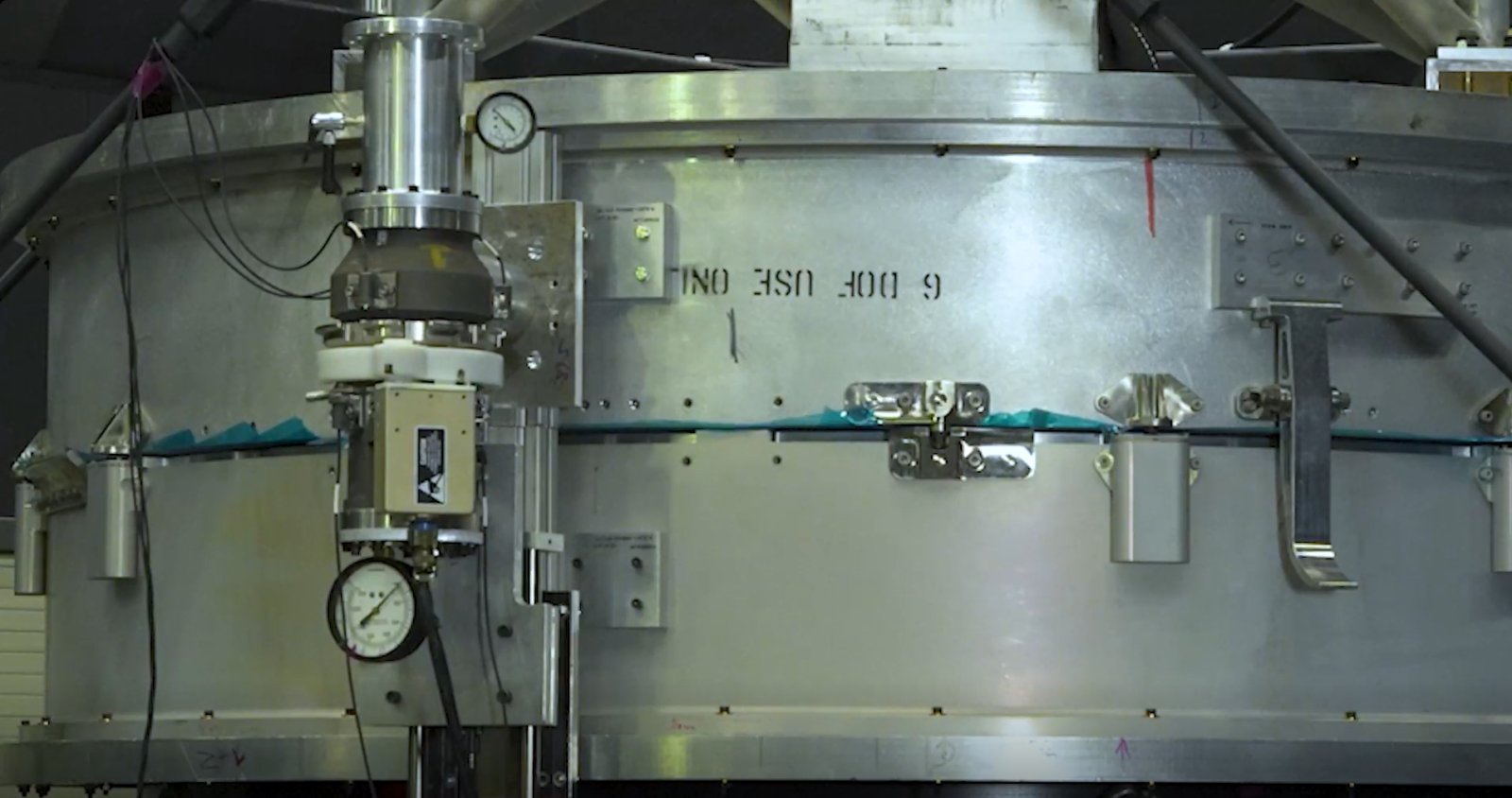
NASA’s testing of the cryocoupler has involved collaboration with L3Harris, focusing on automatically connecting and disconnecting, minimizing the need for astronaut intervention. Belcher emphasized the design’s emphasis on automation: “The cryocouplers we’re working on can attach and detach multiple times.”
Recent test scenarios conducted at NASA Marshall utilized liquid nitrogen to simulate the cryogenic conditions the couplers will encounter. The temperatures reached minus 321 degrees Fahrenheit, testing how the coupler reacts to thermal contraction and varying temperature conditions. The team also evaluated the coupler’s performance limits. This test setup allowed for simulated misalignment during docking, ensuring that the coupler can adapt even if a spacecraft and depot are not perfectly aligned.
While these cryocouplers are still in the early stages of development, the focus is on proving basic functionality. Future tests will be tailored to specific mission requirements, fine-tuning the design based on practical needs. This project forms part of a broader initiative, the Cryogenic Fluid Management Portfolio, which aims to refine fluid management in space.
Innovations in cryogenic technology are critical for upcoming NASA missions. Successful in-situ refueling will extend mission durations and range, fundamentally transforming deep space exploration possibilities. For more information about cryogenic fluid management, interested readers can visit NASA’s dedicated site.
Discover More Technology Insights
Learn how the Internet of Things (IoT) is transforming everyday life.
Stay inspired by the vast knowledge available on Wikipedia.
Space
