

Quick Takeaways
- NASA plans to launch up to three Moon Base missions by 2026, focusing on testing rovers and landers from Blue Origin and Astrolab to prepare for future lunar exploration.
- The missions will deliver payloads like surface studies instruments and cameras, and use different landers including Blue Origin’s Endurance, AstrobiLab’s FLIP rover, and Nova-C Trinity.
- Contracts worth hundreds of millions have been awarded to companies like Astrolab, Lunar Outpost, and Blue Origin for developing lunar vehicles and delivering payloads.
- These efforts are part of NASA’s broader strategy to establish a long-term lunar presence, with humans expected to return to the Moon by 2028 after extensive testing and site surveys.
NASA’s Ambitious Plans for Lunar Exploration
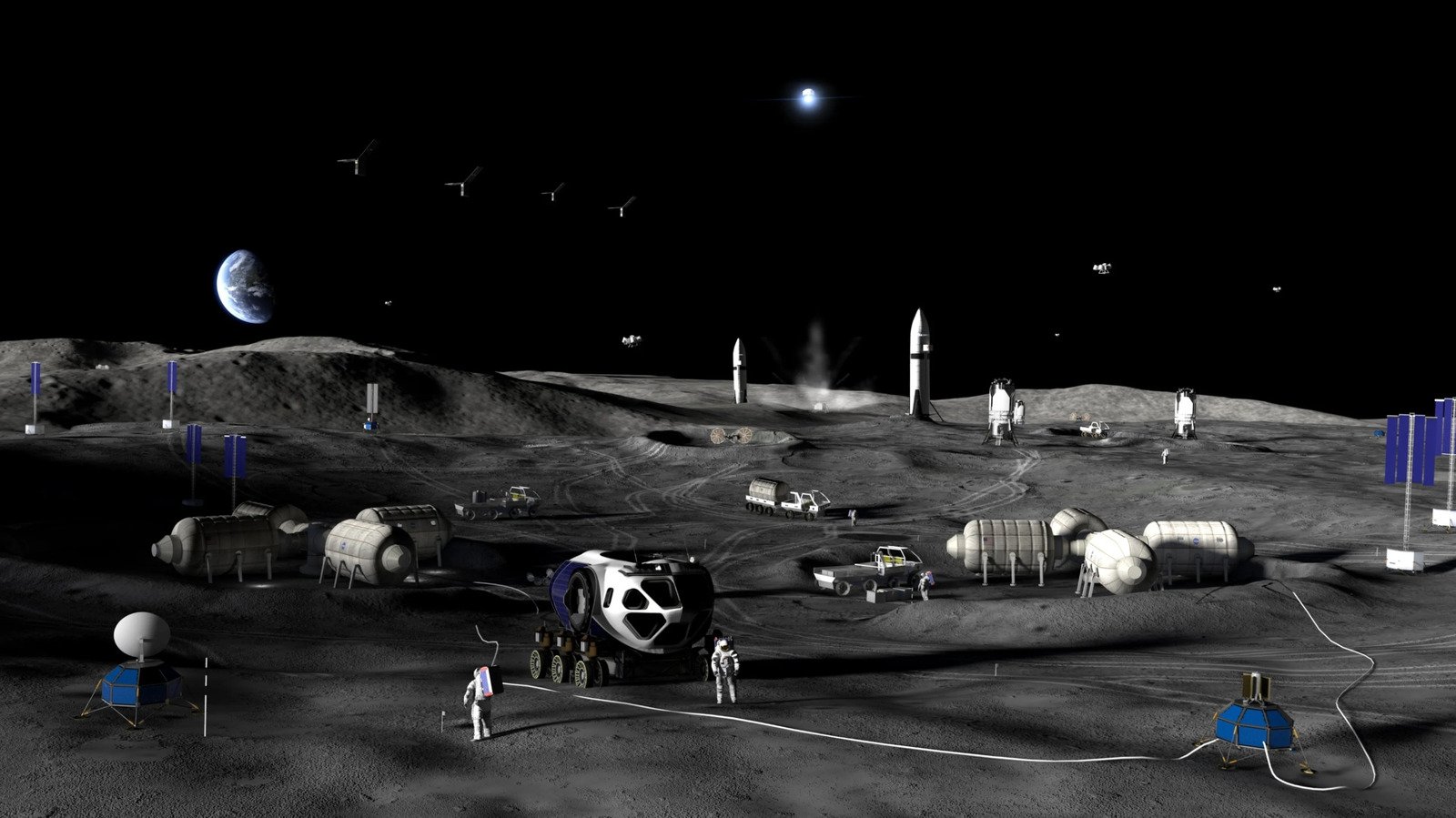
NASA is gearing up for at least three new missions to the Moon before the end of 2026. These missions aim to deliver important payloads and test new equipment on the lunar surface. The goal is to build a long-term presence on the Moon, not just visit once. So far, NASA has completed its crewed Artemis II mission, which was just a step in a bigger plan. Now, the focus shifts to testing and learning. These upcoming missions will send different payloads and vehicles to the Moon to gather valuable data. This progress shows NASA’s strong commitment to exploring space and developing new technologies.
The upcoming missions will also test vehicles and tools from private companies. For instance, Blue Origin will deliver payloads with its Blue Moon Endurance lander. Astrolab, a startup company, will drop off a rover called FLIP using the Astrobiotic Griffin lander. These missions will help scientists understand how different equipment performs in the lunar environment. The testing is essential because it helps prepare for more complex missions later. Everyone is excited because these efforts can lead to better lunar exploration and even establish a base for future humans on the Moon.
Technological Advances and New Features
NASA’s schedule shows their focus on developing new technology for lunar explorers. These missions include testing rovers, studying surface conditions, and understanding lunar features like swirls—bright patterns on the Moon’s surface. For example, the Moon Base III mission will carry payloads to study these swirls, which could reveal new insights about the Moon’s geology. The payloads also include cameras and scientific instruments to study the surface closely. These new features will help scientists plan safer and more efficient landings, and better understand the environment for future settlers.
Private companies play a key role in these advancements. For instance, contracts worth over $200 million have been awarded for the development of lunar terrain vehicles. Blue Origin, awarded over $100 million, is also working on landers to carry equipment and humans in the future. NASA has already tested a Blue Origin lander, and a new prototype designed to carry crew is in development. These innovations will make lunar missions safer, more reliable, and more cost-effective. Overall, the technology being developed now will pave the way for more complex missions and, eventually, a sustainable lunar presence.
The Value and Future of Lunar Missions
These upcoming lunar missions mark an important chapter in space exploration. They serve multiple purposes: testing new vehicles, collecting scientific data, and preparing for future human visits. Sending drones to survey landing sites is another key part of NASA’s strategy. This will help identify the safest places for future astronauts and stations. Even though humans won’t return to the lunar surface until 2028, these robotic missions are building the foundation for that milestone.
The effort benefits everyone. It pushes technological boundaries and creates new opportunities for science and discovery. These missions also foster partnerships with private companies, which accelerates innovation and reduces costs. Ultimately, these lunar explorations are not just about visiting the Moon—they’re about laying the groundwork for future space travel. As NASA and its partners continue to test and develop new equipment, the dream of a permanent human presence on the Moon feels closer than ever.
Expand Your Tech Knowledge
Explore the future of technology with our detailed insights on Artificial Intelligence.
Access comprehensive resources on technology by visiting Wikipedia.
CellphonesV1
