

Summary Points
- NASA’s X-59 aircraft now resides in a newly renovated hangar.
- The hangar modernization includes upgraded safety features and workspaces.
- The X-59 aims to revolutionize commercial supersonic travel over land.
- Successful test flights progress as the team evaluates aircraft performance.
The New Home for the X-59
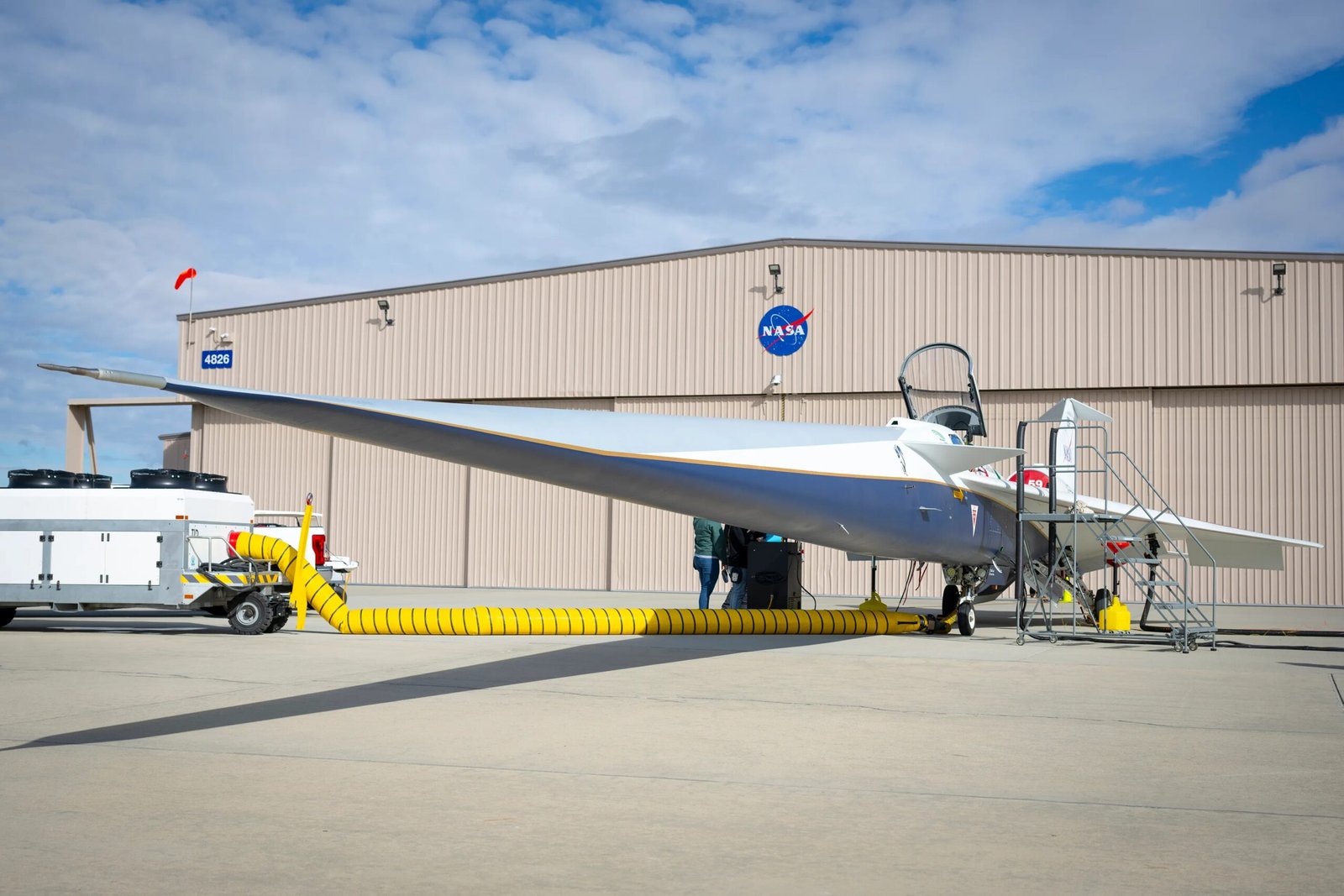
NASA’s X-59 sits gracefully inside its newly renovated hangar at Armstrong Flight Research Center in Edwards, California. Built in 1968, the hangar has undergone significant transformations, resulting in a home fit for a cutting-edge aircraft of the 2020s. While the facility has a rich history, the recent upgrades make it feel brand new.
During the renovation, the team dismantled the hangar’s interior. They enhanced electrical wiring, added a modern fire suppression system, and installed air conditioning. Office spaces were also integrated to support the operations related to the X-59. This meticulous process was led by project manager Bryan Watters, who expressed pride in modernizing such an important facility. The X-59 is not just an aircraft; it is the centerpiece of NASA’s Quesst mission, which aims to revolutionize commercial supersonic flight by minimizing the disruptive sonic boom into a manageable thump.
The choice of hangar was crucial. At just under 100 feet long and 30 feet wide, the X-59 needed ample space to avoid exposure to outdoor elements. Building 4826, officially named, was stripped down to its bare essentials and remodeled to become a safe haven for the aircraft. The hangar features a durable epoxy-coated floor, which prevents spills from seeping into the concrete, ensuring a solid working environment.
The Road Ahead for Quiet Supersonic Flight
The X-59’s first flight on October 28, 2025, marked a pivotal moment in aeronautics. Test pilot Nils Larson flew the aircraft from its assembly site in Palmdale to NASA Armstrong. After this successful transition, regular flights have been conducted, providing valuable data to assess the aircraft’s performance. While innovation is exciting, it isn’t without challenges, especially those relating to the supply chain issues caused by the COVID-19 pandemic.
Now, with the X-59 comfortably situated in its new home, excitement permeates the atmosphere among the Quesst team. The shift from model to reality is significant. Project manager Cathy Bahm noted that seeing the aircraft in the renovated hangar felt surreal, a tangible reminder of the hard work put into its development.
Furthermore, the airy office views feature F-15 research jets, set to support the X-59 as chase planes in upcoming flights. The transformation of both the hangar and the aircraft symbolizes the commitment to advancing aeronautical research. The journey from concept to a functional aircraft is a tribute to the collaborative efforts across NASA’s Aeronautics Research Mission Directorate.
Continue Your Tech Journey
Explore the future of technology with our detailed insights on Artificial Intelligence.
Explore past and present digital transformations on the Internet Archive.
Space
