
Close Menu
    Facebook X (Twitter) Instagram
    Tuesday, February 10
    Top Stories:
    • Waymo Launches Fully Driverless Rides in Nashville!
    • Unlock 1 Month of Ultimate Savings for Just $10!
    • Unlock Incredible Sound: Shokz OpenFit Air Earbuds at All-Time Low Price!
    Facebook X (Twitter) Instagram Pinterest Vimeo
    IO Tribune
    • Home
    • AI
    • Tech
      • Gadgets
      • Fashion Tech
    • Crypto
    • Smart Cities
      • IOT
    • Science
      • Space
      • Quantum
    • OPED
    IO Tribune
    Home » Navigating the Skies: A Blueprint to Avert Satellite Collisions
    Space

    Navigating the Skies: A Blueprint to Avert Satellite Collisions

    Staff ReporterBy Staff ReporterFebruary 10, 2026No Comments3 Mins Read
    Share Facebook Twitter Pinterest LinkedIn Tumblr Reddit Telegram Email
    Share
    Facebook Twitter LinkedIn Pinterest Email

    Fast Facts

    1. Crowded Orbit: Over 45,000 human-made objects currently orbit Earth, including thousands of satellites and significant amounts of space junk, making collision prevention essential.

    2. Innovative Modeling: Researchers at Lawrence Livermore National Laboratory have developed a new approach to simulate a million orbits in cislunar space, employing advanced machine learning techniques.

    3. Stability Insights: Their findings show approximately half of the modeled orbits remained stable for at least a year, but just under 10% sustained stability for the entire six-year simulation.

    4. High-Performance Computing: Utilizing 1.6 million CPU hours, the simulations that would typically take over 182 years to process were completed in just three days using LLNL’s advanced supercomputers, aiding future satellite coordination.

    Crowded Orbits: New Mapping System Aims to Reduce Satellite Collisions

    As the number of objects in Earth’s orbit continues to rise, the need for effective collision prevention has never been clearer. Currently, over 45,000 human-made objects circle our planet. These consist of not only thousands of operational satellites but also a significant amount of space debris left from earlier missions. With ambitious launch schedules planned for 2026, space agencies face increasing pressure to ensure safety in this congested environment.

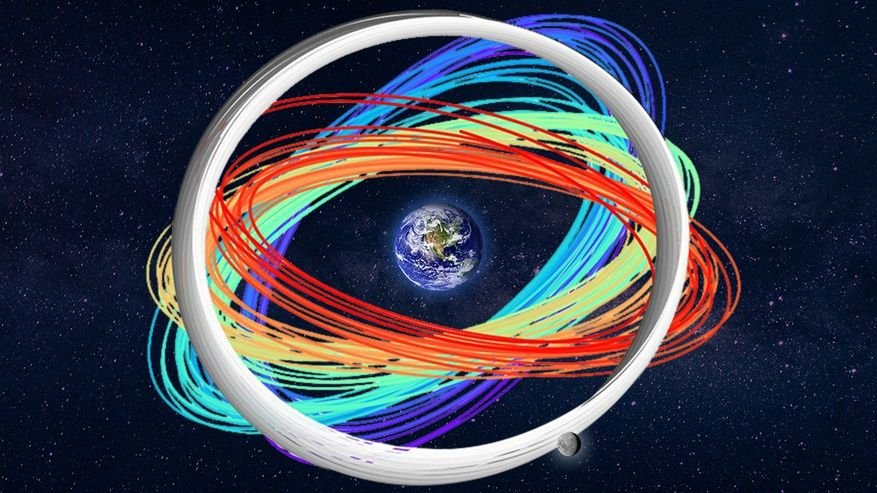
    To address this challenge, researchers at the Lawrence Livermore National Laboratory (LLNL) in California have developed an innovative model for tracking orbital paths in cislunar space—the area between Earth and the Moon. They created a simulation that visualizes a million potential orbits over six years. Using an open-access database and powerful supercomputers, they achieved stunning results in mere days.

    The findings indicate that approximately half of the modeled orbits maintained stability for at least one year. However, less than 10% demonstrated stability throughout the entire six-year timeframe. This data holds significant implications as scientists aim to predict satellite behavior.

    According to LLNL scientists, machine learning techniques can enhance this analysis. By anticipating the lifetime of an orbit or identifying unusual movements, researchers can provide clearer paths for navigation. These insights may help define busy “intersections” where satellite traffic increases, ultimately guiding future missions and helping avoid accidents.

    The computing demands for this research were immense. LLNL utilized 1.6 million CPU hours—equivalent to over 182 years on a single computer—to process the simulations. Yet, the lab’s Quartz and Ruby supercomputers completed the task in just three days. This impressive feat highlights the potential of advanced technology to tackle complex problems in space.

    As countries continue to launch satellites, often without global coordination, this mapping tool could play a vital role. By offering a clearer understanding of orbital traffic, it may significantly enhance the safety and reliability of satellite operations.

    In a rapidly evolving technological landscape, such advancements not only promote safety but also improve communication, navigation, and our overall capacity to explore space.

    Expand Your Tech Knowledge

    Dive deeper into the world of Cryptocurrency and its impact on global finance.

    Stay inspired by the vast knowledge available on Wikipedia.

    SciV1

    Cosmos NASA Space VT1
    Share. Facebook Twitter Pinterest LinkedIn Tumblr Email
    Previous ArticleUnlock 1 Month of Ultimate Savings for Just $10!
    Next Article Ethereum Sees Surge in Withdrawals: Largest Since October
    Avatar photo
    Staff Reporter
    • Website

    John Marcelli is a staff writer for IO Tribune, with a passion for exploring and writing about the ever-evolving world of technology. From emerging trends to in-depth reviews of the latest gadgets, John stays at the forefront of innovation, delivering engaging content that informs and inspires readers. When he's not writing, he enjoys experimenting with new tech tools and diving into the digital landscape.

    Related Posts

    Tech

    Waymo Launches Fully Driverless Rides in Nashville!

    February 10, 2026
    Crypto

    Ethereum Sees Surge in Withdrawals: Largest Since October

    February 10, 2026
    Tech

    Unlock 1 Month of Ultimate Savings for Just $10!

    February 10, 2026
    Add A Comment

    Comments are closed.

    Must Read

    Waymo Launches Fully Driverless Rides in Nashville!

    February 10, 2026

    Ethereum Sees Surge in Withdrawals: Largest Since October

    February 10, 2026

    Navigating the Skies: A Blueprint to Avert Satellite Collisions

    February 10, 2026

    Unlock 1 Month of Ultimate Savings for Just $10!

    February 10, 2026

    Unlock Incredible Sound: Shokz OpenFit Air Earbuds at All-Time Low Price!

    February 10, 2026
    Categories
    • AI
    • Crypto
    • Fashion Tech
    • Gadgets
    • IOT
    • OPED
    • Quantum
    • Science
    • Smart Cities
    • Space
    • Tech
    • Technology
    Most Popular

    China Greenlights Two Advanced Level-3 Autonomous EVs

    December 16, 2025

    Grab the Shokz OpenRun Pro for $99.99 – Just in Time for Christmas!

    December 24, 2025

    Karnal’s Smart City Deadline Extended to March 2027!

    July 8, 2025
    Our Picks

    Apple Faces Challenges in China as Huawei Rises

    July 7, 2025

    Instagram Debuts Reels App on Fire TV!

    December 17, 2025

    Revolutionizing Time: Ncuti Gatwa’s Impact on ‘Doctor Who’

    June 7, 2025
    Categories
    • AI
    • Crypto
    • Fashion Tech
    • Gadgets
    • IOT
    • OPED
    • Quantum
    • Science
    • Smart Cities
    • Space
    • Tech
    • Technology
    • Privacy Policy
    • Disclaimer
    • Terms and Conditions
    • About Us
    • Contact us
    Copyright © 2025 Iotribune.comAll Rights Reserved.

    Type above and press Enter to search. Press Esc to cancel.