

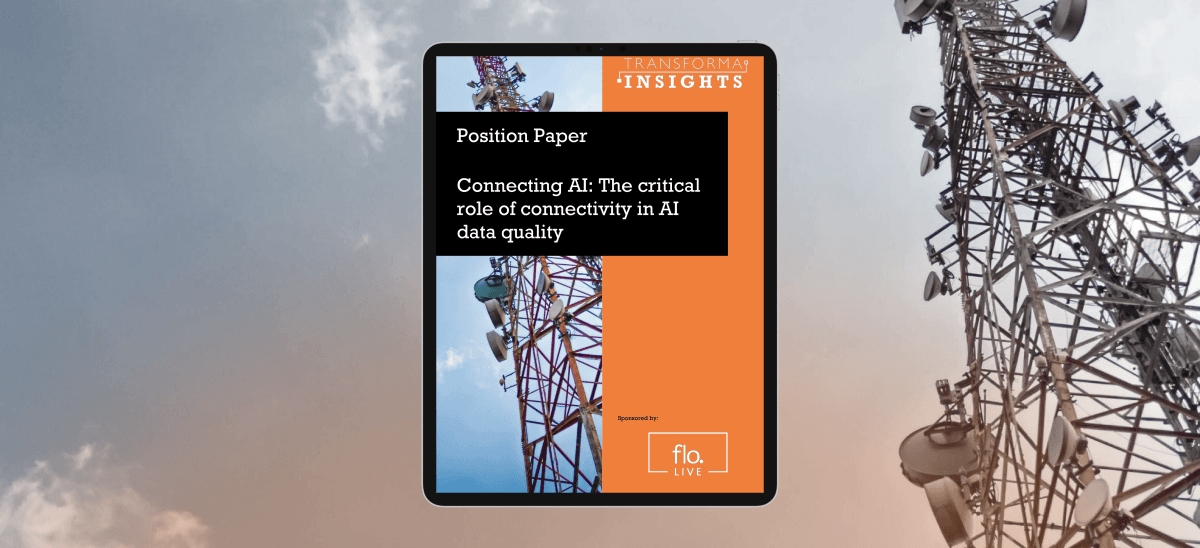
Summary Points
- Connectivity failures—not algorithms—can undermine real-time AI decisions.
- Missing, delayed, or duplicated IoT data quietly distorts models.
- The report explores four data-quality dimensions and network-related AI risks.
- Discover AI-ready connectivity; download the free paper after logging in.
The model may not be the problem
When an AI makes a poor decision, the first suspect is often its software. Yet the data may have arrived late, gone missing or appeared twice. These small failures can distort what an AI system sees. At the scale of connected devices, they can become a pattern.
Everyday decisions depend on reliable signals
AI systems increasingly act in real time, not just review past events. For example, a system that monitors equipment or supports a security response needs timely, consistent readings. If the connection falters, the AI may act on an incomplete picture. Better data handling can help people make safer, more dependable decisions.
Connectivity can improve with AI, too
The relationship works both ways. AI can help identify network problems, while stronger connectivity can give AI cleaner data to learn from. Still, no network can guarantee perfect decisions. Organizations should assess data quality alongside model performance. That can support more reliable research, useful services and better quality of life.
Continue Your Tech Journey
Learn how the Internet of Things (IoT) is transforming everyday life.
Stay inspired by the latest discoveries from NASA.
IoTV1
