

Top Highlights
- First night in new place causes broken sleep and frequent waking.
- Robinson Leoni sleeps less and feels tired despite feeling relaxed.
- Sleep specialists attribute it to the “first-night effect,” an evolutionary response.
- The brain stays vigilant in unfamiliar environments, disrupting sleep quality.
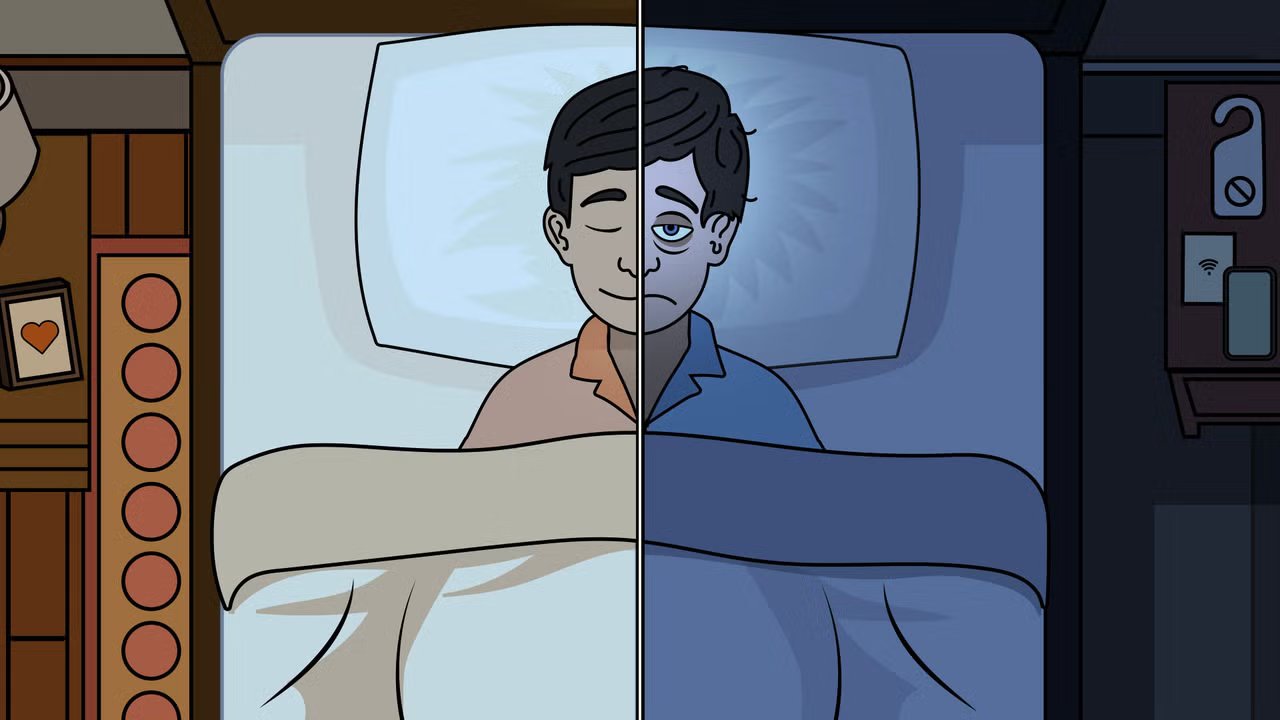
Here’s how to beat it.
Many travelers experience trouble sleeping in new places. Robinson Leoni, a sales director, knows this all too well. He says his sleep pattern changes the very first night away. He falls asleep later, wakes up frequently, and sleeps fewer hours. His smartwatch confirms this—about five hours in a new bed compared to seven at home. Despite feeling relaxed and unstressed, Leoni notices the sleepless nights.
Understanding the First-Night Effect
The first-night effect is real. Sleep specialists have studied it extensively. Dozens of studies confirm this phenomenon. The effect is believed to have ancient, evolutionary roots. Anna Wick, a sleep researcher at the University of Freiburg, explains that it is part of a survival instinct. The brain stays alert in unfamiliar environments. This vigilance makes it harder to fall asleep and stay asleep. It is the sleeping brain’s way of protecting you from potential danger.
Practical Tips to Improve Sleep in New Places
While the first-night effect is common, you can try practical steps to reduce its impact. Keep your bedtime routine consistent, even when you travel. Use earplugs or a white noise machine to block out unfamiliar sounds. Maintain a cool, dark, and comfortable sleeping environment. Avoid caffeine and screens before bed. Over time, your brain may adapt, and future first nights may become easier. Traveling always involves some adjustment. With a few simple strategies, you can improve your sleep and feel more rested no matter where you are.
Continue Your Tech Journey
Dive deeper into the world of Cryptocurrency and its impact on global finance.
Explore past and present digital transformations on the Internet Archive.
TechV1
