

Top Highlights
-
Extreme Flooding: In February 2026, northern Colombia’s Córdoba department experienced unprecedented flooding, affecting over 80% of the region due to unusually heavy rains, upending seasonal agricultural practices.
-
Meteorological Factors: An unusual cold front in early February triggered intense downpours, with rain rates reaching 1.7 centimeters per hour on February 1, following an already wet January.
-
Widespread Destruction: Preliminary reports indicate thousands of homes destroyed, over 11,000 families displaced, and more than 150,000 hectares of farmland inundated, leading to a humanitarian crisis.
-
Emergency Response: The Colombian government declared a state of emergency as the floods persisted, with ongoing monitoring and assessments provided by NASA and local agencies.
Dry-Season Floods Drench Northern Colombia
February is usually dry in northern Colombia’s Córdoba department. Farmers prepare for planting, while ranchers manage grazing livestock. However, 2026 brought an unexpected twist. Heavy rains flooded much of the region, altering seasonal patterns.
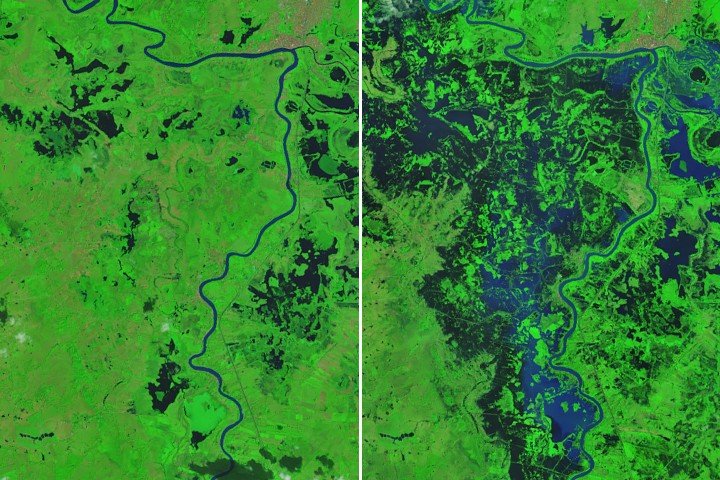
On February 9, NASA’s Landsat 9 captured striking images of the flooding along the Sinú River. The images reveal dark floodwaters engulfing farmland and communities. Lorica, a city of about 90,000 residents, appears submerged in the upper portion of the satellite imagery, stark against a previously dry landscape documented on January 23.
Rainfall began with an unusual cold front that pushed south on February 1 and 2. This event brought moisture-laden air over the Andes, resulting in significant downpours. Some areas in Córdoba recorded 4 to 7 centimeters of rain daily. This extreme weather event became evident as NASA’s IMERG reported rain rates of up to 1.7 centimeters per hour on February 1, marking the peak of the heavy rains.
Since that intense beginning, storms continued to soak the region. By February 25, satellite imagery confirmed widespread flooding persisted. According to the UN Office for the Coordination of Humanitarian Affairs, over 80 percent of Córdoba remained underwater. Thousands of homes suffered damage, and more than 11,000 families experienced displacement.
Yet, amidst this crisis, technology is stepping up. Advances in satellite imaging allow for rapid assessment of flood impact. Agencies are using this data to coordinate rescue efforts and deliver relief where it’s needed most. Furthermore, scientists analyze the events to enhance weather models, potentially improving future forecasts.
Community resilience also plays a critical role. Local organizations and government agencies are mobilizing to assist affected families. They are focusing on rebuilding and providing essential services. This approach underscores the strength of collective action in times of hardship.
While the floods have caused devastation, they also spark innovations in disaster response. As technology evolves, there’s hope for better preparedness during future climatic events. Northern Colombia’s experience highlights the importance of adapting to a changing climate while fostering community tenacity.
Stay Ahead with the Latest Tech Trends
Dive deeper into the world of Cryptocurrency and its impact on global finance.
Stay inspired by the vast knowledge available on Wikipedia.
SciV1
