

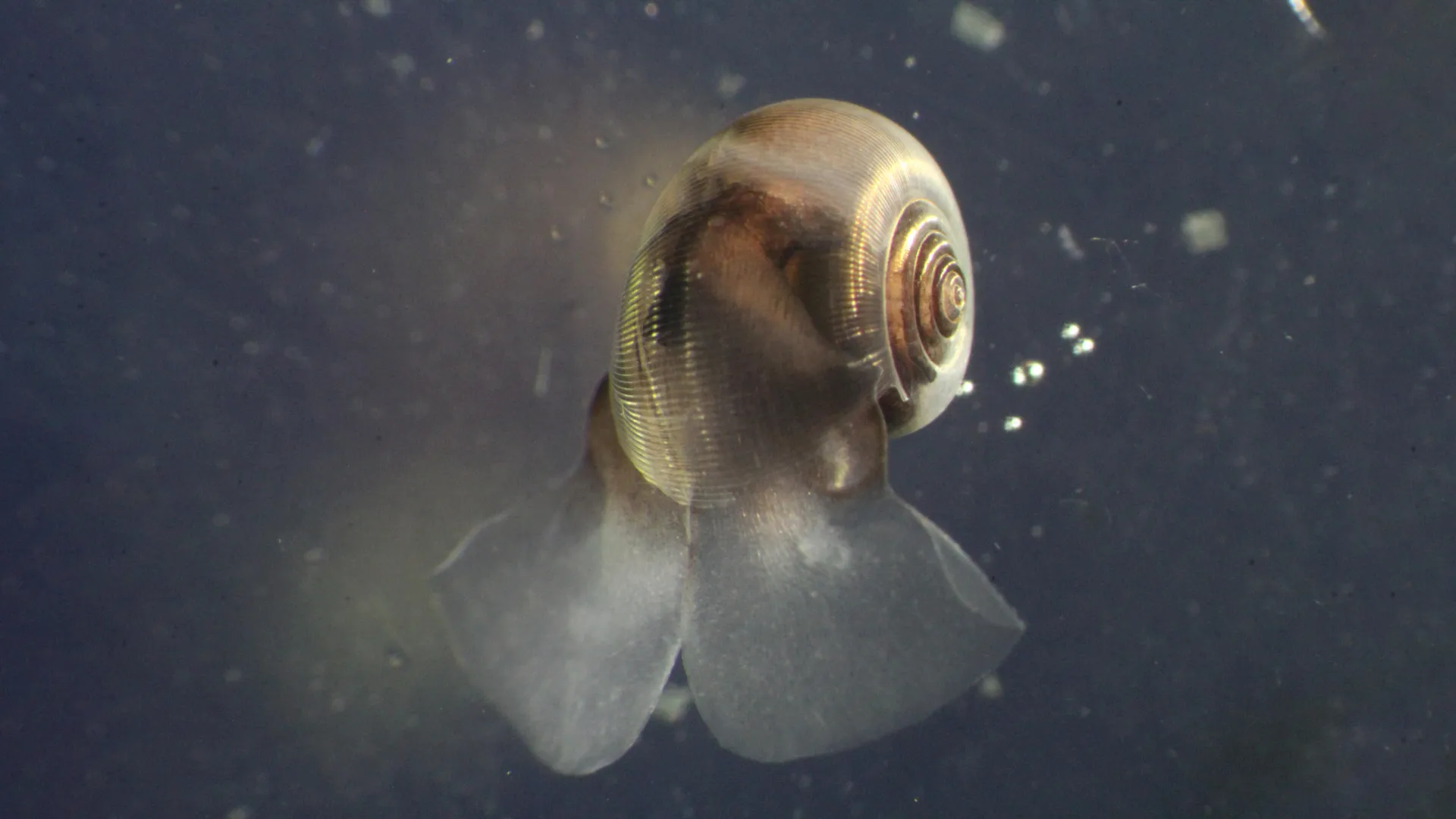
Fast Facts
-
Invisible Contributors: Calcifying plankton, crucial for regulating Earth’s temperature through carbon capture, are underrepresented in climate models used for predicting future conditions.
-
Ocean Carbon Pump: These organisms aid in the ocean carbon pump, moving carbon from the atmosphere to the ocean’s depths, stabilizing climate over time and affecting seawater chemistry.
-
Shallow Dissolution Ignored: Important processes like shallow dissolution, where calcium carbonate breaks down in the upper ocean, are often excluded from major climate models, compromising accuracy in carbon movement predictions.
-
Varied Vulnerabilities: Different groups of plankton face unique climate threats; enhancing climate models to include their specific dynamics is essential for better understanding ocean-atmosphere interactions and long-term carbon storage.
How Calcifying Plankton Shape the Carbon Cycle
Scientists reveal that tiny organisms called calcifying plankton play a crucial role in Earth’s climate. These microscopic beings, including coccolithophores, foraminifers, and pteropods, create hard shells made of calcium carbonate. In doing so, they capture carbon and help transport it to deeper ocean layers. This process, known as the ocean carbon pump, stabilizes the climate over long periods.
However, current climate models often overlook these organisms. By omitting plankton from their calculations, we might get a skewed perspective of how the ocean reacts to climate change. As a leading researcher noted, missing these crucial steps could lead us to misunderstand how carbon flows through our oceans.
The Missing Process of Shallow Dissolution
Moreover, researchers indicate that much of the calcium carbonate produced by plankton does not sink to the ocean floor. Significant amounts dissolve in the upper ocean, a process called shallow dissolution. This dissolution alters ocean chemistry significantly but remains largely unaccounted for in major climate models.
If we ignore shallow dissolution, models may miscalculate carbon movement and the ocean’s response to stressors. Different plankton types face unique threats from climate change. Therefore, treating them as a single group oversimplifies a complex issue.
To enhance climate models, scientists call for urgent studies on calcium carbonate production and dissolution in these organisms. Incorporating this data could lead to more accurate predictions of climate dynamics and improve our understanding of how ecosystems and communities may adapt in the future. The ocean’s smallest inhabitants could hold keys to unlocking a more comprehensive view of our climate system.
Stay Ahead with the Latest Tech Trends
Dive deeper into the world of Cryptocurrency and its impact on global finance.
Access comprehensive resources on technology by visiting Wikipedia.
TechV1
