

Quick Takeaways
- Euclid’s mission provides vital data for NASA’s upcoming Roman Space Telescope launch.
- This collaboration helps map the Milky Way and find elusive cosmic objects.
- Roman will detect microlensing events, revealing hidden planets and black holes.
- Pairing data from both telescopes enhances our understanding of the galaxy.
Euclid’s Revolutionary Preview of the Milky Way’s Heart
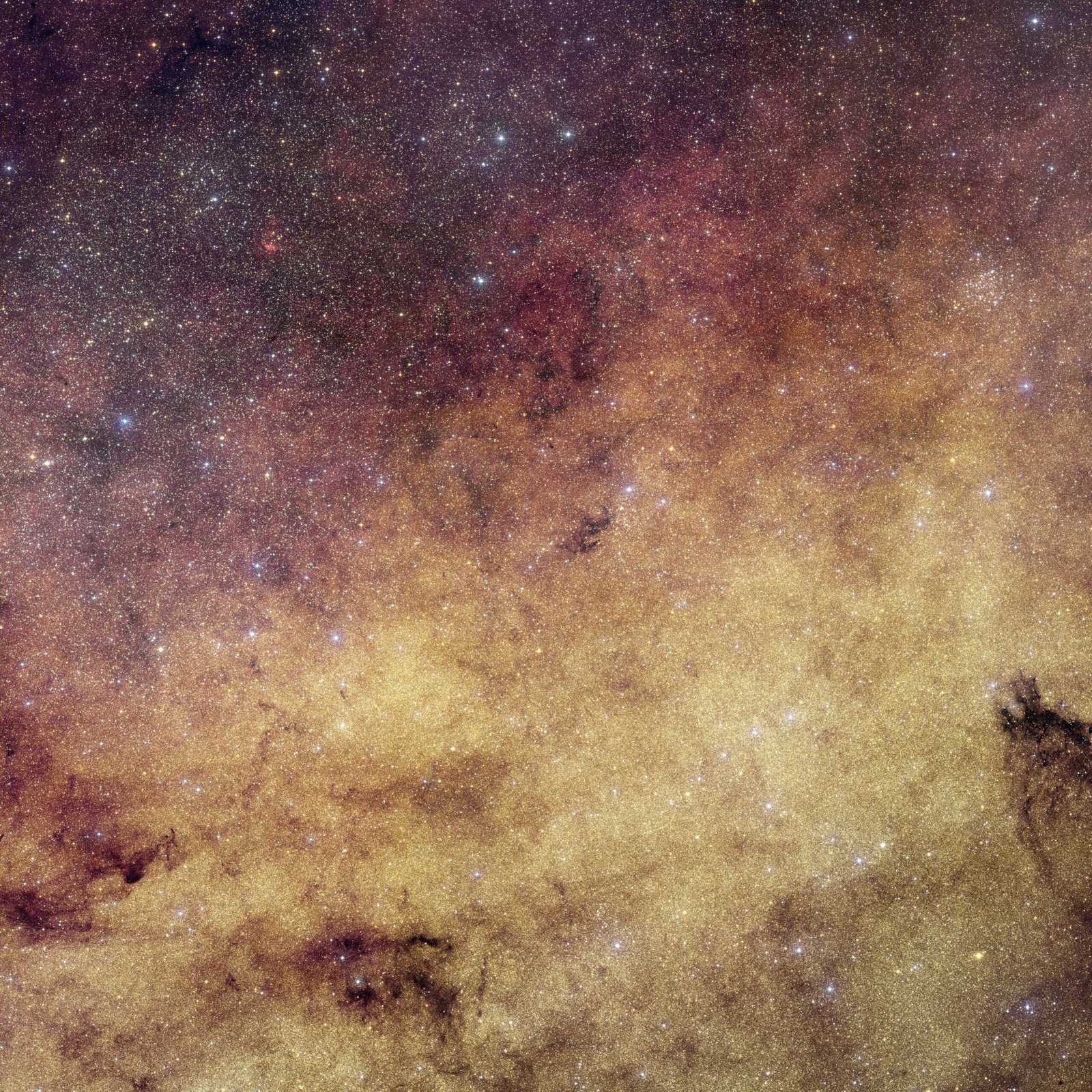
A recent collaboration in space observation is set to transform our understanding of the Milky Way galaxy. The European Space Agency’s Euclid mission, which includes contributions from NASA, has paused its primary sky survey to capture a snapshot of the Milky Way’s core. This unprecedented move will significantly enhance the upcoming survey by NASA’s Nancy Grace Roman Space Telescope, scheduled to launch later this summer. The overlap between these two ambitious projects promises to reveal cosmic treasures, such as rogue planets and elusive black holes, that are difficult to identify using just one telescope.
Enhancing Galactic Surveys
Euclid’s unique observation took place over one day, marking the only time it has deviated from its primary focus on cosmology. Jason Rhodes from NASA’s Jet Propulsion Laboratory noted the meticulous planning required for this brief intermission, emphasizing its high scientific value. The snapshot Euclid provides is shallower, lacking some detail but covering a larger area — about five square degrees, roughly equivalent to 25 full moons. This is significant since Roman will be examining a smaller region of 1.7 square degrees over the course of its survey.
Roman will monitor hundreds of millions of stars, unveiling new planets and unexplored cosmic phenomena by observing changes over short time periods. The integration of Euclid’s data into Roman’s future galactic bulge observations not only extends the timeline by two years but enhances the overall scientific yield. Collectively, these telescopes will enable astronomers to paint a more accurate picture of our galaxy’s structure and evolution.
Discovering Cosmic Oddities
One of the standout features of Roman’s mission is its ability to identify microlensing events: small bursts of starlight caused when a massive object aligns closely with a distant star. Most of the time, the lensing object is another star, but Roman can also detect planets orbiting them. This technique allows for the discovery of rare objects like stellar-mass black holes, which are estimated to number around 100 million in the Milky Way. These black holes usually elude detection unless they interact with companion stars.
The extended observational timeline provided by Euclid is crucial. It enables astronomers to track how lensing objects drift apart from background stars, making it easier to identify and measure their mass. Unlike standard planet detection methods that favor hot, close-orbiting planets, microlensing is better suited for finding distant worlds, including those cast adrift from their parent stars.
Additionally, the collaboration extends to Roman’s Galactic Plane Survey. This comprehensive program aims to chart an area approximately 400 times larger than the galactic bulge survey, exposing billions of stars and previously undiscovered structures. Such detailed observations allow for improved modeling of the Milky Way, a complex task likened to mapping the human body from within a single cell.
This synergy between the Euclid mission and the Roman telescope lays a foundation for future coordinated observations, offering a roadmap for unlocking deeper cosmic discoveries. As scientists anticipate the insights these missions will provide, the partnership symbolizes a pivotal advancement in our quest to understand the architecture of our galaxy.
Expand Your Tech Knowledge
Explore the future of technology with our detailed insights on Artificial Intelligence.
Access comprehensive resources on technology by visiting Wikipedia.
Space
