

Quick Takeaways
This article is for students grades 5-8:
-
Lunar Regolith Challenges: The Moon’s surface is covered with a sharp, dusty layer called lunar regolith, formed by meteorites, making exploration and safety for astronauts difficult.
-
Health Risks: Tiny, jagged regolith particles can irritate skin, eyes, and lungs, posing long-term health risks for astronauts returning to Earth.
-
Impact on Equipment: Regolith can damage tools, clog radiators, and make surfaces slippery, complicating operations for astronauts and robots.
- Innovative Solutions: NASA is developing technologies, like the Electrodynamic Dust Shield and SCALPPS system, to better understand and manage lunar regolith for safer missions.
What is Lunar Regolith?
This article is for students in grades 5-8.
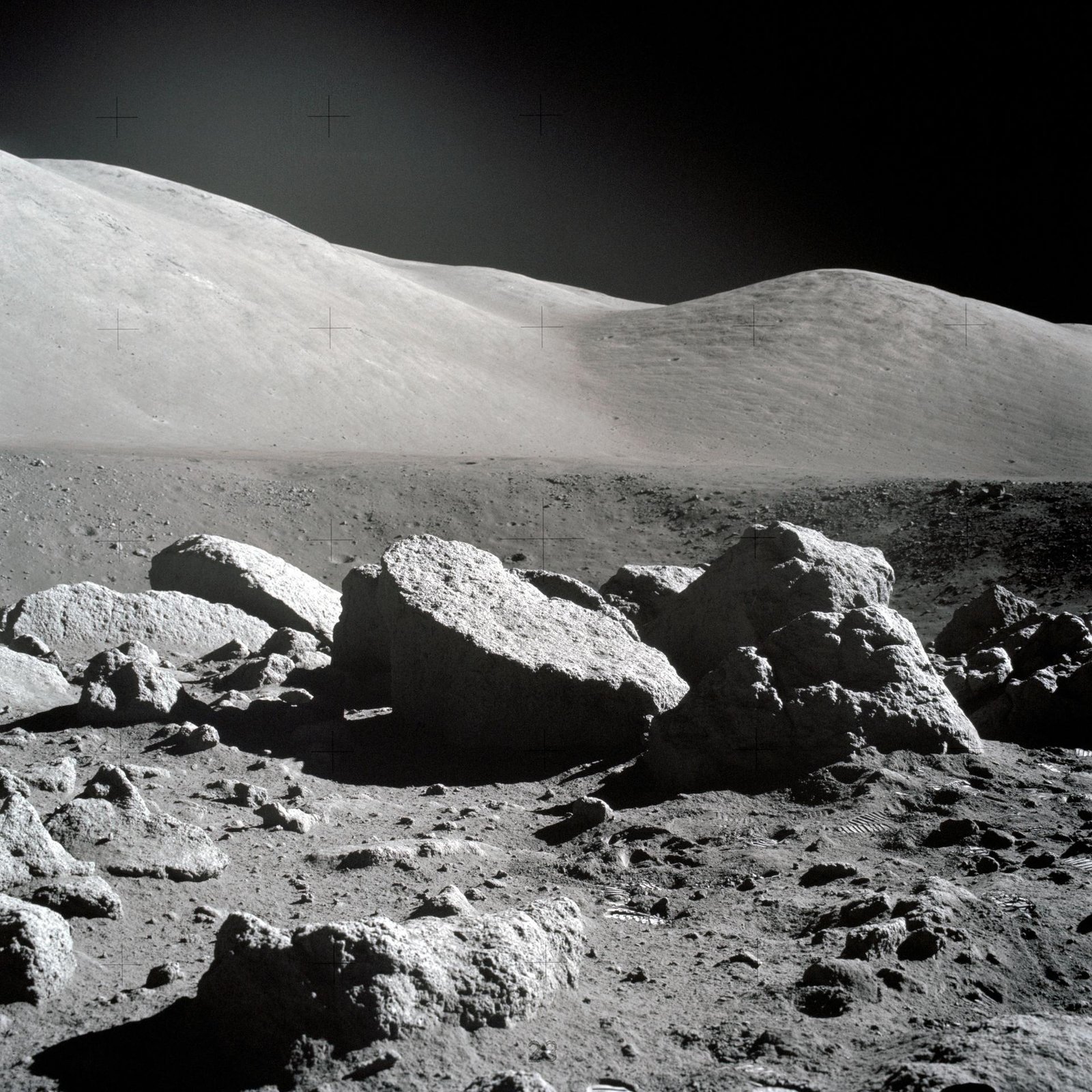
The Moon’s surface is a fascinating landscape covered in a thick layer known as lunar regolith. This layer consists of boulders, rocks, and a fine dust. Scientists believe meteorites created this regolith when they crashed into the Moon and shattered its surface long ago. Today, NASA scientists study regolith to unlock secrets about the Moon’s history while ensuring the safety of future astronauts.
Lunar regolith presents unique challenges. It contains tiny, sharp pieces that behave like bits of broken glass. Unlike Earth’s soil, these particles haven’t been worn down by wind or rain. As a result, the regolith is rough and jagged, sticking to everything it touches—including spacesuits, tools, and spacecraft. It may look like soft, gray powder in pictures, but it can damage vital equipment and pose risks to astronauts.
When astronauts return to their spacecraft, regolith can enter and cause problems. These tiny grains irritate skin and eyes, leading to discomfort. If inhaled, they can cause respiratory issues. Scientists worry that even after astronauts return to Earth, health problems may persist. Thus, NASA is focused on finding clever solutions to protect astronauts from the hazards of regolith.
Moreover, regolith can harm machinery. It can scratch tools, block solar panels, and clog radiators. These issues complicate lunar exploration missions. Unlike Earth’s soil, which packs down, Moon regolith remains loose and spreads around easily. This messiness complicates takeoff and landing for spacecraft, making every mission riskier.
To tackle these challenges, NASA is developing innovative technologies. One exciting tool is the Electrodynamic Dust Shield (EDS). This device uses electricity to create a force field, pushing regolith particles away from sensitive equipment. Additionally, NASA employs advanced systems like SCALPPS—Stereo Cameras for Lunar Plume-Surface Studies. SCALPPS uses cameras and lasers to observe how regolith behaves during landings, helping scientists understand its motion and particle size.
Collaborative efforts among various scientists and engineers drive these innovations. Several interesting career paths await those passionate about space exploration:
- Planetary Geologist: Like detectives, these scientists examine how celestial bodies formed and evolved, providing insights about our solar system.
- Chemist: Chemists analyze space materials, uncovering their composition and origins.
- Astrobiologist: These researchers search for clues of life beyond Earth, studying the potential for extraterrestrial existence.
- Planetary Scientist: They explore outer worlds using data, images, and samples from space, gaining knowledge from afar.
- Remote Sensing Scientist: By using satellites and drones, these scientists study planets remotely, gathering valuable information.
- Engineers: Diverse engineering fields, including civil and materials engineering, focus on practical applications of lunar regolith for construction and resource utilization.
Through continued research and innovation, lunar regolith holds promise for future space exploration and technology development. The journey to the Moon may not be easy, but understanding regolith helps pave the way for exciting discoveries ahead.
Stay Ahead with the Latest Tech Trends
Explore the future of technology with our detailed insights on Artificial Intelligence.
Access comprehensive resources on technology by visiting Wikipedia.
SciV1
