

Essential Insights
- Researchers achieved shifting a centimeter-sized object via quantum electron spins.
- The experiment links quantum mechanics with classical physics, including gravity.
- A diamond with controllable spins moved just 100 nanometers using lasers.
- Findings suggest potential to create larger objects in quantum superposition states.
Quantum Spins Countlessly Influence a Centimeter-Scale Object
For the first time, scientists have shown that quantum electron spins can move a centimeter-sized object. This breakthrough comes from a team at the Okinawa Institute of Science and Technology in Japan. The experiment is a big step in understanding how quantum physics interacts with the larger world. Previously, quantum spins only nudged individual atoms or very tiny structures. Now, they have influenced an object big enough to feel gravity. This challenges ideas about how quantum effects can play out on a macroscopic scale.
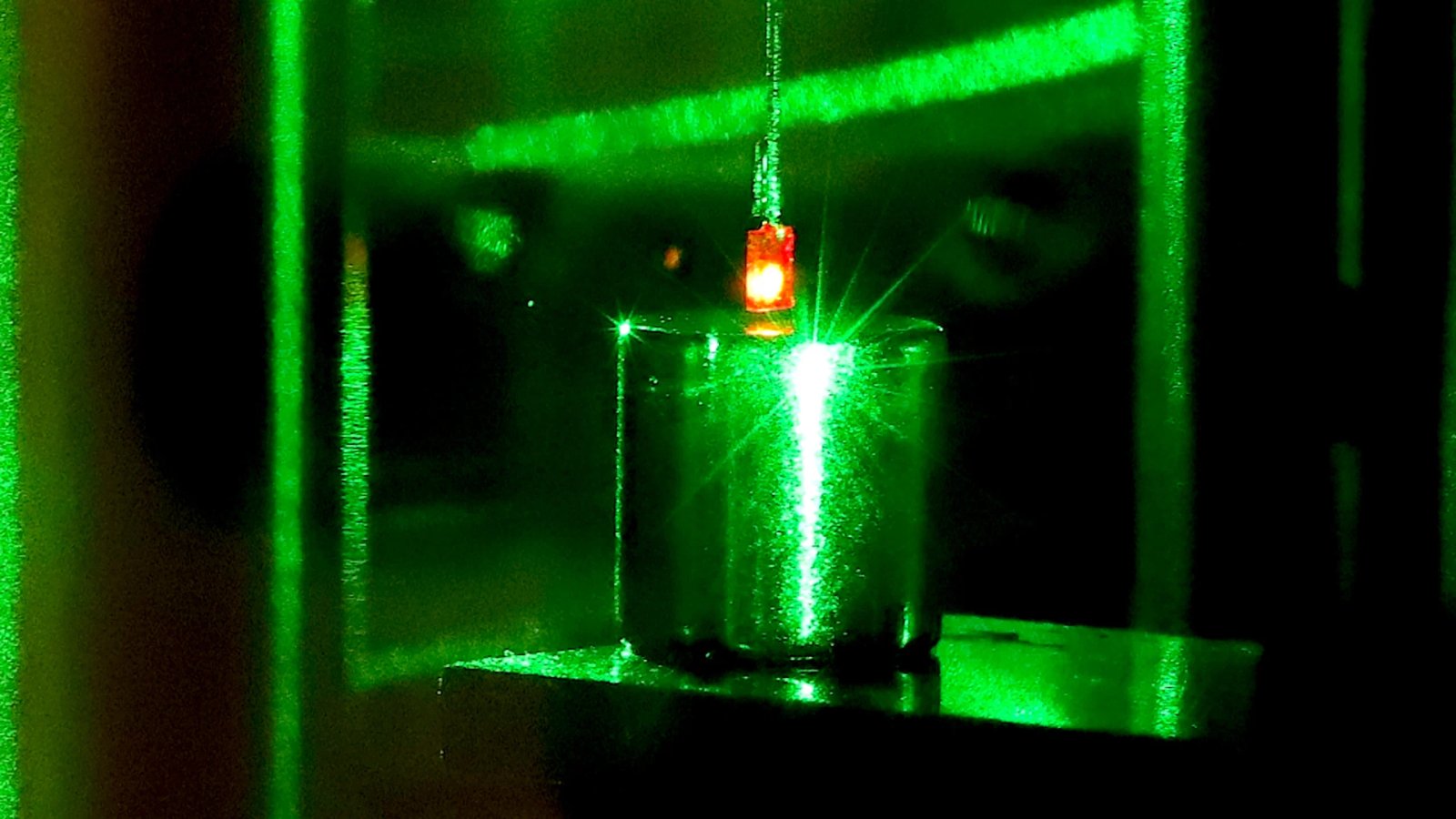
The team used a graphite plate levitating above magnets. Attached was a tiny diamond with special atomic defects called nitrogen vacancy (NV) centers. Laser light controlled the spins in the diamond. The magnet then translated those spins into movement. The whole setup weighed around 128 milligrams—about a few grains of rice—and moved only 100 nanometers, a very small distance. Yet, that tiny movement was enough to prove a quantum spin could influence a larger object. This shows how quantum forces can produce real, measurable effects on a scale bigger than ever before.
Implications for Quantum Physics and the Future
This experiment pushes the boundary of observing quantum effects beyond tiny atoms to more familiar objects. Scientists often try to shrink worlds or scale up, but this team took the opposite route—making a large object respond to quantum forces. The research helps explore how gravity interacts with quantum mechanics. It raises the possibility of putting bigger objects in quantum states, like being in two places at once.
The study also highlights the potential for future technology. By refining these methods, scientists hope to create superpositions in larger objects. That could bring us closer to testing famous thought experiments like Schrödinger’s cat in real life. While the movement was classical—caused by quantum effects—the achievement shows the pathway for future advances. It’s a significant step toward understanding the universe’s most profound laws.
Discover More Technology Insights
Explore the future of technology with our detailed insights on Artificial Intelligence.
Access comprehensive resources on technology by visiting Wikipedia.
QuantumV1
