
Close Menu
    Facebook X (Twitter) Instagram
    Saturday, August 29
    Top Stories:
    • BioNTech Stops Mid-Stage Colorectal Cancer Personalized mRNA Vaccine Trial
    • China’s CXMT Achieves 870% Revenue Surge Through Bold Expansion
    • Unveiling Molecular Pathways Behind Autoantibody Production Post-COVID Infection
    Facebook X (Twitter) Instagram Pinterest Vimeo
    IO Tribune
    • Home
    • AI
    • Tech
      • Gadgets
      • Fashion Tech
    • Crypto
    • Smart Cities
      • IOT
    • Science
      • Space
      • Quantum
    • OPED
    IO Tribune
    Home » Quantum “squeeze” boosts clock precision, MIT finds
    Quantum

    Quantum “squeeze” boosts clock precision, MIT finds

    Staff ReporterBy Staff ReporterJuly 15, 2026No Comments2 Mins Read
    Share Facebook Twitter Pinterest LinkedIn Tumblr Reddit Telegram Email
    Share
    Facebook Twitter LinkedIn Pinterest Email

    Fast Facts

    1. Clocks and oscillators are limited by environmental and quantum noise.
    2. Quantum effects set an ultimate stability limit, beyond environmental isolation.
    3. Squeezing quantum states can enhance oscillator precision past quantum limits.
    4. MIT aims to experimentally demonstrate quantum-enhanced timekeeping for future tech.

    Quantum Squeezing Could Make Clocks More Accurate

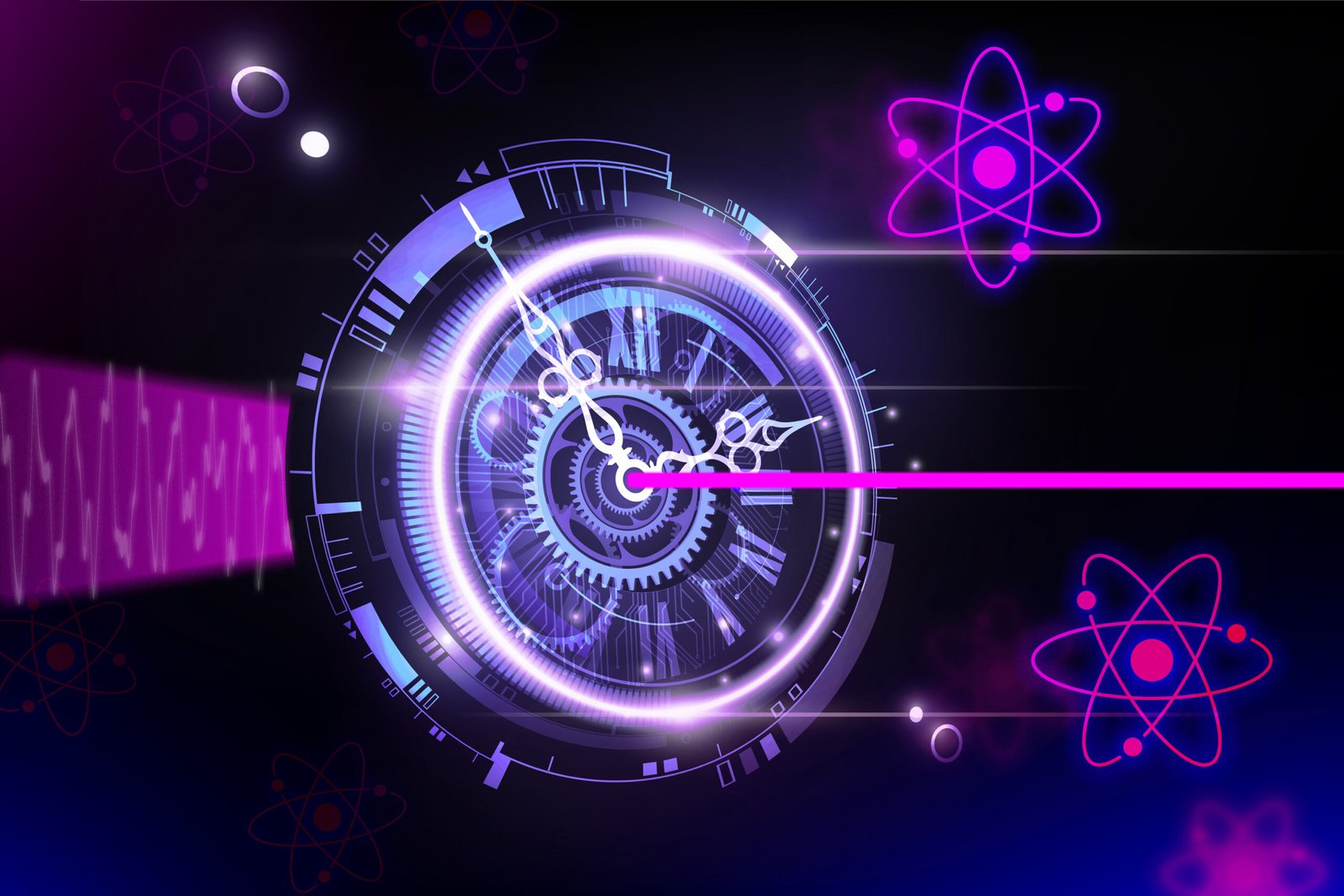
    MIT researchers have proposed a groundbreaking way to improve the precision of timekeeping devices, such as atomic clocks and lasers. Traditionally, the stability of these oscillators is limited by environmental noise and fundamental quantum effects. Even if outside noise is eliminated, a clock’s accuracy hits a fundamental barrier imposed by quantum noise—the tiny, unavoidable fluctuations caused by quantum mechanics. The new study suggests that by manipulating these quantum effects through a process called “squeezing,” scientists could push past this limit. Squeezing reduces quantum fluctuations in one part of the system at the expense of increasing them in another, allowing for more stable oscillations. This innovation could lead to clocks capable of measuring even infinitesimal differences in time, with potential applications in quantum computing, dark matter detection, and other advanced technologies.

    How Quantum Squeezing Could Transform Timekeeping

    The team focused on simplifying the physics behind laser oscillators—a type of highly precise light source—by creating an abstract model. This model includes an amplifier, a delay line, and a coupler, representing the key components of a laser. By analyzing these, they identified where quantum noise enters the system. Their calculations show that reducing quantum fluctuations in the coupler, where the laser’s signal exits, can improve the timing stability. This approach is different from just isolating the device from external factors; it targets the quantum states directly. The researchers plan to test their theories through experiments, aiming to demonstrate laser systems with enhanced quantum stability. Success could revolutionize timekeeping, enabling more accurate navigation, communication, and scientific measurement far beyond current limits.

    Discover More Technology Insights

    Learn how the Internet of Things (IoT) is transforming everyday life.

    Discover archived knowledge and digital history on the Internet Archive.

    QuantumV1

    clock precision feedback oscillator HPC Hudson Loughlin laser precision MIT MechE precision measurements Quantum quantum limit Quantum mechanics Vivishek Sudhir VT1
    Share. Facebook Twitter Pinterest LinkedIn Tumblr Email
    Previous ArticleMarkem-Imaje Unveils CoLOS v7 for Secure Coding
    Next Article Samsung’s Flex Titanium: Reducing Foldable Creases for a Flawless Experience
    Avatar photo
    Staff Reporter
    • Website

    John Marcelli is a staff writer for IO Tribune, with a passion for exploring and writing about the ever-evolving world of technology. From emerging trends to in-depth reviews of the latest gadgets, John stays at the forefront of innovation, delivering engaging content that informs and inspires readers. When he's not writing, he enjoys experimenting with new tech tools and diving into the digital landscape.

    Related Posts

    Science

    BioNTech Stops Mid-Stage Colorectal Cancer Personalized mRNA Vaccine Trial

    August 29, 2026
    AI

    Choosing Between Claude Code and Codex

    August 29, 2026
    Space

    Unlocking the Cosmos: Episode 225 – Get a Grip!

    August 29, 2026
    Add A Comment

    Comments are closed.

    Must Read

    BioNTech Stops Mid-Stage Colorectal Cancer Personalized mRNA Vaccine Trial

    August 29, 2026

    Choosing Between Claude Code and Codex

    August 29, 2026

    Unlocking the Cosmos: Episode 225 – Get a Grip!

    August 29, 2026

    Quick Guide: Reset Your Roku TV Easily

    August 29, 2026

    4 Essential Claude Skills for Data Scientists 2026

    August 29, 2026
    Categories
    • AI
    • Crypto
    • Fashion Tech
    • Gadgets
    • IOT
    • OPED
    • Quantum
    • Science
    • Smart Cities
    • Space
    • Tech
    Most Popular

    NASA’s 737 Unveils Stunning New Look!

    August 14, 2026

    XRP Leverage Drops as Speculators Fade, Open Interest Hits 2024 Lows

    December 25, 2025

    Martian Chronicles: A Cosmic Cabaret!

    September 20, 2025
    Our Picks

    One-Press Obliteration: Your Data’s Final Goodbye

    November 21, 2025

    Ethereum (ETH) Charts Ignite Déjà Vu as Bulls Target $10K

    January 30, 2026

    Tensor’s Robocar: Factory-Fresh and Lyft-Ready!

    October 10, 2025
    Categories
    • AI
    • Crypto
    • Fashion Tech
    • Gadgets
    • IOT
    • OPED
    • Quantum
    • Science
    • Smart Cities
    • Space
    • Tech
    • Privacy Policy
    • Disclaimer
    • Terms and Conditions
    • About Us
    • Contact us
    Copyright © 2025 Iotribune.comAll Rights Reserved.

    Type above and press Enter to search. Press Esc to cancel.