

Top Highlights
-
Enhanced Radiation Modeling: Recent NASA flights over Greenland are improving the Nowcast of Aerospace Ionizing Radiation System (NAIRAS), providing real-time data on cosmic radiation exposure for air travelers and enabling better flight path planning.
-
Polar Radiation Danger: The study highlights that radiation exposure is highest at the poles due to direct magnetic field lines, posing increased health risks for air travelers on polar routes.
-
Interplanetary Applications: The model developed through these flights not only serves Earth aviation but also aids in planning for future lunar and Martian missions, ensuring astronaut safety during space travel.
-
Data Validation and Comparison: Continuous efforts will focus on validating new dosimetry measurements against existing NAIRAS data, aiming to eliminate uncertainties around cosmic radiation impacts on both Earth and interplanetary missions.
NASA Flights Study Cosmic Ray Effects for Air, Future Space Travelers
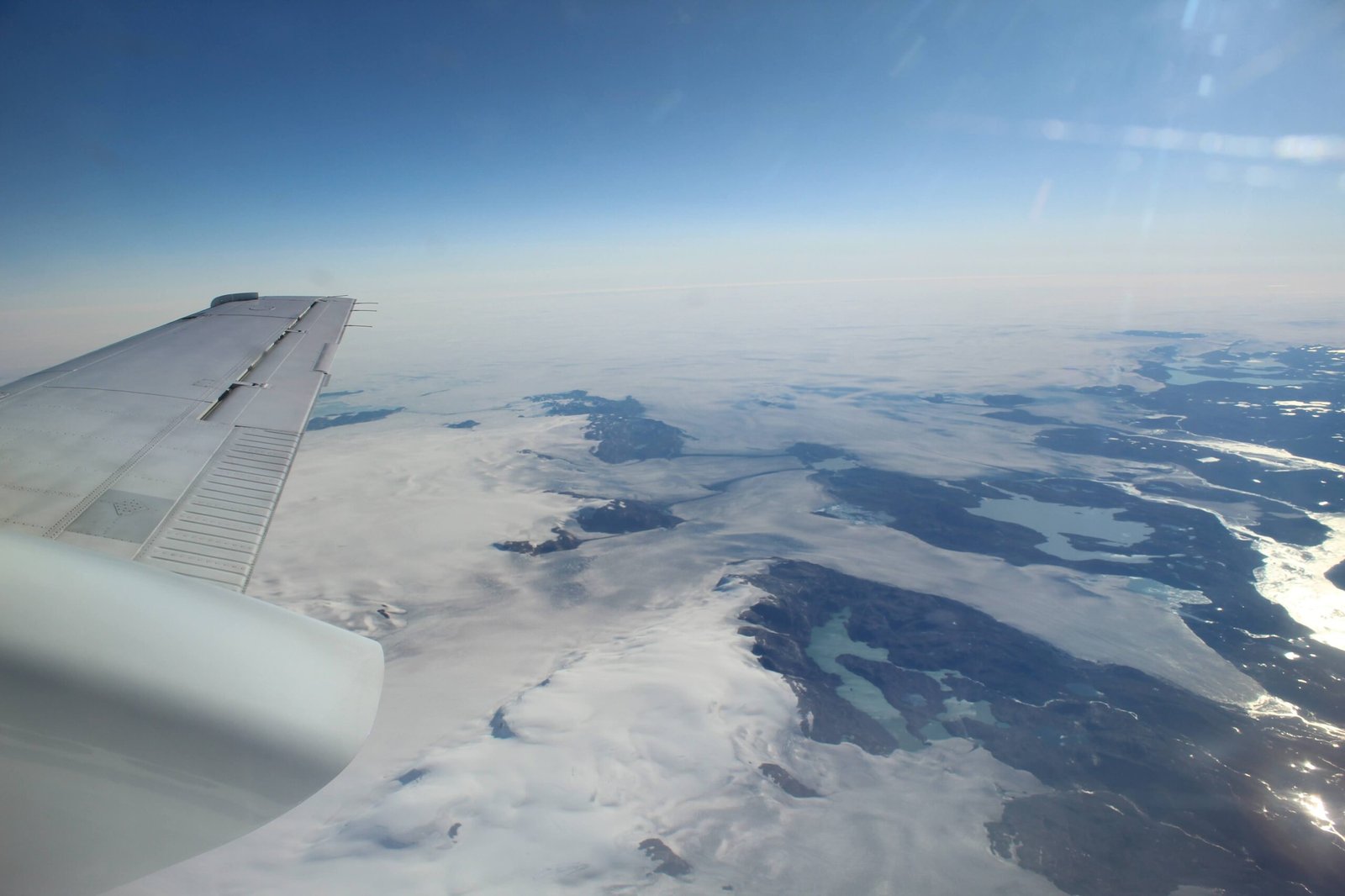
NASA recently conducted a series of flights over Greenland to investigate the effects of cosmic radiation on air travelers. These flights, part of the Space Weather Aviation Radiation (SWXRAD) campaign, took place from August 25-28. Researchers aimed to gather valuable data to enhance understanding of space weather and improve safety for both air and space travel.
Cosmic radiation consists of high-energy particles that originate from events such as solar flares and distant supernovae. This radiation poses health risks to pilots and passengers, especially during flights over polar regions. Interestingly, the Earth’s magnetic field offers protection at the equator, but not near the poles, where radiation exposure increases dramatically.
The SWXRAD mission involved two five-hour flights and utilized a NASA B200 King Air aircraft. Scientists collected dosimetry measurements to evaluate radiation dose levels experienced by air travelers. These measurements play a crucial role in validating global radiation maps, which airlines use for flight planning.
“This research supports critical efforts to predict space weather impacts across the solar system,” a NASA official stated. While the immediate focus is on aviation, the insights gained could benefit future lunar and Mars missions.
The mission builds on the Nowcast of Aerospace Ionizing Radiation System (NAIRAS), which provides real-time global maps of hazardous radiation. By comparing new data with NAIRAS predictions, researchers can refine their models. If discrepancies arise, the team will investigate possible causes, emphasizing how the magnetic field interacts with cosmic particles.
Moreover, this research aims to inform future missions to Mars. As astronauts prepare for prolonged exposure to space conditions, understanding radiation is essential. The data collected in Greenland will enhance safety measures for both current air travel and future space expeditions.
In addition, the SWXRAD campaign serves a broader purpose. It helps ensure that advancements in technology effectively minimize health risks associated with radiation exposure. By leveraging current scientific tools and research, NASA strives to create a safer environment for both air travelers on Earth and astronauts venturing beyond.
Through this initiative, NASA aims to foster innovations that contribute to improved quality of life while paving the way for humanity’s exploration of the Moon and Mars. The ongoing research not only benefits those flying today but also lays the groundwork for future interplanetary travelers.
For more information on NASA’s ongoing efforts, visit the official NASA Space Weather website and explore the developments with the NAIRAS modeling system.
Stay Ahead with the Latest Tech Trends
Learn how the Internet of Things (IoT) is transforming everyday life.
Explore past and present digital transformations on the Internet Archive.
SciV1
