

Fast Facts
-
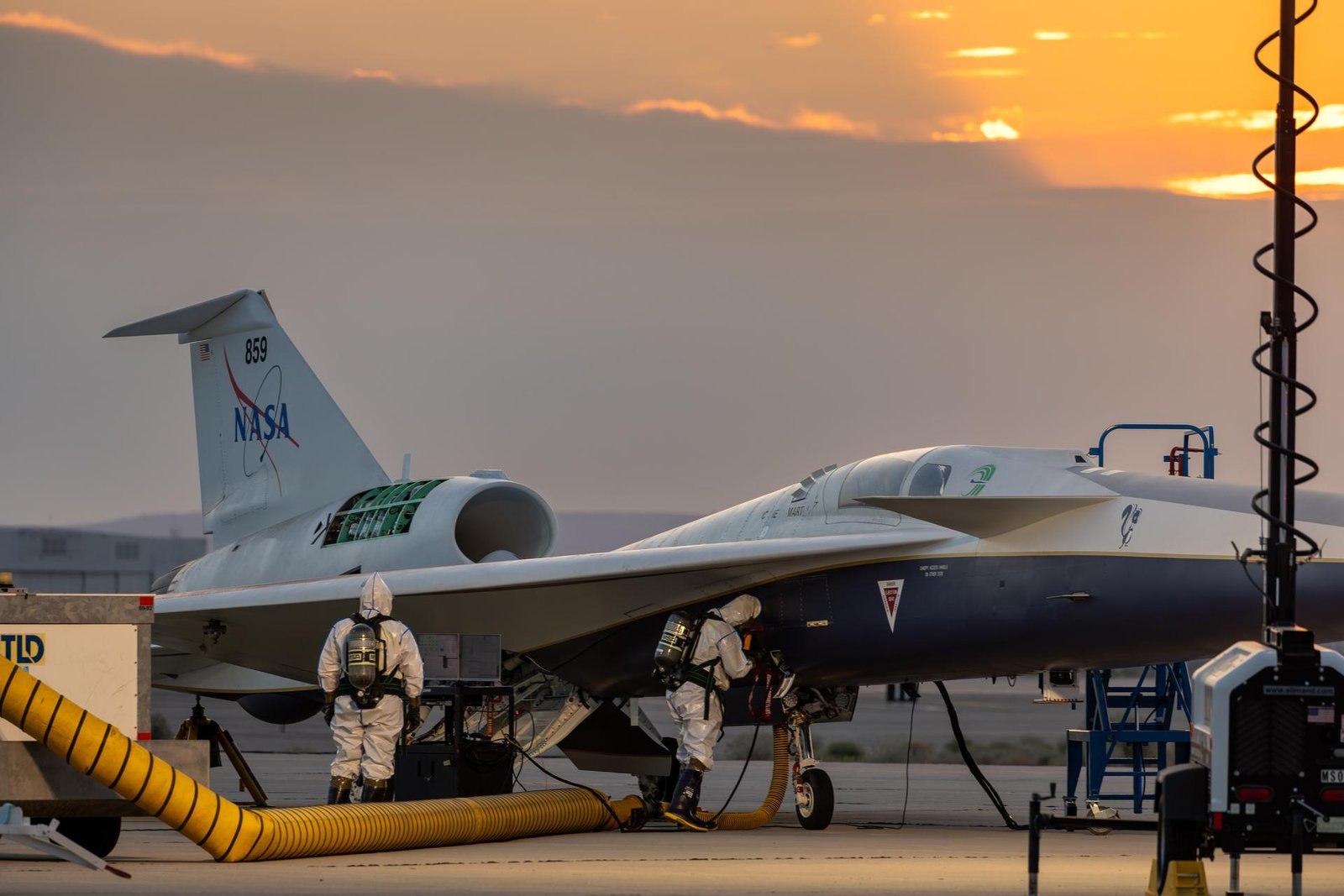
First Flight Preparations: NASA’s X-59 supersonic aircraft is set for its first flight—a low-altitude test focused on safety and system integration—before advancing to higher speeds and altitudes.
-
Data Collection and Monitoring: The aircraft’s Flight Test Instrumentation System (FTIS) captures over 20,000 parameters across 60 data streams, bolstering confidence in its readiness through extensive pre-flight evaluations.
-
Safety Systems in Place: The X-59 features advanced digital fly-by-wire technology, redundant computer systems, and multiple safety backups—including an emergency engine restart system—ensuring operational reliability and pilot security.
-
Collaboration and Trust: A dedicated team of engineers and maintainers underpins the mission’s success, with a strong emphasis on trust between pilots and the ground crew, underscoring the collaborative spirit in advancing aviation technology.
NASA’s X-59 Moves Toward First Flight at Speed of Safety
NASA’s X-59 quiet supersonic aircraft is gearing up for its first flight, a pivotal moment in aviation history. As the team prepares, they prioritize safety every step of the way. The inaugural flight will involve a low-altitude loop, flying at about 240 mph. This allows engineers to check system integration before moving on to subsequent tests that will push the aircraft higher and faster.
Transitioning from traditional flight technology, the X-59 employs a digital fly-by-wire system. This system translates pilot commands into electronic signals, improving stability and safety. If one computer fails, another automatically takes over. Backup systems for hydraulics and electrical operations further enhance reliability.
The aircraft’s Flight Test Instrumentation System collects extensive data during tests, mapping various parameters. This thorough monitoring offers reassurance as it previously logged over 200 days of successful ground tests. Engineers depend on this information to confirm that the aircraft is ready for flight, reducing uncertainty throughout the process.
A crew of dedicated engineers and technicians oversees the X-59’s maintenance and operations. Each member plays a crucial role, boosting safety and efficiency. The pilot will navigate this advanced aircraft with the support of various life-saving technologies, including an oxygen delivery system for high altitudes.
Moreover, the X-59’s design minimizes sonic boom effects. Instead of a loud bang, the aircraft produces a quiet thump, making it suitable for flights over populated areas. This innovation aims to transform commercial aviation, potentially opening new routes and improving travel convenience without disturbing communities.
As the X-59 approaches its first flight, the commitment to safety and technological advancement stands out. Trust within the team fuels confidence as they embark on this groundbreaking journey. The X-59 promises not just a leap in speed but a significant step forward in the future of air travel.
Stay Ahead with the Latest Tech Trends
Explore the future of technology with our detailed insights on Artificial Intelligence.
Explore past and present digital transformations on the Internet Archive.
SciV1
