

Summary Points
- Solar eclipse occurs Wednesday across Europe and the U.S., with total and partial views.
- Total eclipse visible in Iceland, Greenland, northern Russia, Spain, Portugal; partial in the U.S.
- Special eclipse glasses necessary for safe viewing; regular sunglasses inadequate.
- Scientists will study the sun’s corona and Earth’s atmosphere during the eclipse.
Solar Eclipse to Occur Next Week: Here’s What to Know
A rare celestial event is approaching next week — the solar eclipse. This event will be visible across parts of Europe, North America, and some regions in Russia and Portugal. People in these areas will have a chance to witness the moon crossing in front of the sun. The extent of the eclipse will vary based on location, with some experiencing a total blackout of the sun and others seeing only a partial cover.
What to Expect During the Eclipse
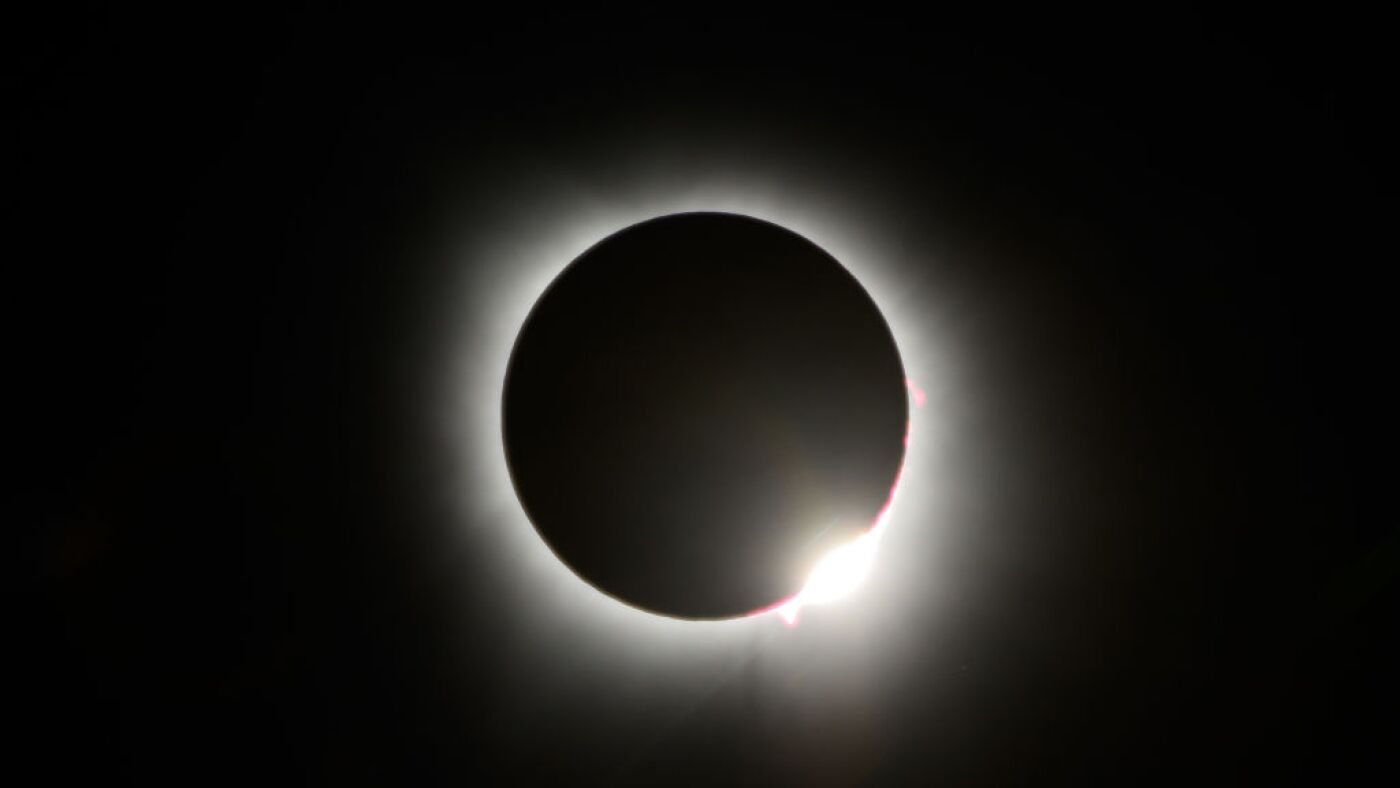
The upcoming eclipse offers a fascinating opportunity to observe one of nature’s most impressive sights. In a total eclipse, the moon completely blocks the sun. This creates a dramatic darkening of the sky and reveals the sun’s outer atmosphere, known as the corona. Such total eclipses are rare, with this one being especially significant for regions like Iceland, Greenland, northern Russia, Spain, and Portugal, which will witness the full event.
In contrast, most of the United States will see only a partial eclipse. From Alaska to North Carolina, the moon will pass in front of part of the sun, obscuring only segments of it. For example, in Washington D.C., the partial eclipse will start around 1:17 p.m. ET, covering about 4% of the sun at its peak. In Reykjavík, Iceland, the total eclipse will begin at 5:48 p.m., while in León, Spain, it will start at 8:28 p.m. and last for approximately two minutes. Notably, this is the first solar eclipse visible from mainland Spain since 1905.
Spectators need special equipment to view the eclipse safely. Standard sunglasses will not work. Instead, use eclipse glasses or handheld viewers with special filters. Looking at the sun directly, even briefly, can damage your eyes. The American Academy of Ophthalmology warns that exposure can cause burns, pain, and permanent vision loss.
Scientific Opportunities and Future Eclipses
While many people will enjoy the spectacle, scientists also see the eclipse as a useful tool. NASA plans to deploy scientific balloons and high-altitude jets to study how the eclipse affects Earth’s atmosphere. The event provides a unique chance to observe the sun’s corona, which is typically hidden by the bright surface of the sun. Kelly Korreck, NASA’s eclipse program manager, notes that the eclipse allows scientists to study the corona from Earth in ways not possible elsewhere in the solar system.
Looking ahead, the next partial eclipse will occur on August 2, 2027. This event will be visible from parts of the U.S. and will provide another chance to observe the sky’s wonders. A future total eclipse will be visible across parts of Spain and North Africa on August 23, 2044. These celestial events continue to remind us of the dynamic and awe-inspiring nature of our solar system.
Discover More Technology Insights
Explore the future of technology with our detailed insights on Artificial Intelligence.
Discover archived knowledge and digital history on the Internet Archive.
Space
