

Fast Facts
-
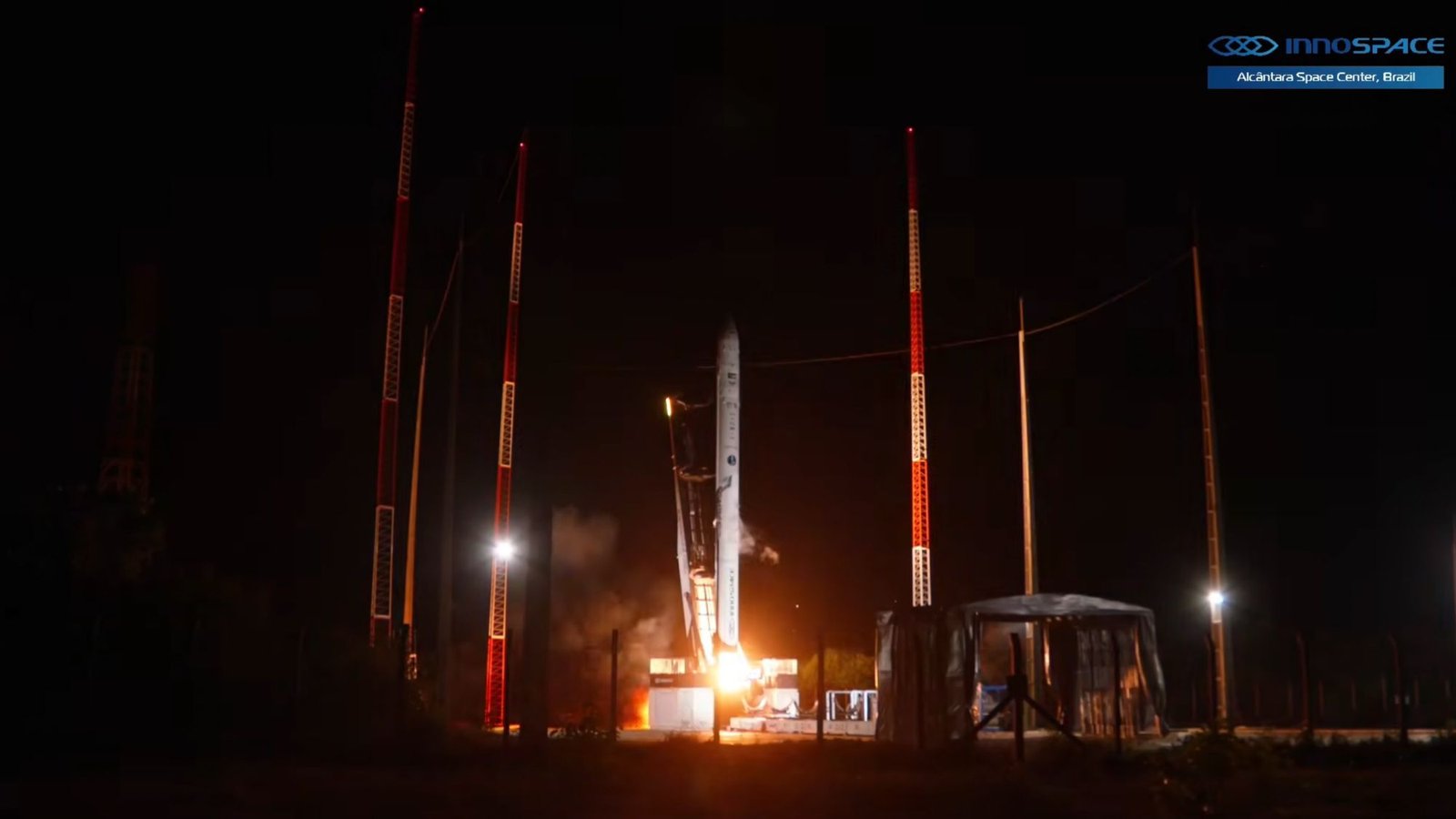
Launch Failure: South Korean startup Innospace’s Hanbit-Nano rocket failed during its inaugural launch on December 22, crashing back to Earth roughly one minute after liftoff from Brazil’s Alcantara Space Center.
-
Anomaly Detected: The rocket experienced an anomaly 50 seconds into flight, leading to its explosion; the cause of the failure is currently unknown as Innospace has not provided an update.
-
Payload & Purpose: The Hanbit-Nano was designed to carry five small satellites and technology-demonstrating payloads, targeting a capacity of up to 198 pounds (90 kg) into a sun-synchronous orbit.
-
Future Aspirations: Founded in 2017, Innospace aims to further develop its rocket technology with larger models, despite setbacks in its initial launch attempt.
Innospace’s First Orbital Launch Attempt Falls Short
South Korean startup Innospace faced disappointment on its inaugural orbital launch attempt on Dec. 22. The company launched its Hanbit-Nano rocket from the Alcantara Space Center in Brazil at 8:13 p.m. EST. Unfortunately, the 57-foot rocket encountered a significant anomaly about a minute into its flight. Reports indicate that the rocket crashed back to Earth shortly thereafter.
The exact cause of the failure remains uncertain. Innospace did not release immediate updates and suspended its live webcast after announcing the anomaly. The Hanbit-Nano, designed to carry up to 198 pounds of payload, aimed to deliver five small satellites for clients from Brazil and India. It uses a two-stage design, incorporating liquid oxygen and paraffin fuel.
Innospace, founded in 2017, currently employs around 260 people. The company prides itself on developing all of its technology in-house. Despite this setback, officials remain optimistic about the future. The launch faced delays prior to the scheduled date due to technical issues and unfavorable weather conditions.
Moreover, Innospace’s vision extends beyond the Hanbit-Nano. The company is actively working on larger rockets, including the Hanbit-Micro and Hanbit-Mini models. The ambition of Innospace reflects a growing commitment to advancing space technology, offering promising possibilities for further research and development in the sector.
While this first attempt did not succeed, many startups often learn crucial lessons from such experiences. The journey of technological innovation comes with challenges, yet it continually drives improvements that can enhance our quality of life in the long run.
Stay Ahead with the Latest Tech Trends
Explore the future of technology with our detailed insights on Artificial Intelligence.
Explore past and present digital transformations on the Internet Archive.
SciV1
