

Quick Takeaways
- Researchers at KAIST developed a spray-on powder to stop severe bleeding.
- The AGCL powder forms a hydrogel barrier rapidly, enhancing emergency care.
- Designed for complex wounds, it outperforms traditional hemostatic agents significantly.
- Its durability and safety make it suitable for battlefield and civilian use.
Transforming Trauma Care on the Battlefield
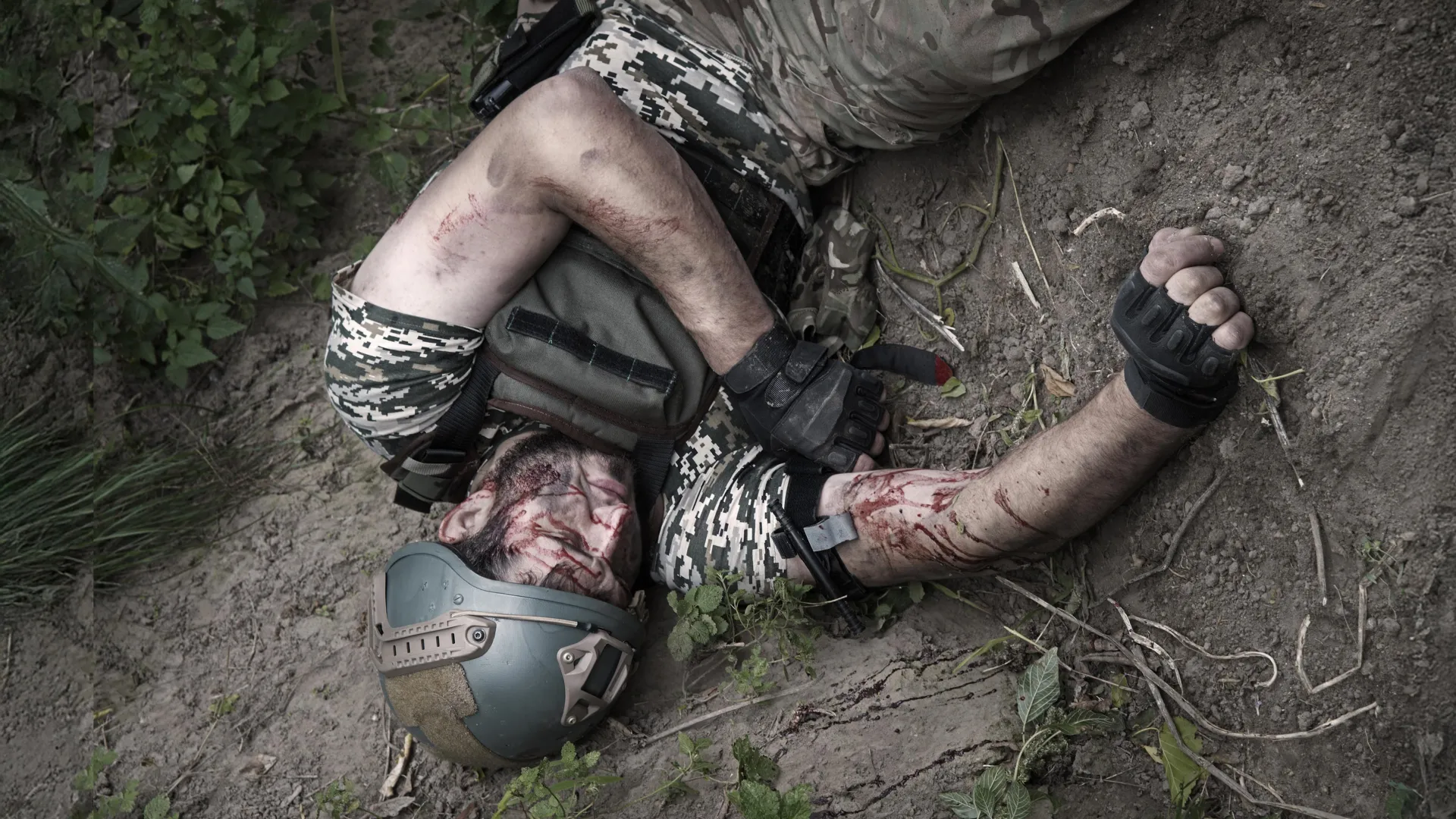
Excessive blood loss remains the leading cause of death from combat injuries. Rapid bleeding control is a paramount challenge in battlefield medicine. Researchers at KAIST have made a groundbreaking advancement: a spray-on powder that stops severe bleeding in just one second. This innovation could not only enhance survival rates for wounded soldiers but also broaden its application to civilian emergency care.
The AGCL powder combines several biocompatible ingredients, such as alginate and gellan gum, to create a hemostatic agent that forms a gel upon contact with blood. This gel seals wounds and works differently than traditional patch-type products, which often fall short on deep or complex injuries. Conventional methods can prove ineffective in high-pressure bleeding scenarios. AGCL powder overcomes these challenges, molding to irregular wounds and significantly improving treatment efficacy. Its ability to absorb more than seven times its weight in blood sets it apart from existing hemostatic agents.
Potential for Broader Applications
Though initially designed for military use, the implications for civilian medicine are vast. The durability and stability of AGCL powder allow for deployment in disaster response scenarios and healthcare settings in underserved regions. This technology represents a successful spin-off of defense research into public sector applications, similar to past innovations like GPS and microwave ovens.
Research indicates that the AGCL powder is both safe and effective. It maintains a hemolysis rate below 3% and boasts a cell viability of over 99%. Animal studies reveal rapid wound healing and minimal systemic toxicity. Such results build a strong case for integrating this technology into various emergency medical settings, including surgeries and trauma care.
As this technology gains recognition—earning both academic and defense awards—it opens avenues for saving lives beyond the battlefield. The mission to minimize loss, whether in military or civilian contexts, resonates strongly with the researchers. The potential to save even one more life speaks to the heart of this transformative development.
Discover More Technology Insights
Stay informed on the revolutionary breakthroughs in Quantum Computing research.
Explore past and present digital transformations on the Internet Archive.
TechV1
