

Fast Facts
-
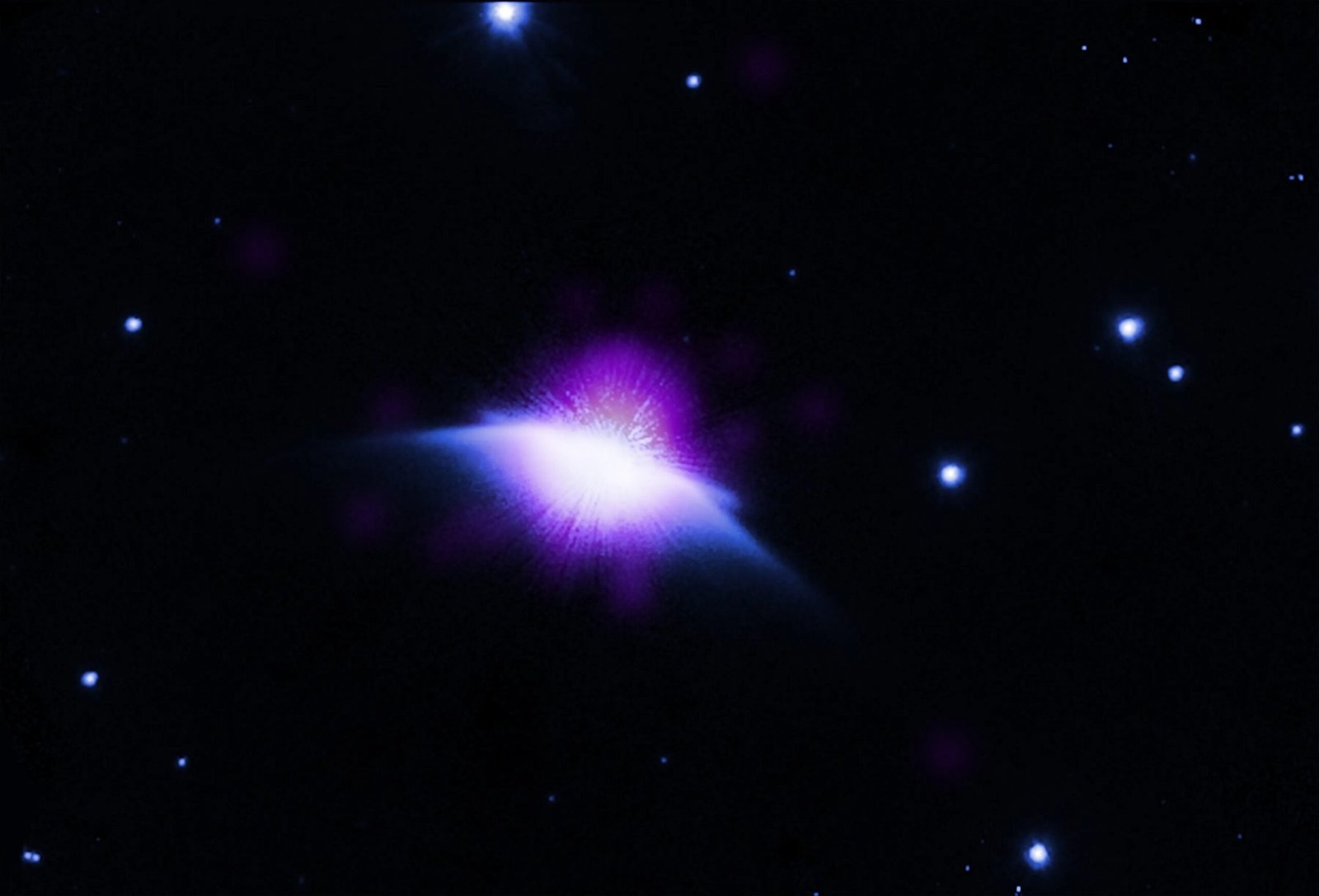
Discovery of Astrophere: Astronomers have captured the first image of an “astrosphere,” a bubble of hot gas surrounding the young star HD 61005, using NASA’s Chandra X-ray Observatory.
-
Comparison to the Sun: The findings enhance understanding of the Sun’s own astrosphere, with HD 61005 exhibiting stronger winds three times faster and 25 times denser than the Sun’s wind.
-
Implications for Solar Evolution: The study suggests that the Sun likely experienced a similar phase of development in a denser galactic environment, impacting its heliosphere’s size and shape through billions of years.
-
Significance of the Moth System: Nicknamed the “Moth,” the HD 61005 system features a dust pattern reminiscent of moth wings, and its astrosphere could reach ten times larger than that of the Sun if it were in our solar system.
NASA’s Chandra X-ray Observatory Captures Young Star Blowing Bubbles
For the first time, astronomers have spotted a younger version of the Sun blowing bubbles in space. This exciting discovery comes from NASA’s Chandra X-ray Observatory. These bubbles, known as astrospheres, encase a star called HD 61005, located 120 light-years away from Earth.
The winds from HD 61005 push hot gas into the surrounding cooler interstellar material. This process creates a bubble similar to the heliosphere that surrounds our Sun. This heliosphere protects Earth from cosmic radiation, extending far beyond the planets in our solar system.
Astronomers have studied our Sun for decades, yet they have never seen its astrosphere from an outside perspective. Learning from HD 61005 helps scientists understand the changing shape of our Sun’s protective bubble over billions of years.
Unlike our Sun, HD 61005 is much younger, at about 100 million years old. It also has a stronger stellar wind. This wind is three times faster and 25 times denser than that from our Sun. This strength enhances the astrosphere bubble formation, showcasing how our Sun behaved billions of years ago.
This research has practical implications. The Sun’s solar winds affect technology on Earth, disrupting satellites and impacting astronauts traveling in space. Understanding the early-stage dynamics of stars like HD 61005 allows scientists to predict how our Sun’s behavior might have impacted early life on Earth.
The HD 61005 star system has earned the nickname “Moth” because of its dusty structure that resembles moth wings. These are remnants from the star’s birth, much like the Kuiper Belt in our own solar system. Observations show that the dust around HD 61005 is a thousand times denser than that surrounding the Sun.
Chandra’s high-resolution X-ray imaging allowed researchers to capture this astrosphere, as it emitted X-rays when the stellar wind met local interstellar gas and dust. This spectacular sight has a diameter about 200 times the distance from Earth to the Sun.
For astronomers, this breakthrough marks a significant achievement. They have long sought to capture the astrosphere surrounding a star like our Sun. Recent efforts, including a substantial observation of nearly 19 hours in 2021, provided the necessary data to visualize this stellar phenomenon.
The findings not only enhance our understanding of stellar evolution but also emphasize the complex interactions between stars and their surroundings. These insights could shape future space exploration and satellite technology. The knowledge gained here impacts our understanding of conditions in space, which directly correlates with the safety of space travel.
This discovery also prompts reflection on how our Sun and its heliosphere have evolved over time. The implications resonate with the ongoing exploration of our cosmic neighborhood. This newfound understanding of HD 61005 will undoubtedly enrich the narrative of our solar system’s past and future.
Expand Your Tech Knowledge
Learn how the Internet of Things (IoT) is transforming everyday life.
Discover archived knowledge and digital history on the Internet Archive.
SciV1
