

Fast Facts
-
NASA’s X-59 aircraft successfully completed its second flight, initiating a series of test flights planned for 2026 despite a brief early landing due to a technical issue.
-
Project manager Cathy Bahm highlighted that valuable data was collected during the flight, reinforcing safety and readiness for future tests.
-
Pilot Jim “Clue” Less confirmed the flight’s procedures mirrored those of the simulator, emphasizing the readiness for ongoing flight campaigns.
-
The X-59 aims to achieve quiet supersonic flight, crucial for advancing commercial supersonic travel over land as part of NASA’s Quesst mission.
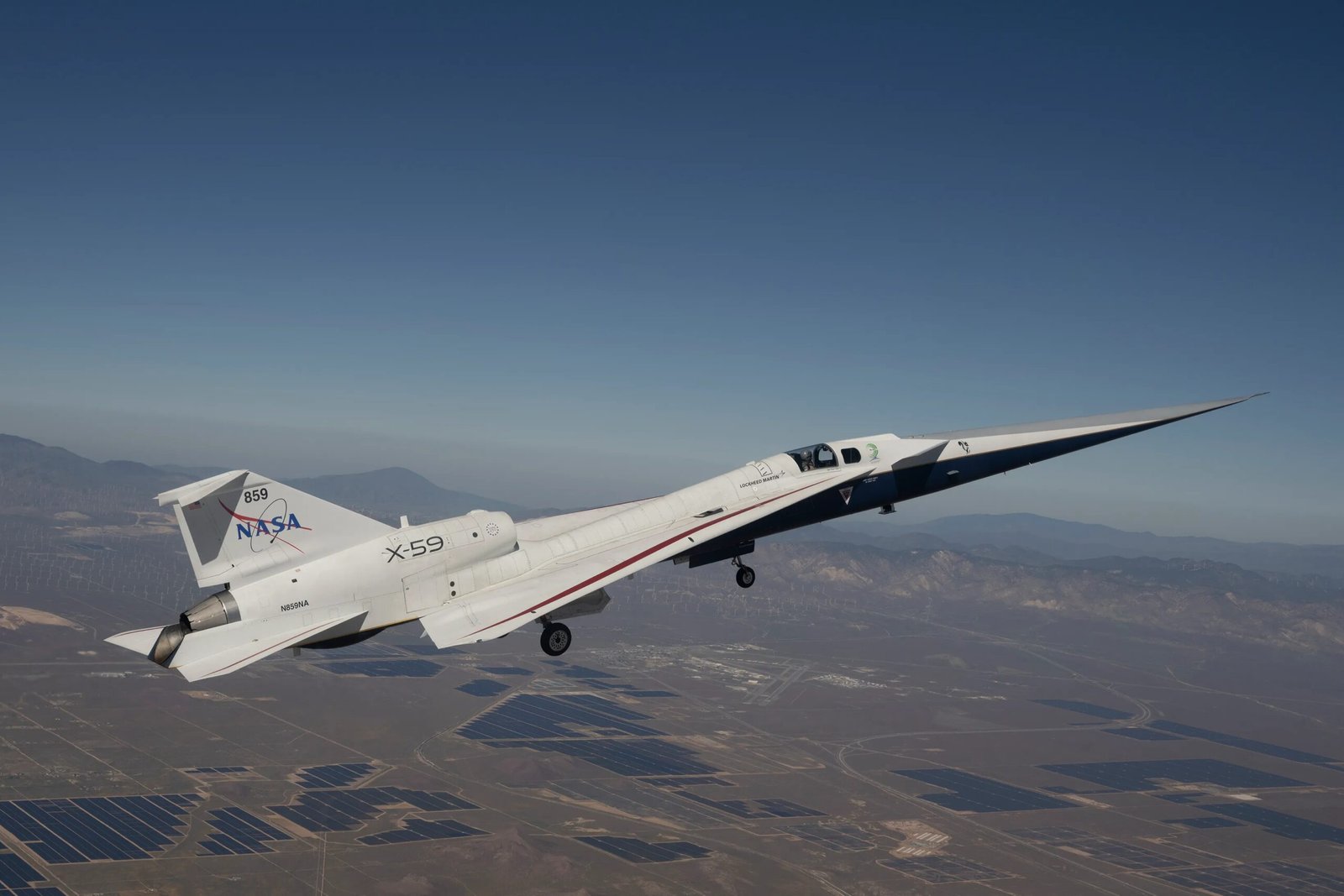
NASA’s quiet supersonic X-59 aircraft made its second flight on Friday, signaling a significant step in aviation technology. Although the flight was shorter than planned due to a technical issue, the team successfully gathered valuable data to guide future tests.
“Despite the early landing, this is a good day for the team,” said the project manager at NASA’s Armstrong Flight Research Center in California. “We collected more data, and the pilot landed safely. We’re looking forward to getting back to flight as soon as possible.”
The X-59 took off at 10:54 a.m. PDT from Edwards Air Force Base. Several minutes into the flight, the pilot noticed a warning message in the cockpit. Following standard procedures, the aircraft landed safely at 11:03 a.m.
The pilot expressed optimism, saying, “As we like to say, it was just like the simulator – and that’s what we like to hear. This is just the beginning of a long flight campaign.”
Designed to fly faster than the speed of sound, the X-59 will produce only a quiet thump rather than a disruptive sonic boom. This innovation represents a breakthrough for NASA’s Quesst mission, which aims to make commercial supersonic flight over land a reality.
Looking ahead, the aircraft will ramp up testing in 2026. It will demonstrate performance and airworthiness through envelope expansion, gradually increasing its speed and altitude on the way to achieving supersonic flight.
The X-59’s advancements promise to reshape air travel, potentially reducing flight times and increasing accessibility. As tests continue, the future of quiet supersonic flight looks bright.
Discover More Technology Insights
Stay informed on the revolutionary breakthroughs in Quantum Computing research.
Explore past and present digital transformations on the Internet Archive.
SciV1
