

Quick Takeaways
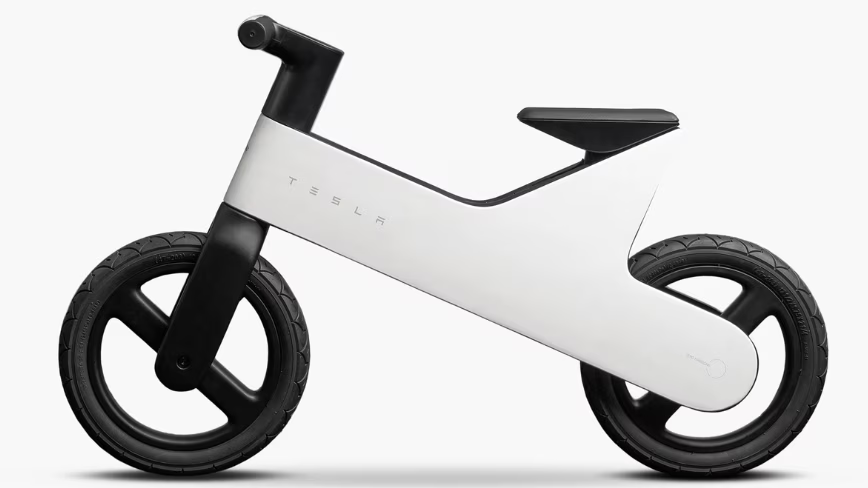
- Tesla launched a $225 balance bike for ages 2 to 5.
- The bike features a lightweight magnesium frame, no motor, or brakes.
- It sold out immediately, with unknown stock quantity disclosed by Tesla.
- Musk rejects making adult e-bikes, citing safety concerns from past accidents.
TL;DR Tesla launched a $225 balance bike for ages 2-5. No motor, no pedals, magnesium frame. Sold out immediately. Musk still refuses to make an adult e-bike.
The Price of Branding
Tesla’s new balance bike for toddlers embodies the company’s knack for capturing attention. At $225, it sits at the upper echelon of the balance bike market. Most competitors offer similar products for under $100, leaving one to wonder about the justification for that premium tag. Parents usually look for affordability and functionality in children’s products. Yet, Tesla’s branding appeals to a niche market willing to pay more for a familiar name.
The bike skips pedals and brakes entirely, relying solely on toddlers’ unsteady legs. Shoppers eager to invest in their children’s experiences overspend on a product that lacks essential features. For the price, a buyer could acquire solid competitors like the Woom 1, which not only offers a higher price point but also includes useful brakes. Tesla’s balance bike pushes the boundary on perceived value through branding rather than technology. This moment exemplifies how companies can leverage fan loyalty to drive sales, even for an unremarkable product.
The Missing Adult Market
While parents clamor for these high-priced toys, Tesla misses a golden opportunity in the adult e-bike market. Consumers clearly want an electric bike. Yet, CEO Elon Musk has consistently dismissed the idea, citing safety concerns. This leaves a gap for competitors eager to capture this burgeoning segment.
The balance bike seems a miscalculation, serving as a compromise for a demographic far removed from Tesla’s core clientele. Selling premium-priced balance bikes to toddlers may enrich Tesla’s brand, but it does little for a generation that can’t even spell “Tesla.” Instead, Musk’s decision to sidestep adult e-bikes could alienate a loyal customer base eager for new offerings. The market demands innovation and practicality, not just branding.
As Tesla hones in on its younger audience, it risks missing the broader trends shaping adult consumer choices. The balance bike sells out, yet a unifying adult e-bike remains a glaring absence. How long can Tesla thrive on brand loyalty alone?
Stay Ahead with the Latest Tech Trends
Stay informed on the revolutionary breakthroughs in Quantum Computing research.
Discover archived knowledge and digital history on the Internet Archive.
TechV1
