

Summary Points
-
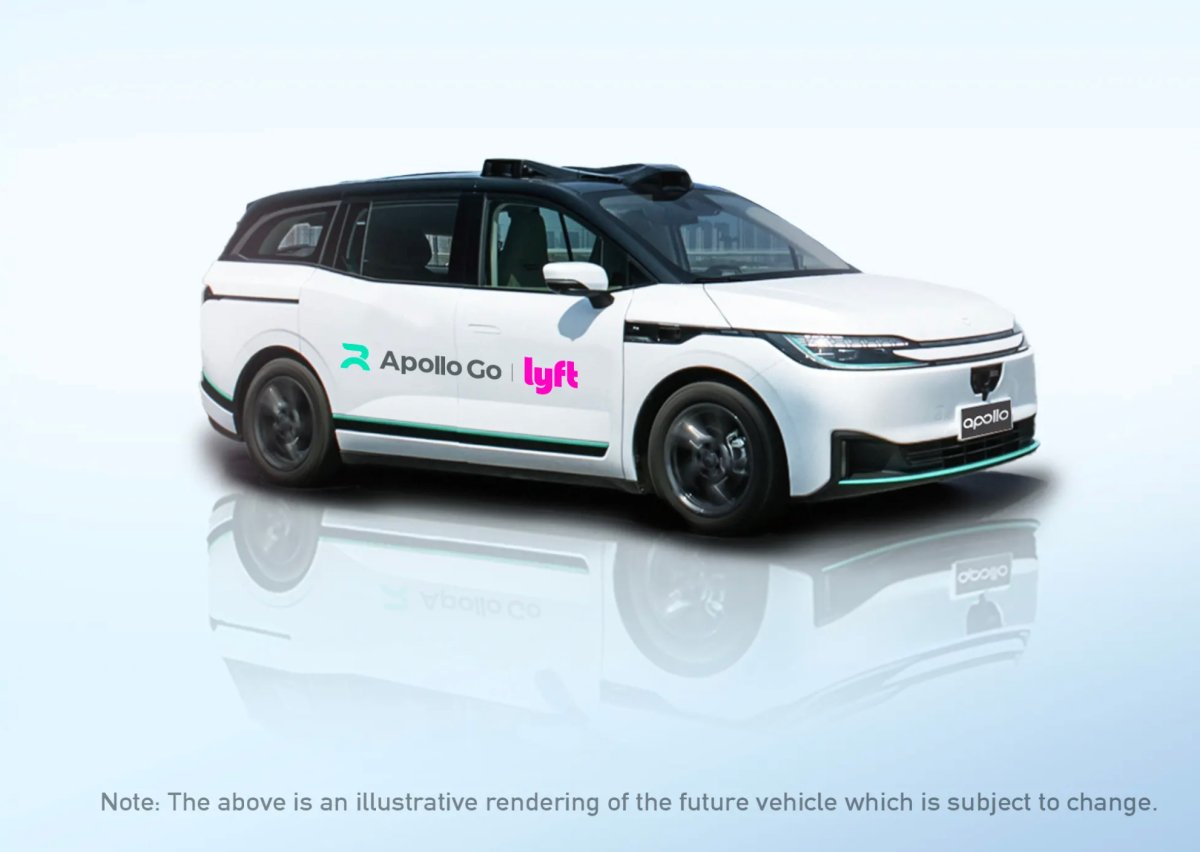
Testing Launch: Uber and Lyft will begin testing Baidu’s Apollo Go robotaxis in London in 2026, joining Waymo and local startup Wayve.
-
Lyft’s Plans: Lyft intends to scale up to hundreds of Baidu’s RT6 SUVs after receiving local regulatory approval, though no timeline for commercial launch is provided.
-
Uber’s Timeline: Uber plans to start testing the robotaxis in London in the first half of 2026 as part of a deal with Baidu announced in July.
-
Global Expansion: These London rollouts are part of a broader initiative, with Uber and Lyft collaborating with Baidu, Waymo, and others to expand autonomous vehicle operations worldwide.
Advancements in Autonomous Technology
Uber and Lyft will introduce Baidu’s Apollo Go robotaxis in London starting in 2026. Both companies join Waymo and local startup Wayve in testing autonomous vehicles in the city. Notably, Lyft’s CEO emphasized plans to scale operations significantly once they receive regulatory approval. He mentioned the goal of deploying hundreds of Baidu’s electric RT6 SUVs. Thus, the rise of driverless technology continues to gain momentum.
Similarly, Uber has also announced plans to test these vehicles in the first half of 2026. This marks an important milestone for the ride-sharing giant as it partners with Baidu—a strategic move that indicates growing confidence in autonomous driving technology. As these companies collaborate, the implications extend beyond mere transportation. They represent a shift in urban mobility, offering solutions to congestion and sustainability concerns while enhancing overall accessibility.
Potential Impact on Urban Mobility
The introduction of robotaxis in London raises questions about their practicality and potential for widespread adoption. On one hand, autonomous vehicles promise to improve efficiency and reduce operational costs. Riders could enjoy quicker, safer trips without the need for a human driver. On the other hand, public perception remains a significant hurdle. People often express skepticism about safety and reliability.
Yet, as cities experiment with autonomous technology, the potential benefits remain substantial. These advancements can contribute significantly to the human journey by reimagining how we navigate urban spaces. They could reduce traffic congestion and lower emissions, aligning with sustainability goals. Moreover, as companies like Uber and Lyft deepen their engagement with robotaxi technology, they pave the way for a future where transportation is more efficient, eco-friendly, and accessible for everyone.
Continue Your Tech Journey
Stay informed on the revolutionary breakthroughs in Quantum Computing research.
Explore past and present digital transformations on the Internet Archive.
TechV1
