

Top Highlights
-
Interoperability Achievement: NASA’s Polylingual Experimental Terminal (PExT) has successfully demonstrated seamless communication between government and commercial satellite networks, similar to how cellphones roam across different networks.
-
Enhanced Communication Reliability: This technology enhances mission reliability by allowing spacecraft to switch effortlessly between networks, mitigating data interruptions critical to navigation and health monitoring.
-
Commercial Partnership Growth: NASA aims to expand this capability for future missions to the Moon and Mars, indicating a strong commitment to integrating commercial technologies to improve space communications.
-
Ongoing Testing and Future Plans: The PExT demonstration will undergo an extended 12-month testing period and is set to pave the way for NASA to procure satellite relay services from U.S. companies by 2031.
NASA’s Wideband Technology Demo Proves Space Missions Are Free to Roam
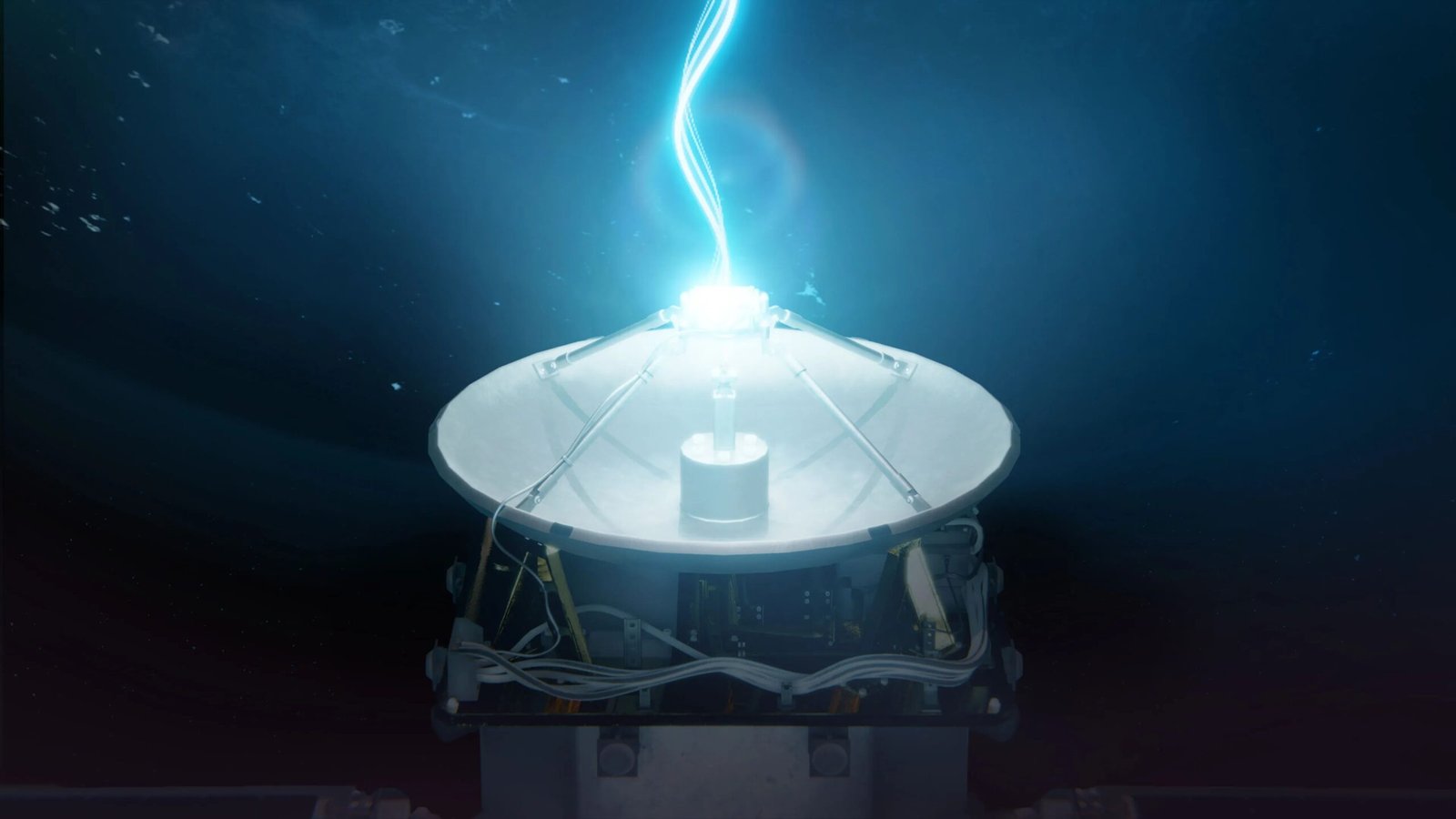
NASA’s latest technology demonstration showcases a significant leap in space communications. The Polylingual Experimental Terminal (PExT) proves that spacecraft can switch between government and commercial networks, just like your cellphone roams between providers. This advancement could redefine how missions operate in space.
Spacecraft depend on reliable data for navigation, monitoring health, and sending scientific findings to Earth. The PExT technology promises to enhance communication, minimizing data interruptions and increasing reliability. Kevin Coggins of NASA expressed enthusiasm about this breakthrough, stating, “This mission has reshaped what’s possible for NASA and the U.S. satellite communications industry.” He noted that they would leverage this success to further enhance capabilities for future lunar and Martian missions.
Wideband technology opens the door for data exchange across various frequencies. By linking government and commercial networks, it provides advantages that previous missions lacked. As commercial providers enhance their services, wideband terminals will allow NASA to integrate new capabilities even after launch. Additionally, the system will enable smooth transitions between different networks, ensuring uninterrupted communications during critical moments.
Greg Heckler from NASA’s SCaN team highlighted an interesting parallel to mobile technology. “Today, we take seamless cellphone roaming for granted, but in the early days of mobile phones, our devices only worked on one network,” he said. The flexibility of wideband terminals represents a turning point for NASA, making space missions more adaptable.
On July 23, the PExT launched into low Earth orbit aboard the York Space Systems’ BARD mission. Built by the Johns Hopkins Applied Physics Laboratory, this compact terminal uses the Ka-band frequency, common among NASA missions. Initial tests confirmed the PExT operated successfully through NASA’s Tracking and Data Relay Satellite fleet and commercial networks managed by SES Space & Defense and Viasat.
The tests demonstrated vital operations like real-time tracking and high-rate data delivery. Results indicated that future NASA missions could more easily collaborate with both government and commercial infrastructure.
Due to the promising results, NASA has extended the PExT demonstration for an additional 12 months, focusing on new tests planned with the Swedish Space Corporation starting in early 2026. The technology will continue to evolve through April 2027, paving the way for satellite relay services in low Earth orbit planned for commercial partnerships by 2031.
This impressive advancement reshapes the landscape of space communication. Organizations and technology developers can look forward to a future where space missions are equipped to adapt swiftly, enhancing both efficiency and scientific exploration. For more information on this ground-breaking technology, visit NASA’s PExT website.
Stay Ahead with the Latest Tech Trends
Explore the future of technology with our detailed insights on Artificial Intelligence.
Stay inspired by the vast knowledge available on Wikipedia.
SciV1
