

Summary Points
-
Snow Drought Declared: The western U.S. is facing a significant snow drought, characterized by low snowpack levels despite average rainfall, primarily due to unusually warm temperatures causing precipitation to fall as rain.
-
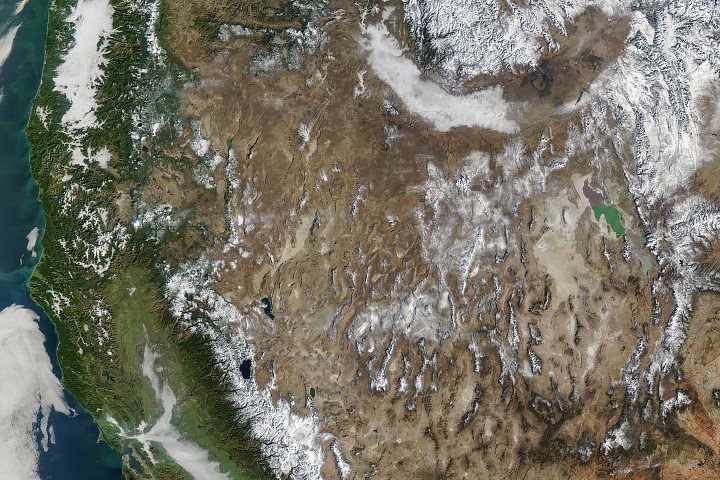
Record Low Snow Coverage: On January 15, 2026, satellite data revealed the lowest snow coverage in the western U.S. for that date since records began in 2001, covering only 142,700 square miles.
-
Critical Water Shortages Loom: Snow water equivalent (SWE) measurements indicate severe snow drought conditions in major states like Washington, Colorado, and New Mexico, with many areas recording their lowest SWE levels in over 20 years.
-
Implications for Water Supply: The lack of snowpack threatens ecosystems, increases wildfire risks, and jeopardizes agricultural and water supply reliability, with concerns that drought conditions may worsen in the coming months.
The West Faces Snow Drought
The western United States encounters a concerning snow drought in early 2026. Despite earlier precipitation, warmer temperatures caused much of it to fall as rain instead of snow. Consequently, the snowpack remains unusually low for this time of year.
NASA’s satellite images reveal stark contrasts. For instance, on January 15, snow covered only 142,700 square miles, marking the lowest recorded amount since 2001. Although coverage improved by January 26, it still fell short of normal ranges.
The snow water equivalent (SWE) is another key indicator to watch. This measure reflects how much water is stored in the snowpack. In early January, significant areas in Washington, Oregon, Colorado, Utah, Arizona, and New Mexico recorded their lowest SWE levels in 20 years. Thus, these regions face severe water concerns.
This past fall and winter, the West experienced wet but warm weather. Many areas received average or even above-average precipitation. Nevertheless, the persistent warmth meant that much of this moisture converted to rain, limiting snow accumulation. A December atmospheric river event in the Pacific Northwest exemplified this trend.
Interestingly, some regions like the Southern Sierra and Northern Rockies fared better. Higher elevations received more snow compared to lower areas, with SWE levels above average in some mountainous spots. Climate scientists suggest this reflects a broader trend driven by climate change, which affects snowpack based on altitude.
Rainfall, unlike snow, tends to run off quickly. Hence, it cannot replenish reservoirs and groundwater effectively. In contrast, a healthy snowpack offers a gradual release of water during spring months, supporting ecosystems, agriculture, and wildfire management.
While winter isn’t over, and February and March could bring snow, it may not fully reverse current deficits. Areas such as the Pacific Northwest and the Colorado River Basin risk transitioning from snow drought to traditional drought.
As researchers and policymakers examine these trends, innovation gains momentum. Advances in water management technology may help mitigate drought risks in the future. Thus, ongoing research can improve the adaptation strategies necessary to tackle these challenges head-on.
Expand Your Tech Knowledge
Learn how the Internet of Things (IoT) is transforming everyday life.
Access comprehensive resources on technology by visiting Wikipedia.
SciV1
