

Top Highlights
- NASA’s X-59 reached Mach 1.4, testing its supersonic capabilities.
- Unlike future passenger jets, it’s a one-seat research aircraft.
- Goal is quieter sonic thumps, convincing regulators to change noise limits.
- Upcoming tests will measure its sound as it flies over communities.
An Historic Leap Toward Supersonic Travel
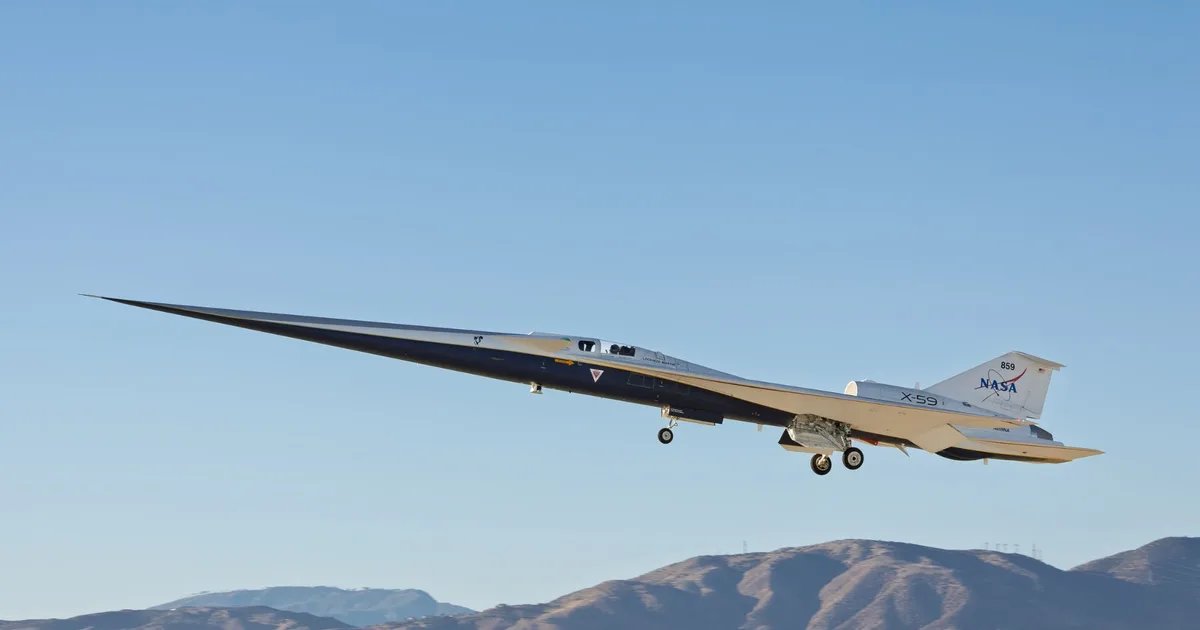
NASA’s recent achievements with the X-59 aircraft mark a significant step in aviation history. From its maiden flight on June 5 to reaching speeds of Mach 1.4 at 55,000 feet, the X-59 has demonstrated potential beyond expectations. Unlike its predecessors, this aircraft aims to silence the explosive sonic booms associated with supersonic travel. Researchers designed its needle-nosed shape and top-mounted engine to disperse shock waves. The goal is a sound that resembles a soft thump rather than the thunderous clap that has held back supersonic flight over land.
If successful, these innovations could reshape air travel, cutting flight times and enhancing global connectivity. A quieter sonic boom might persuade regulators to revisit existing noise restrictions for commercial flights. This could pave the way for airlines to offer faster journeys without disturbing communities below.
The Challenge of Quietness
Despite these successes, the path to quieter supersonic travel remains fraught with challenges. NASA has yet to accurately measure the X-59’s sound profile during flights. Currently, an F-15 jet trails the X-59, creating its own booms that overshadow the experimental aircraft’s noise. Upcoming tests will feature a modified F-15 to gather precise data on the X-59’s sonic signature.
Months of rigorous testing loom ahead before NASA can validate its acoustic findings. The X-59 won’t carry passengers, but the knowledge gained will empower manufacturers to create quieter supersonic airliners. The dream of a Concorde-like experience becomes tangible, offering a glimpse into a future where supersonic travel is not just a relic of the past but a viable option for modern aviation.
Expand Your Tech Knowledge
Stay informed on the revolutionary breakthroughs in Quantum Computing research.
Access comprehensive resources on technology by visiting Wikipedia.
TechV1
