

Summary Points
Discovery launched secret military mission STS-33 at night on November 22, 1989.
It deployed a likely Magnum spy satellite, whose orbital purpose remains classified.
Shuttle missions balanced NASA’s civilian goals with military satellite deployment needs.
After Challenger, military shuttle use was restricted to vital national-security missions.
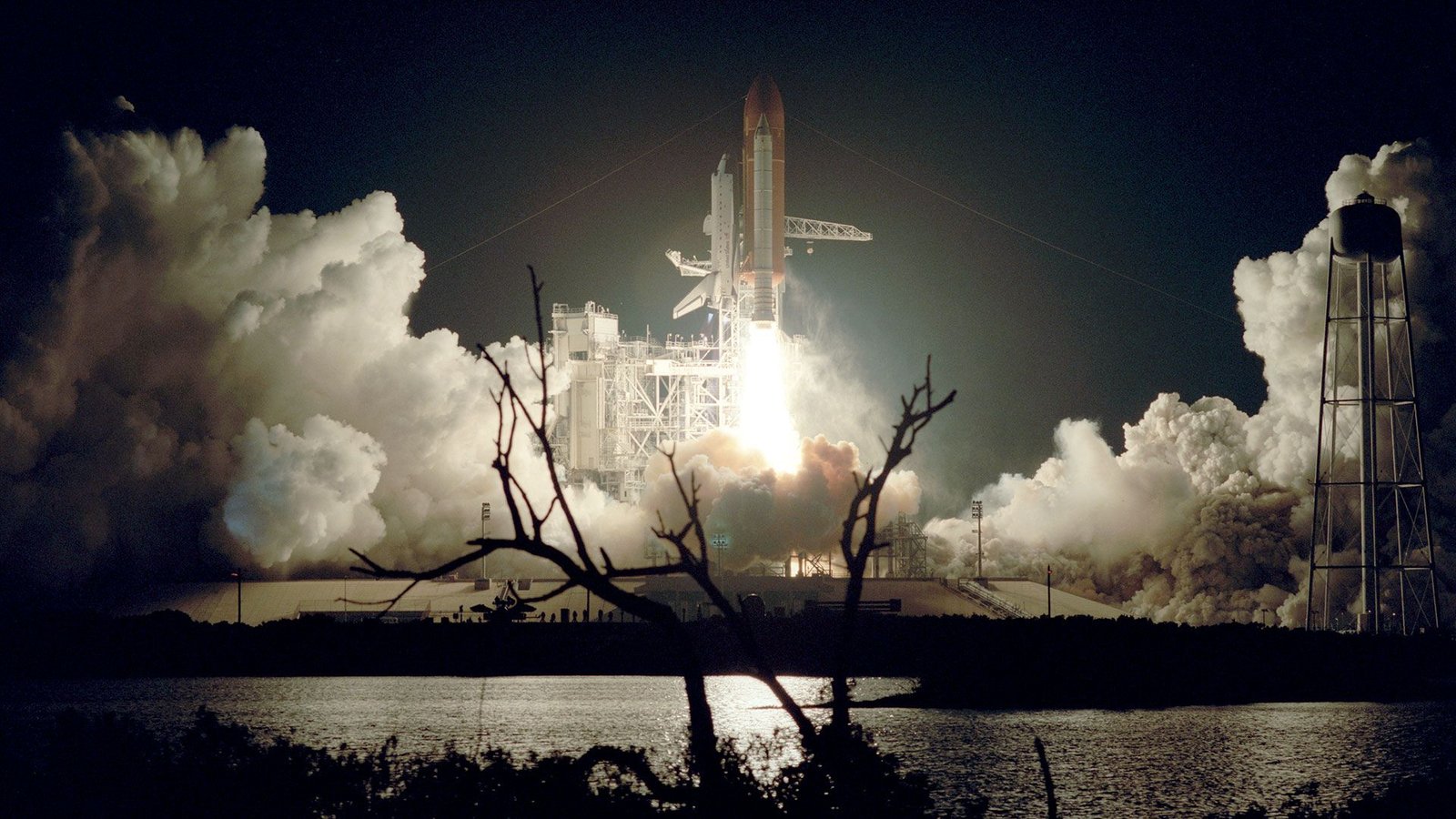
On Nov. 22, 1989, space shuttle Discovery rose into the night sky from Kennedy Space Center in Florida. Its mission, STS-33, carried five astronauts and a classified payload for the U.S. Department of Defense.
The launch marked the shuttle program’s third nighttime liftoff and its 32nd mission overall. NASA disclosed the mission’s broad purpose, but details about the payload and its work in orbit remained secret.
A night launch with a classified objective
STS-33 was one of several shuttle missions that supported U.S. military space operations. The shuttle could carry large payloads into orbit, making it a useful option for deploying military satellites. Its crews also operated under strict secrecy when missions involved classified technology.
The satellite launched on STS-33 is believed to have been part of the Magnum series of spy satellites. The exact nature of the spacecraft’s mission, however, remains classified. Public accounts can describe the launch and the shuttle’s role, but they cannot confirm what the satellite observed or how it operated.
The crew faced a less secret challenge during the flight. Thanksgiving fell while Discovery was in orbit, but the holiday began with a malfunction in the shuttle’s toilet. The astronauts spent much of the day working to fix it before they could enjoy their turkey dinner.
Why STS-33 mattered
The space shuttle was designed to serve both civilian and military goals. NASA viewed it as a way to conduct research, carry commercial payloads and support the eventual construction of a space station. The Department of Defense saw potential in its ability to deploy and retrieve reconnaissance satellites and other equipment.
That shared purpose made the shuttle a flexible but complicated tool. Its reusable design could support varied missions, yet military use raised questions about when a crewed vehicle was practical for national security work. After the loss of space shuttle Challenger, the government decided that the shuttle would fly military missions only when they were essential to national security. Other military launches would use expendable launch vehicles.
STS-33 shows how the shuttle program balanced those competing demands. Discovery carried out a mission whose central payload remains out of public view, while the vehicle itself demonstrated both the reach and the limits of a reusable spacecraft.
Stay Ahead with the Latest Tech Trends
Stay informed on the revolutionary breakthroughs in Quantum Computing research.
Explore past and present digital transformations on the Internet Archive.
Space
