
Close Menu
    Facebook X (Twitter) Instagram
    Monday, July 20
    Top Stories:
    • Mac Pro: Almost Equipped with a Game-Changing M3 Extreme Chip!
    • China’s AI Race: Huawei, Humanoids, and Xi’s WAIC Spotlight
    • Revolutionizing Fluorescence Lifetime Imaging with Fast, Denoising Technology
    Facebook X (Twitter) Instagram Pinterest Vimeo
    IO Tribune
    • Home
    • AI
    • Tech
      • Gadgets
      • Fashion Tech
    • Crypto
    • Smart Cities
      • IOT
    • Science
      • Space
      • Quantum
    • OPED
    IO Tribune
    Home » Unveiling 3I/ATLAS: The Cosmic Wanderer
    Space

    Unveiling 3I/ATLAS: The Cosmic Wanderer

    Staff ReporterBy Staff ReporterJuly 7, 2025No Comments3 Mins Read
    Share Facebook Twitter Pinterest LinkedIn Tumblr Reddit Telegram Email
    Share
    Facebook Twitter LinkedIn Pinterest Email

    Summary Points

    1. Rare Discovery: Astronomers confirmed 3I/ATLAS as the third known interstellar object, following 1I/’Oumuamua and 2I/Borisov, highlighting its interstellar nature due to a hyperbolic orbit.

    2. Impressive Size: At approximately 15 kilometers in diameter, 3I/ATLAS is the largest and brightest interstellar object detected, offering unique opportunities to study the formation of star systems.

    3. Comet Classification: Initially detected with comet-like characteristics, 3I/ATLAS has been designated as a comet (C/2025 N1), indicating it has a coma and tail, similar to 2I/Borisov.

    4. Future Prospects: With advancements in telescope technology, such as the new Vera C. Rubin Observatory, astronomers expect to discover many more interstellar objects, suggesting that 3I/ATLAS may not be the last of its kind.

    New Interstellar Object 3I/ATLAS: A Bright Spot in Cosmic Exploration

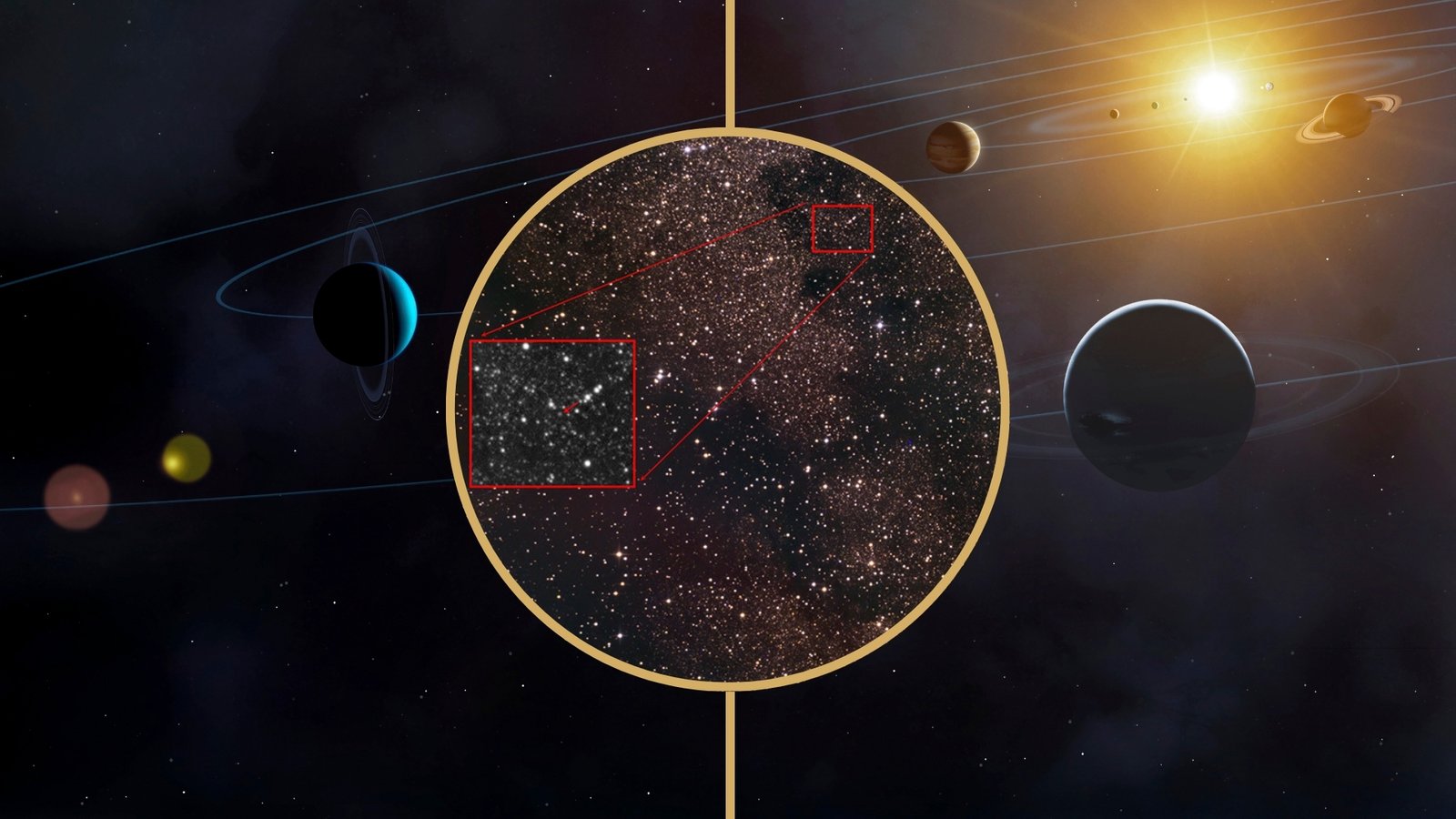
    Astronomers recently confirmed a remarkable discovery: the interstellar object 3I/ATLAS. This marks only the third time scientists have identified a visitor from another star system. Experts first spotted 3I/ATLAS on July 1, 2025, using the Deep Random Survey remote telescope in Chile.

    Initially, astronomers named it A11pl3Z, but its unusual movement quickly garnered attention. After extensive analysis, researchers concluded that 3I/ATLAS is not bound to the sun’s gravity. Its highly hyperbolic orbit features an eccentricity of 6.2, indicating it comes from deep space. This finding supports the idea that interstellar objects could be more common than previously thought.

    One exciting aspect of 3I/ATLAS is its size. At approximately 15 kilometers in diameter, it significantly surpasses its predecessors, 1I/’Oumuamua and 2I/Borisov, making it a prime target for future studies. Like these earlier visitors, 3I/ATLAS has a comet-like appearance, confirmed by the discovery of a coma and tail.

    Currently, 3I/ATLAS is safely within Jupiter’s orbit, far from Earth at about 323 million miles away. It will make its nearest approach to Earth on December 19, coming within 167 million miles. Notably, it poses no threat to our planet.

    Astronomers have noted that 3I/ATLAS is currently dim, requiring specialized telescopes to observe. However, as it nears perihelion on October 29, experts expect it to brighten, becoming more visible to amateur astronomers.

    This discovery opens doors to new scientific opportunities. The object carries materials that may offer insights into the formation of other star systems. Researchers believe analyzing 3I/ATLAS could enhance our understanding of the universe and potentially even life beyond Earth.

    Increased detective work in the field of astronomy, particularly with advanced telescopes like the new Vera C. Rubin Observatory, helps explain the surge in interstellar object discoveries. These advances in technology promise a brighter future for cosmic exploration.

    While 3I/ATLAS shines in the night sky, it underscores humanity’s growing capability to study the cosmos. As we gear up for the next wave of discoveries, interstellar visitors may soon become a more frequent topic of study and discussion.

    Discover More Technology Insights

    Explore the future of technology with our detailed insights on Artificial Intelligence.

    Stay inspired by the vast knowledge available on Wikipedia.

    SciV1

    Cosmos NASA Research Space VT1
    Share. Facebook Twitter Pinterest LinkedIn Tumblr Email
    Previous ArticlePixel Lock Screen Issues After Android 16? You’re Not Alone!
    Next Article Unlock 2 Months of Paramount+ for Just $2!
    Avatar photo
    Staff Reporter
    • Website

    John Marcelli is a staff writer for IO Tribune, with a passion for exploring and writing about the ever-evolving world of technology. From emerging trends to in-depth reviews of the latest gadgets, John stays at the forefront of innovation, delivering engaging content that informs and inspires readers. When he's not writing, he enjoys experimenting with new tech tools and diving into the digital landscape.

    Related Posts

    AI

    Fix Retrieval Failures, Not Prompts

    July 20, 2026
    Quantum

    AI Agents Build Virtual Playgrounds for Robot Training

    July 20, 2026
    IOT

    Hot Cities: 5 Extreme Mayor Communication Strategies

    July 20, 2026
    Add A Comment

    Comments are closed.

    Must Read

    Fix Retrieval Failures, Not Prompts

    July 20, 2026

    AI Agents Build Virtual Playgrounds for Robot Training

    July 20, 2026

    Hot Cities: 5 Extreme Mayor Communication Strategies

    July 20, 2026

    Loop Engineering: Pre-Retrieval Question Parsing Power

    July 20, 2026

    Google’s Bad Ads Threaten Free Android App Ecosystem

    July 20, 2026
    Categories
    • AI
    • Crypto
    • Fashion Tech
    • Gadgets
    • IOT
    • OPED
    • Quantum
    • Science
    • Smart Cities
    • Space
    • Tech
    Most Popular

    Four Years Short: A Deep Dive into Health Disparities

    October 27, 2025

    Why Did Zcash (ZEC) Network Go Offline?

    June 3, 2026

    Digital Transformation World: The Path Forward for CSPs

    December 15, 2025
    Our Picks

    AI exposes hidden magnetic chaos draining motor energy

    May 18, 2026

    Lost Gene Unlocks the Sea Spider’s Bizarre Legs

    July 8, 2025

    Chinese AI Startup Moonshot Reaches $18B Valuation in Fundraising Surge

    March 15, 2026
    Categories
    • AI
    • Crypto
    • Fashion Tech
    • Gadgets
    • IOT
    • OPED
    • Quantum
    • Science
    • Smart Cities
    • Space
    • Tech
    • Privacy Policy
    • Disclaimer
    • Terms and Conditions
    • About Us
    • Contact us
    Copyright © 2025 Iotribune.comAll Rights Reserved.

    Type above and press Enter to search. Press Esc to cancel.