

Top Highlights
-
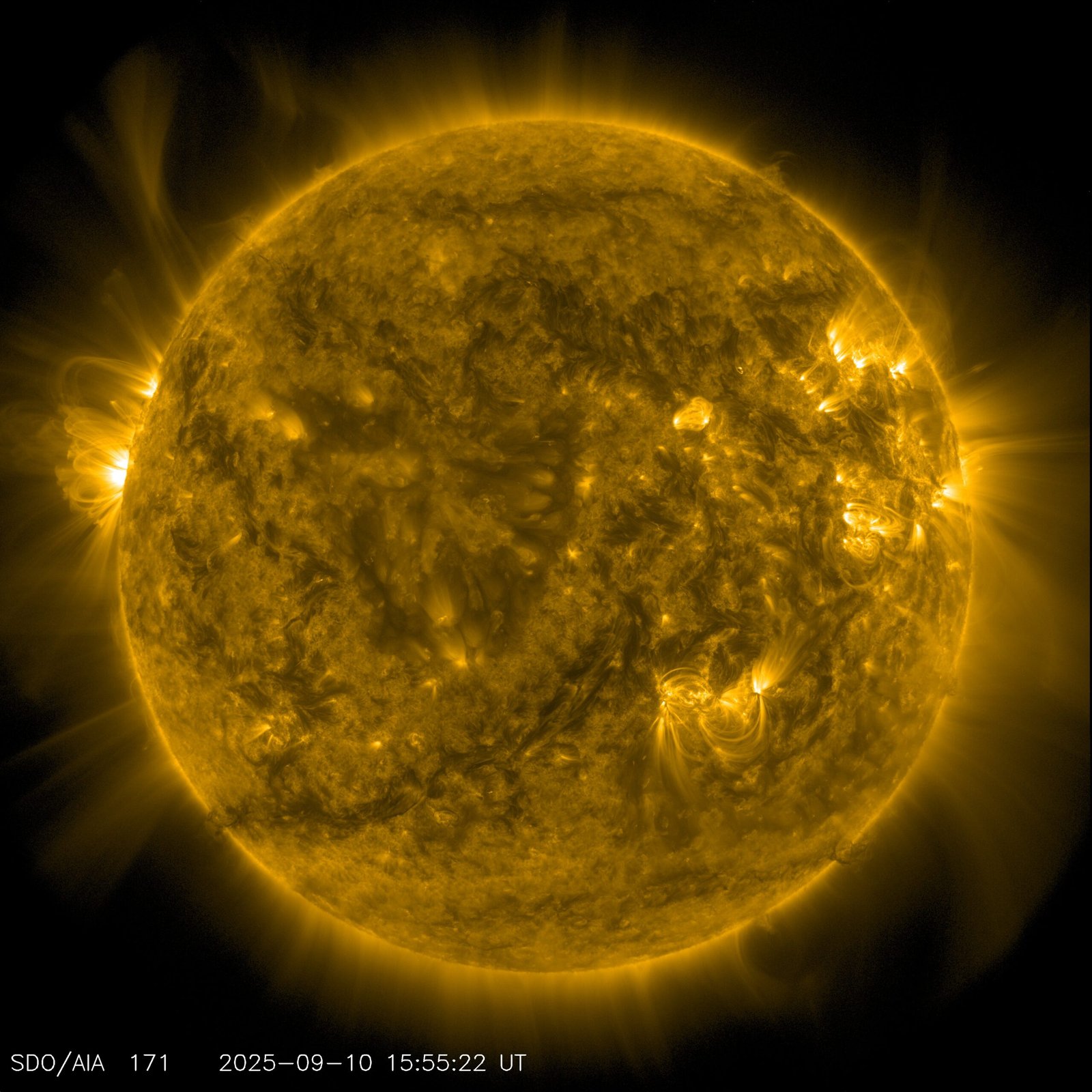
Reversal of Solar Activity: Contrary to expectations of a prolonged low activity phase, the Sun is showing signs of increased activity, as stated by Jamie Jasinski of NASA’s Jet Propulsion Laboratory.
-
Historical Context of Solar Monitoring: Tracking of solar activity dates back to the 1600s, focusing on sunspots, which indicate higher solar activity, such as solar flares and coronal mass ejections.
-
Impact on Space and Earth: Increased solar activity affects satellite operations, astronaut safety, and Earth’s power grids, making space weather predictions vital for current and future NASA missions, including Artemis.
-
Ongoing Research and Data Collection: Upcoming NASA missions, like IMAP and SWFO-L1, aim to enhance understanding of solar activity and its effects on the solar system, building on decades of observational data.
NASA Analysis Shows Sun’s Activity Ramping Up
NASA’s recent study reveals an unexpected increase in solar activity. Researchers once predicted a prolonged period of low activity. “All signs were pointing to the Sun going into a prolonged phase of low activity,” said Jamie Jasinski, lead author of the study. “So it was a surprise to see that trend reversed. The Sun is slowly waking up.”
For centuries, astronomers have tracked solar activity, starting with Galileo in the early 1600s. They recorded sunspots—cooler, darker regions on the Sun’s surface formed by concentrated magnetic fields. Increased sunspots often signal heightened solar activity, such as solar flares and coronal mass ejections. These events can greatly impact technology on Earth.
NASA monitors these space weather phenomena closely. They can affect spacecraft, astronaut safety, and crucial systems like radio communications and GPS. As the agency prepares for future missions, understanding the Sun’s changing behavior becomes increasingly important. The upcoming Artemis campaign will rely on accurate space weather predictions to protect astronauts from harmful radiation.
Launching no earlier than Sept. 23, NASA will deploy new missions designed to advance our understanding of solar impacts. The Interstellar Mapping and Acceleration Probe and the Carruthers Geocorona Observatory will gather vital data, alongside the National Oceanic and Atmospheric Administration’s Space Weather Follow On-Lagrange 1 mission. This research will support future explorations of the Moon, Mars, and beyond.
As the solar wind increases, it alters the magnetic fields of planets in our solar system. These magnetic fields act as protective barriers against the Sun’s intense plasma jets, crucial for a habitable environment on Earth.
Historically, the quietest solar periods occurred from 1645 to 1715 and from 1790 to 1830. The reasons for these lows remain unclear. The last significant slowdown in solar activity ended in 2008. Since then, both sunspots and solar winds have steadily increased, surprising many scientists.
This new data comes from various NASA missions, including the Advanced Composition Explorer and the Wind mission, both launched in the 1990s. They provide critical information on solar plasma and particles. Understanding these changes will enhance our technology and keep us safer in an ever-evolving solar environment.
Expand Your Tech Knowledge
Explore the future of technology with our detailed insights on Artificial Intelligence.
Stay inspired by the vast knowledge available on Wikipedia.
SciV1
