

Summary Points
-
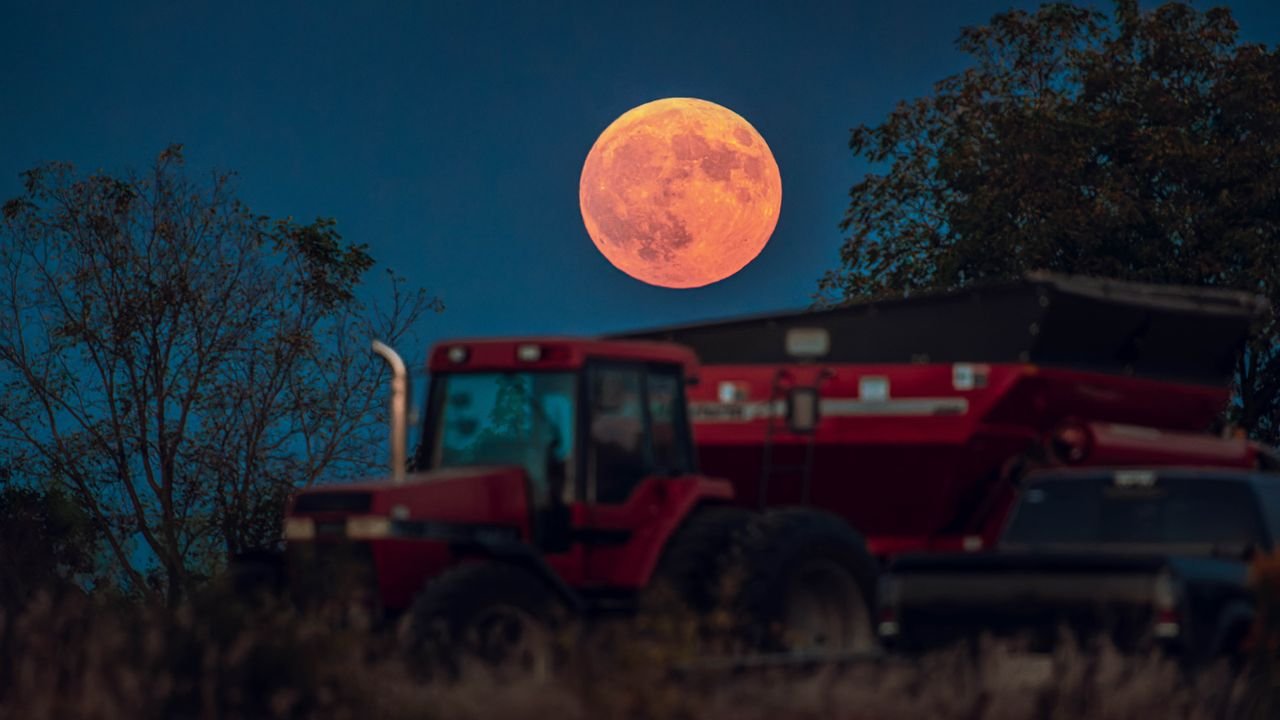
Upcoming Harvest Moon: The full moon will occur on October 6, 2025, at 03:48 GMT, marking the primary “Harvest Moon,” closest to the September equinox.
-
Historical Significance: This full moon has roots in Native American tradition, aiding farmers in harvesting crops like corn and beans by the extended evening light.
-
Moonrise Phenomenon: Unlike other moons, the Harvest Moon rises close to sunset for several nights, creating a unique pattern of nearly simultaneous rise times for consecutive evenings.
-
Geographical Variability: The time difference in moonrise varies by location, with southern areas experiencing longer intervals between moonrises compared to northern latitudes.
On Oct. 6, 2025, skywatchers in the Northern Hemisphere can enjoy a rare spectacle: the Harvest Moon. This full moon won’t just fall in October; it will also come closer to the autumn equinox than any recent September full moon. Specifically, it arrives just 14.4 days after the equinox, unlike September’s full moon, which came 15 days prior.
Harvest Moons traditionally enable farmers to work late into the night, taking advantage of the moon’s early rise. In 2025, the full moon officially peaks at 11:48 p.m. EDT on Oct. 6. Interestingly, this moon rises nearly the same time each evening for several consecutive nights. For instance, in Boston, moonrise occurs at 5:32 p.m. on Oct. 5, 5:55 p.m. on Oct. 6, and 6:20 p.m. on Oct. 7.
Such patterns happen because the moon’s path approaches the horizon during this season. Residents of southerly locations like Miami may see an average moonrise difference of 37 minutes compared to the standard of 50 minutes. Conversely, in northern locations like Edmonton, Alberta, that gap shrinks to just 11 minutes.
Only 18 years between 1970 and 2050 will witness an October Harvest Moon. Recent examples include 2020, while the next instance will occur in 2028. Consequently, this lunar event underscores our connection to natural cycles.
As technology advances, understanding phenomena like the Harvest Moon becomes crucial. For farmers leveraging smart technology and apps, precise moon phases can enhance productivity. Moreover, amateur astronomers can use such knowledge to optimize their skywatching activities.
The 2025 Harvest Moon not only brightens the night sky but also illuminates the path for better agricultural practices. Nature’s rhythms continue to shape our lives, reminding us of our interdependence with the cosmos.
Discover More Technology Insights
Stay informed on the revolutionary breakthroughs in Quantum Computing research.
Explore past and present digital transformations on the Internet Archive.
SciV1
