

Top Highlights
-
New Qubit Architecture: Scientists at Brookhaven National Laboratory developed a new qubit design that allows for easier mass production while performing comparably to traditional qubits, enhancing scalability in quantum computing.
-
Focus on Coherence: The research aims to improve qubit coherence—which affects how long they retain quantum information—by exploring the benefits of constriction junctions over conventional superconductor-insulator-superconductor (SIS) junctions.
-
Material Innovations: The study indicates that specific superconducting materials and careful design adjustments can enhance the performance of constriction junctions, making them viable for qubits operating at typical frequencies (5-10 GHz).
-
Alignment with Manufacturing: This research aligns with the Co-design Center for Quantum Advantage’s goal, aiming to create qubit architectures compatible with existing electronics manufacturing processes, particularly through the use of transition metal silicides.
Mass-Production Architecture Matches Top Performers in Quantum Computing
Scientists from the U.S. Department of Energy’s Brookhaven National Laboratory have made significant strides in quantum computing. As part of the Co-design Center for Quantum Advantage (C2QA), they developed a qubit architecture more suitable for mass production. This new design performs comparably to existing top-performing qubits in the field.
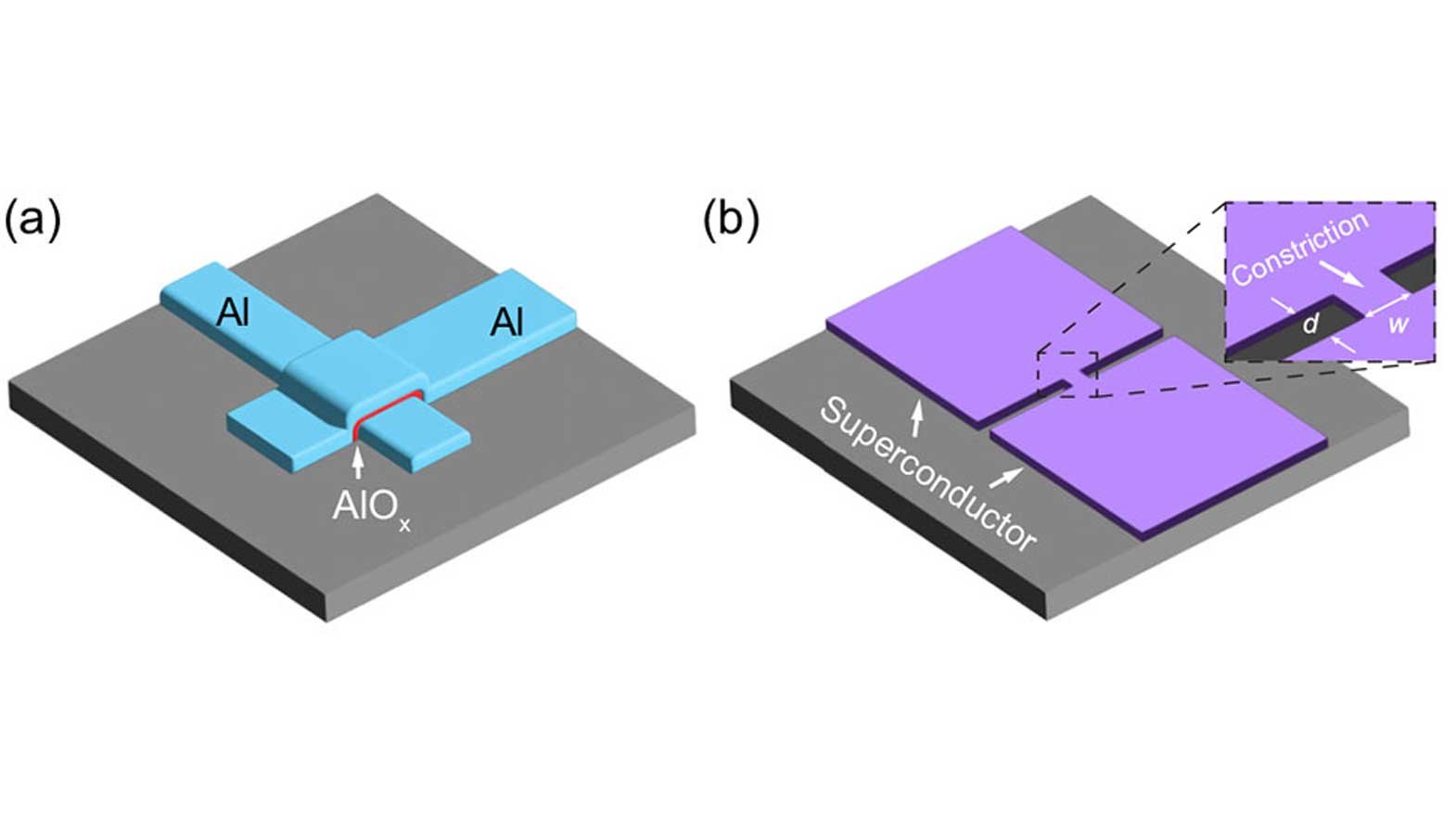
Recent studies focused on improving qubit coherence. Coherence measures how long qubits can hold quantum information, a crucial characteristic for quantum computing. The researchers primarily targeted superconducting qubits, which consist of two superconducting layers separated by an insulator, known as an SIS junction. However, crafting these junctions with the precision needed for mass production has proven difficult.
To explore alternatives, the team assessed the use of constriction junctions, which traditionally allow greater current flow. Their analysis indicated that constriction junctions could still function effectively with superconducting qubits. Researchers noted that these new junctions could be designed to maintain lower current levels, provided they utilized less conventional superconducting materials.
According to Mingzhao Liu, a leading researcher in the project, using metals like aluminum leads to impractical dimensions for the constriction wire. Instead, researchers are investigating superconducting transition metal silicides, which are already prevalent in semiconductor manufacturing. This shift could streamline the fabrication process for qubits.
Moreover, Liu and co-author Charles Black emphasized the need to balance material properties. They discovered that certain combinations might not work effectively for qubits operating at typical frequencies between 5 and 10 gigahertz. Nevertheless, with the right materials that meet their outlined criteria, constriction junctions can function similarly to conventional SIS junctions.
This research emphasizes the importance of materials science in advancing quantum technologies. It aligns with C2QA’s core principle of developing architectures that not only meet quantum computing requirements but also fit within existing manufacturing capabilities. As the team continues to refine these approaches, the future of quantum computing looks increasingly promising, potentially leading to more accessible and efficient technologies.
Continue Your Tech Journey
Learn how the Internet of Things (IoT) is transforming everyday life.
Explore past and present digital transformations on the Internet Archive.
QuantumV1
