

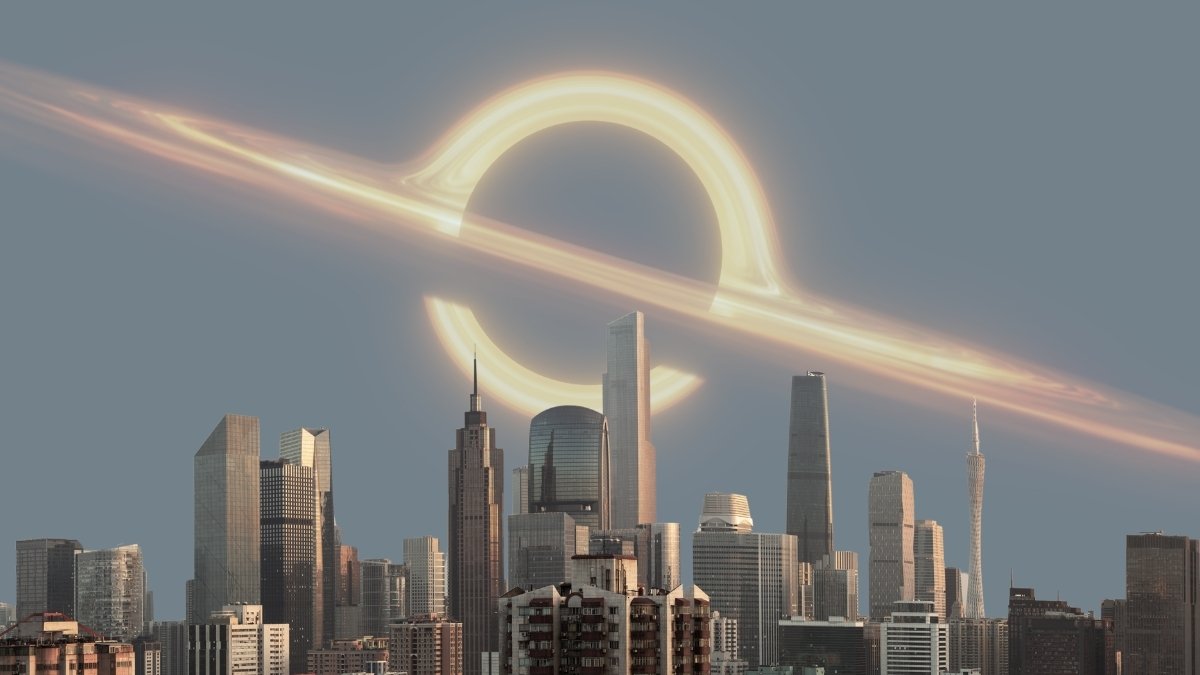
Essential Insights
-
Runaway Black Holes: Evidence suggests that runaway supermassive black holes, potentially moving at thousands of kilometers per second, could exist and travel through galaxies, disrupting their structures.
-
Theoretical Foundations: The understanding of black holes stems from Kerr’s solution to Einstein’s equations, establishing the “no-hair theorem” and revealing that black holes can release vast amounts of rotational energy.
-
Gravitational Wave Observations: The LIGO and Virgo observatories have confirmed the collision and coalescence of black holes, providing evidence for the existence of runaway black holes with significant spin energy, capable of straight trajectories.
-
Contrail Discoveries: Recent findings from the James Webb Space Telescope show long, straight streaks of stars in various galaxies, indicating the presence of runaway black holes, resulting in star formation from gravitational compression.
Runaway Black Holes: A New Frontier in Astrophysics
Astronomers have made groundbreaking discoveries about runaway black holes. This concept may seem like science fiction, but evidence points to their real existence. Last year, a runaway asteroid surprised scientists by speeding through our Solar System. Yet, researchers now suggest black holes can move even faster.
Recent studies reveal supermassive black holes racing through galaxies. Some may travel at speeds of 1,000 km/s, much faster than most stars. These black holes could create trails of new stars as they pass, similar to jet contrails. This prompts an exciting question: Are we witnessing the first signs of other cosmic giants in motion?
The theory began in the 1960s with Roy Kerr’s work on spinning black holes. His research led to key discoveries, including the “no-hair theorem,” which states that black holes can be identified by mass, spin, and charge. Researchers like Roger Penrose further explored how these black holes can release enormous rotational energy. It’s like a reservoir of power that can propel a black hole at unfathomable speeds.
Observations from the LIGO and Virgo gravitational wave observatories have confirmed that black holes collide and merge. These collisions emit detectable gravitational waves, providing insights into their behavior. Scientists noted that when two black holes have opposing spins, they can gain speed from the merger—a phenomenon that might explain the observed runaway black holes.
Observing runaway black holes is challenging, especially smaller ones. However, evidence from the James Webb Space Telescope shows impressive straight trails of stars. For instance, a study led by Yale astronomer Pieter van Dokkum identified a galaxy with a contrail stretching 200,000 light-years. This indicates a black hole of significant mass, confirming the theories around runaway entities.
Such findings are crucial for understanding the cosmos. As researchers reveal more about these celestial phenomena, they inform future technological advancements. For example, the methods used to detect and analyze gravitational waves may enhance sensors and instruments on Earth.
The implications of runaway black holes could reshape our understanding of the universe. They serve as reminders of nature’s complexity and inspire innovations in astronomy and other fields. While the possibility of one entering our Solar System exists, the likelihood remains low. Nonetheless, this research enriches our comprehension of the universe and fuels curiosity about what lies beyond our current knowledge.
Discover More Technology Insights
Explore the future of technology with our detailed insights on Artificial Intelligence.
Explore past and present digital transformations on the Internet Archive.
QuantumV1
