
Close Menu
    Facebook X (Twitter) Instagram
    Friday, July 10
    Top Stories:
    • OpenAI Executive Fidji Simo Resigns: A Major Shift in Leadership
    • Apple’s Foldable on Track: Foxconn Boosts Production with New Hires
    • PDD Embraces China’s Future City Despite Regulatory Clash and Fine
    Facebook X (Twitter) Instagram Pinterest Vimeo
    IO Tribune
    • Home
    • AI
    • Tech
      • Gadgets
      • Fashion Tech
    • Crypto
    • Smart Cities
      • IOT
    • Science
      • Space
      • Quantum
    • OPED
    IO Tribune
    Home » NASA Unleashes Next-Gen Supercomputer: A Leap in Power and Efficiency!
    Space

    NASA Unleashes Next-Gen Supercomputer: A Leap in Power and Efficiency!

    Staff ReporterBy Staff ReporterFebruary 9, 2026No Comments3 Mins Read
    Share Facebook Twitter Pinterest LinkedIn Tumblr Reddit Telegram Email
    Share
    Facebook Twitter LinkedIn Pinterest Email

    Quick Takeaways

    1. Introduction of Athena: NASA’s new supercomputer, Athena, enhances computing power for missions and research, supporting complex challenges in space, aeronautics, and science.

    2. Peak Performance: Athena offers over 20 petaflops of peak performance, surpassing previous systems like Aitken and Pleiades, while reducing operational costs.

    3. Critical Applications: The supercomputer aids in simulating rocket launches, designing advanced aircraft, and training AI models, accessible to both NASA and external researchers.

    4. Future Expansion: As NASA invests in supercomputing, Athena represents a step toward meeting increasingly complex mission demands, laying the groundwork for future discoveries.

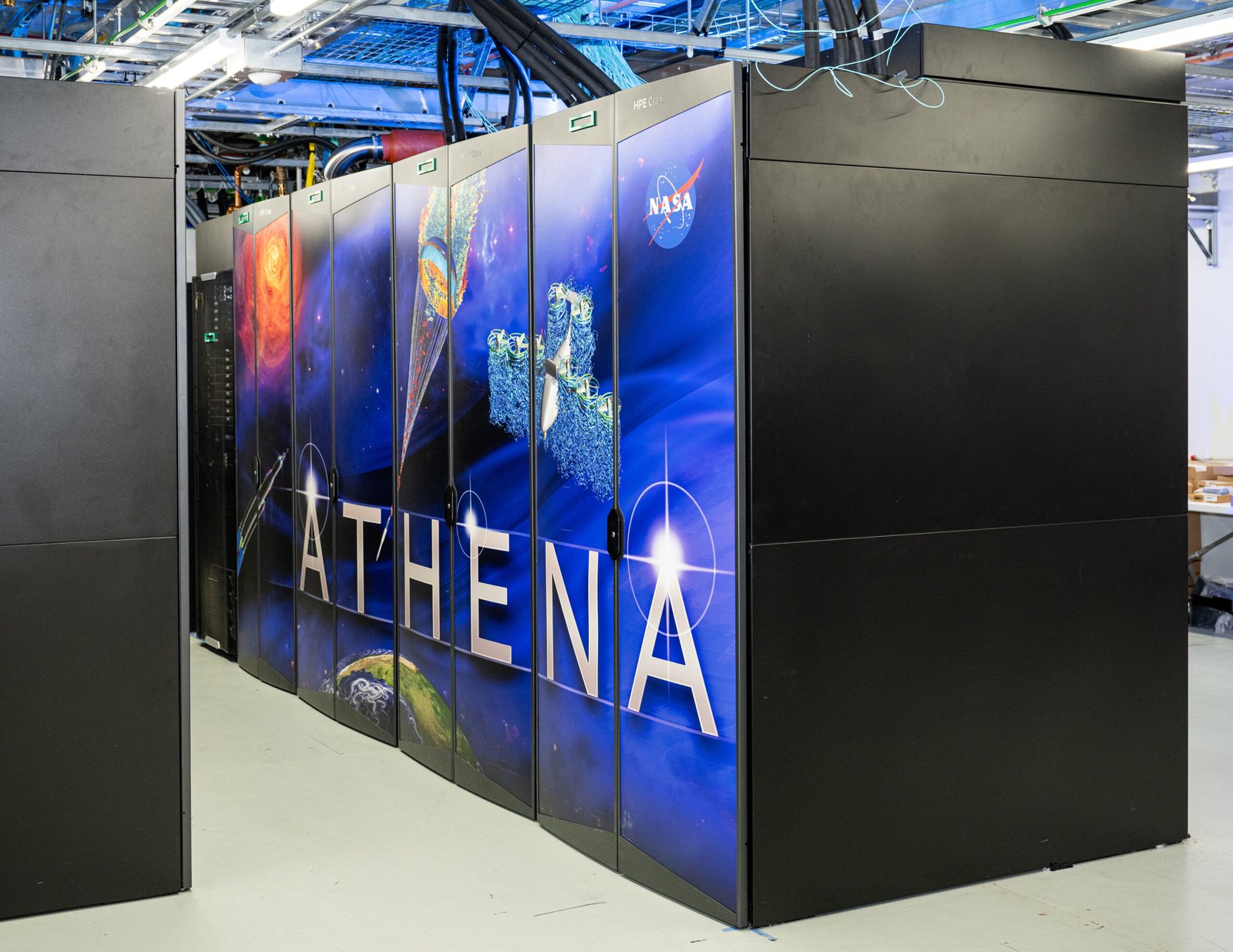
    NASA has launched its newest supercomputer, Athena. This powerful system aims to support a new generation of missions and research projects. It is part of NASA’s High-End Computing Capability project, designed to enhance resources for tackling complex challenges in space and science.

    Athena resides in the Modular Supercomputing Facility at NASA’s Ames Research Center in Silicon Valley, California. Notably, it outperforms its predecessors, Aitken and Pleiades, in both power and efficiency. The supercomputer boasts over 20 petaflops of peak performance, meaning it can make over 20 quadrillion calculations per second. Importantly, it also reduces NASA’s supercomputing utility costs.

    “Exploration has always driven NASA to the edge of what’s computationally possible,” stated Kevin Murphy, chief science data officer at NASA Headquarters. With Athena, NASA can provide tailored computing resources that meet the evolving needs of its missions.

    Supercomputers like Athena are crucial for NASA. They simulate rocket launches, design next-generation aircraft, and train large-scale AI models. This capability helps analyze vast datasets to uncover new scientific insights. Researchers, both within NASA and outside, can apply for time on the supercomputer.

    The name Athena comes from a contest held in March 2025 among NASA’s workforce. It refers to the Greek goddess of wisdom and warfare, highlighting a tie to the agency’s Artemis program.

    Moreover, NASA’s Office of the Chief Science Data Officer manages Athena. The High-End Computing Capability portfolio supports a flexible approach that combines supercomputers with commercial cloud platforms. This flexibility allows teams to choose effective computing environments for their research.

    As NASA invests in advanced supercomputing, its capabilities will continue to grow. The agency recognizes that as exploration extends further into the universe, quick, efficient, and intelligent computing will become increasingly vital. With Athena, NASA is establishing a digital foundation for future discoveries.

    For more information on high-end computing at NASA, visit their website.

    Expand Your Tech Knowledge

    Learn how the Internet of Things (IoT) is transforming everyday life.

    Stay inspired by the vast knowledge available on Wikipedia.

    SciV1

    Ames Research Center Artemis Cosmos General High-Tech Computing NASA Space VT1
    Share. Facebook Twitter Pinterest LinkedIn Tumblr Email
    Previous ArticleFerrari’s First EV: A Jony Ive-Designed Interior Awaits
    Next Article Why Robert Kiyosaki Believes Bitcoin Outshines Gold
    Avatar photo
    Staff Reporter
    • Website

    John Marcelli is a staff writer for IO Tribune, with a passion for exploring and writing about the ever-evolving world of technology. From emerging trends to in-depth reviews of the latest gadgets, John stays at the forefront of innovation, delivering engaging content that informs and inspires readers. When he's not writing, he enjoys experimenting with new tech tools and diving into the digital landscape.

    Related Posts

    AI

    Fidji Simo Steps Down as OpenAI AGI Lead

    July 10, 2026
    Tech

    OpenAI Executive Fidji Simo Resigns: A Major Shift in Leadership

    July 10, 2026
    Science

    Malaria Came Back Near Amazon Dam—Experts Reveal Why

    July 10, 2026
    Add A Comment

    Comments are closed.

    Must Read

    Fidji Simo Steps Down as OpenAI AGI Lead

    July 10, 2026

    OpenAI Executive Fidji Simo Resigns: A Major Shift in Leadership

    July 10, 2026

    Malaria Came Back Near Amazon Dam—Experts Reveal Why

    July 10, 2026

    Apple’s Foldable on Track: Foxconn Boosts Production with New Hires

    July 9, 2026

    PDD Embraces China’s Future City Despite Regulatory Clash and Fine

    July 9, 2026
    Categories
    • AI
    • Crypto
    • Fashion Tech
    • Gadgets
    • IOT
    • OPED
    • Quantum
    • Science
    • Smart Cities
    • Space
    • Tech
    Most Popular

    Bitcoin, Ethereum, and the Unforeseen Multi-Year Reset

    January 24, 2026

    Breaking Barriers: The 20-Electron Molecule That Redefines Chemistry

    July 29, 2025

    Waymo Halts Service as Flooded Roads Threaten Safety

    May 22, 2026
    Our Picks

    Save $30 on Ember’s Travel Mug 2 with Find My!

    July 28, 2025

    Beyond the Horizon: Tracking Methane Leaks with Private Satellites

    December 16, 2025

    Building Blocks of Science: Fun Physics with Lego’s Space Sets!

    April 5, 2026
    Categories
    • AI
    • Crypto
    • Fashion Tech
    • Gadgets
    • IOT
    • OPED
    • Quantum
    • Science
    • Smart Cities
    • Space
    • Tech
    • Privacy Policy
    • Disclaimer
    • Terms and Conditions
    • About Us
    • Contact us
    Copyright © 2025 Iotribune.comAll Rights Reserved.

    Type above and press Enter to search. Press Esc to cancel.