

Quick Takeaways
-
Advanced Organoid Model: Northwestern University scientists developed sophisticated human spinal cord organoids to replicate injury and evaluate regenerative treatments, marking a significant advancement in spinal cord research.
-
Faithful Reproduction of Injury: The organoids mimicked critical biological effects of spinal cord injury, such as cell death, inflammation, and glial scarring, providing a realistic platform for testing therapies.
-
Promising Therapy Outcomes: Treatment with “dancing molecules” drastically improved tissue regeneration and reduced scarring, indicating potential for human recovery from spinal cord injuries, as supported by FDA recognition.
-
Future Applications: The research aims to engineer more complex organoids to model chronic injuries and personalize future therapies, enhancing prospects for implantable tissues derived from patients’ own stem cells.
The Promise of Organoids in Spinal Cord Research
Scientists at Northwestern University achieved a remarkable breakthrough by developing a sophisticated lab-grown model for studying human spinal cord injuries. By using human spinal cord organoids—miniature organs created from stem cells—the research team simulated various types of spinal cord trauma. This innovative approach allows researchers to observe the biological consequences of injuries, such as cell death, inflammation, and the formation of glial scars. These scars complicate recovery by forming barriers that inhibit nerve repair.
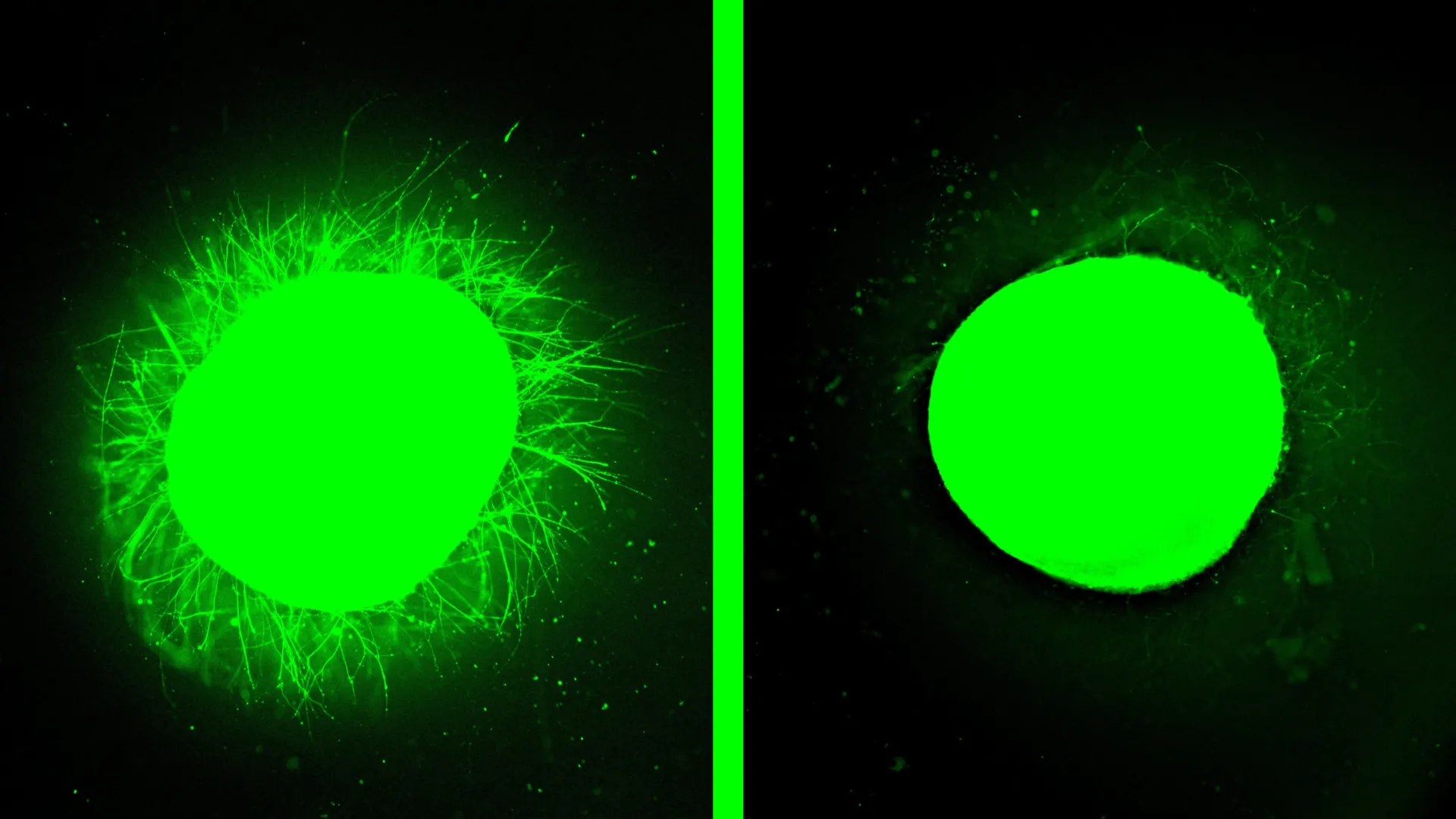
One of the most significant findings involved the application of “dancing molecules,” a therapy that previously showed promise in animal studies for restoring movement. After treating the organoids, researchers noticed impressive signs of recovery. Notably, the injured tissue exhibited substantial growth of neurites, the long extensions essential for neuronal communication. Moreover, the glial scars significantly reduced, suggesting that this therapy could become an effective treatment for human spinal cord injuries.
Implications for the Future of Regenerative Medicine
This advancement in organoid technology represents more than just a success in spinal cord research. It opens doors to quicker, cheaper methods of testing new therapies, bypassing the longer timelines of traditional animal models and human trials. With the recent FDA designation for dancing molecules as an Orphan Drug, this therapy could soon play a crucial role in the recovery of individuals who suffer from spinal cord injuries.
Furthermore, the incorporation of immune cells known as microglia into the organoids adds another layer of realism to testing. This feature allows for a more accurate representation of the body’s inflammatory response following trauma. As researchers refine these models, they aim to mimic chronic injuries and develop personalized medicine solutions that could lead to therapies tailored to individual patients.
The journey toward healing spinal cord injuries has gained new momentum. Through innovative approaches like these organoid studies, we hold onto the hope that we may one day bridge the gap between injury and recovery, ultimately enhancing the quality of life for countless individuals.
Stay Ahead with the Latest Tech Trends
Dive deeper into the world of Cryptocurrency and its impact on global finance.
Access comprehensive resources on technology by visiting Wikipedia.
TechV1
