

Fast Facts
-
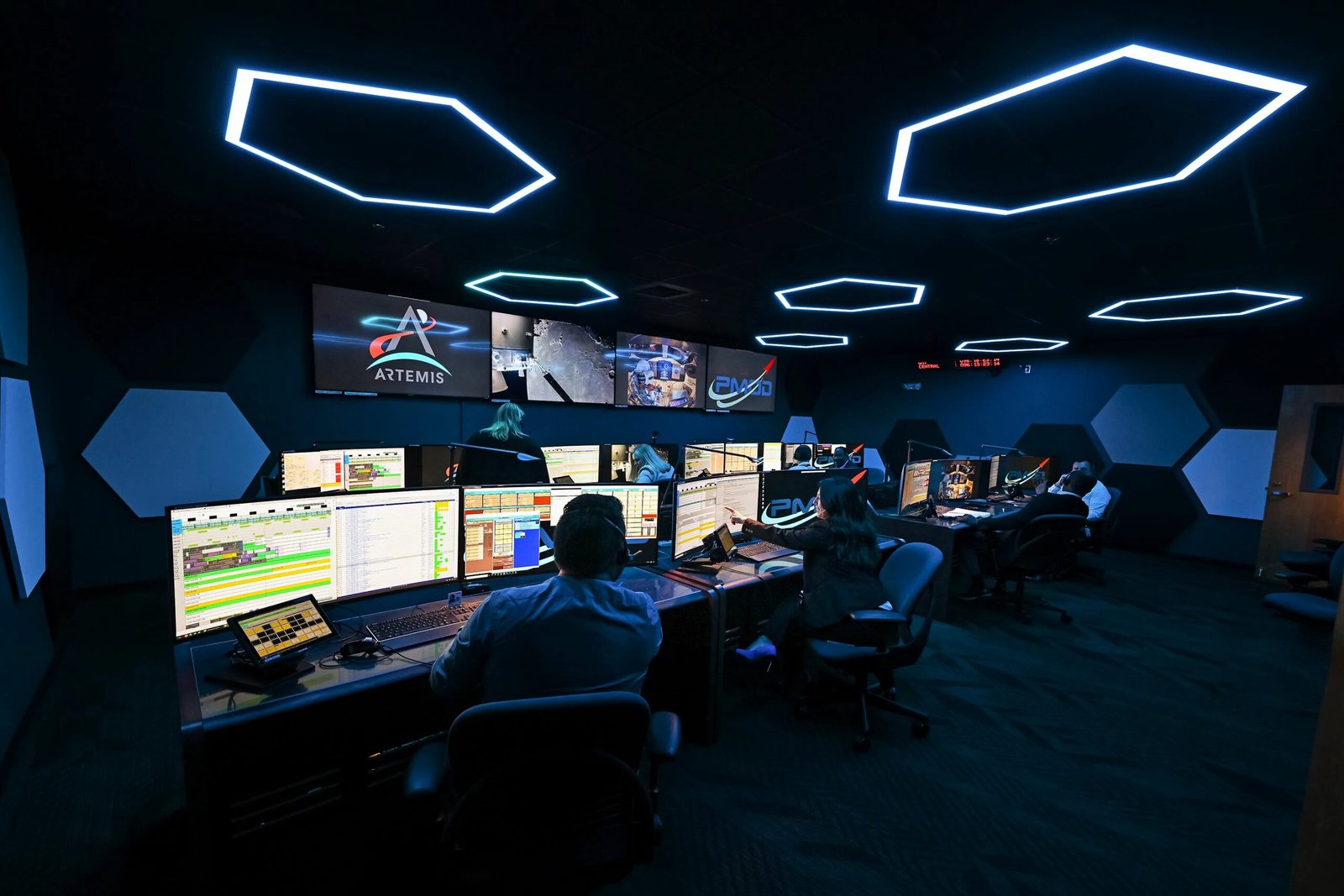
Real-time Support: NASA’s twin control rooms, LUCA and LESA, at the Marshall Space Flight Center, are crucial for supporting mission operations and ensuring astronaut safety during the Artemis II mission.
-
Distinct Functions: LUCA focuses on Artemis science operations, while LESA provides engineering support for lunar landings, demonstrating adaptable mission capabilities.
-
Data and Communication: Advanced services, including spacecraft command and telemetry and live video connections, enable seamless collaboration with global scientists and experts from both control rooms.
-
Future Lunar Missions: Insights gained from Artemis II will enhance our understanding of deep space effects on crew physiology, aiding preparations for future crewed lunar and Mars missions.
Twin NASA Control Rooms Support Artemis Safety, Success
NASA’s Marshall Space Flight Center in Huntsville, Alabama, operates twin control rooms that play a vital role in the Artemis II mission. The Lunar Utilization Control Area (LUCA) and the Lander Engineering Support Area (LESA) support real-time mission operations as astronauts prepare to return to Earth on April 10.
Though similar in appearance, LUCA and LESA serve different purposes. LUCA focuses on science operations, while LESA handles the engineering aspects necessary for lunar landings. This division allows for specialized support tailored to the mission’s varied needs.
The Huntsville Operations Support Center can adapt to different mission requirements. According to officials, these control rooms represent the latest advancements in mission support technology. They are not only crucial for Artemis but also assist with the Commercial Crew Program and international space station operations.
Services provided include spacecraft command management, international communication capabilities, live video streaming, and a unique telescience resource kit. This kit enables seamless data exchange between remote computers, enhancing coordination among teams worldwide.
In LUCA, teams are conducting groundbreaking scientific operations. They monitor the impacts of deep space, focusing on microgravity and radiation effects on astronauts. These findings will aid future lunar missions and improve human health during space travel.
Meanwhile, LEAS teams observe mission operations in real time. This critical oversight helps refine NASA’s procedures for future lunar landings. Experts in engineering, safety, and flight operations utilize LESA to track lander systems and inform key decisions.
NASA’s Artemis program not only aims to bring humans back to the Moon but also seeks to lay the groundwork for future crewed missions to Mars. Through this initiative, the agency fosters scientific discovery and economic opportunities that benefit everyone on Earth.
For more information about the Artemis program, visit NASA’s official website.
Continue Your Tech Journey
Stay informed on the revolutionary breakthroughs in Quantum Computing research.
Explore past and present digital transformations on the Internet Archive.
SciV1
