

Fast Facts
-
New Insights on Human Migration: Researchers at the University of Huddersfield and University of Southampton reveal that modern humans first settled New Guinea and Australia (Sahul) around 60,000 years ago, supporting the “long chronology” model.
-
Multi-Disciplinary Approach: The project combined expertise in archaeogenetics, maritime archaeology, and more, utilizing nearly 2,500 mtDNA genomes to analyze ancient lineages and their migration routes.
-
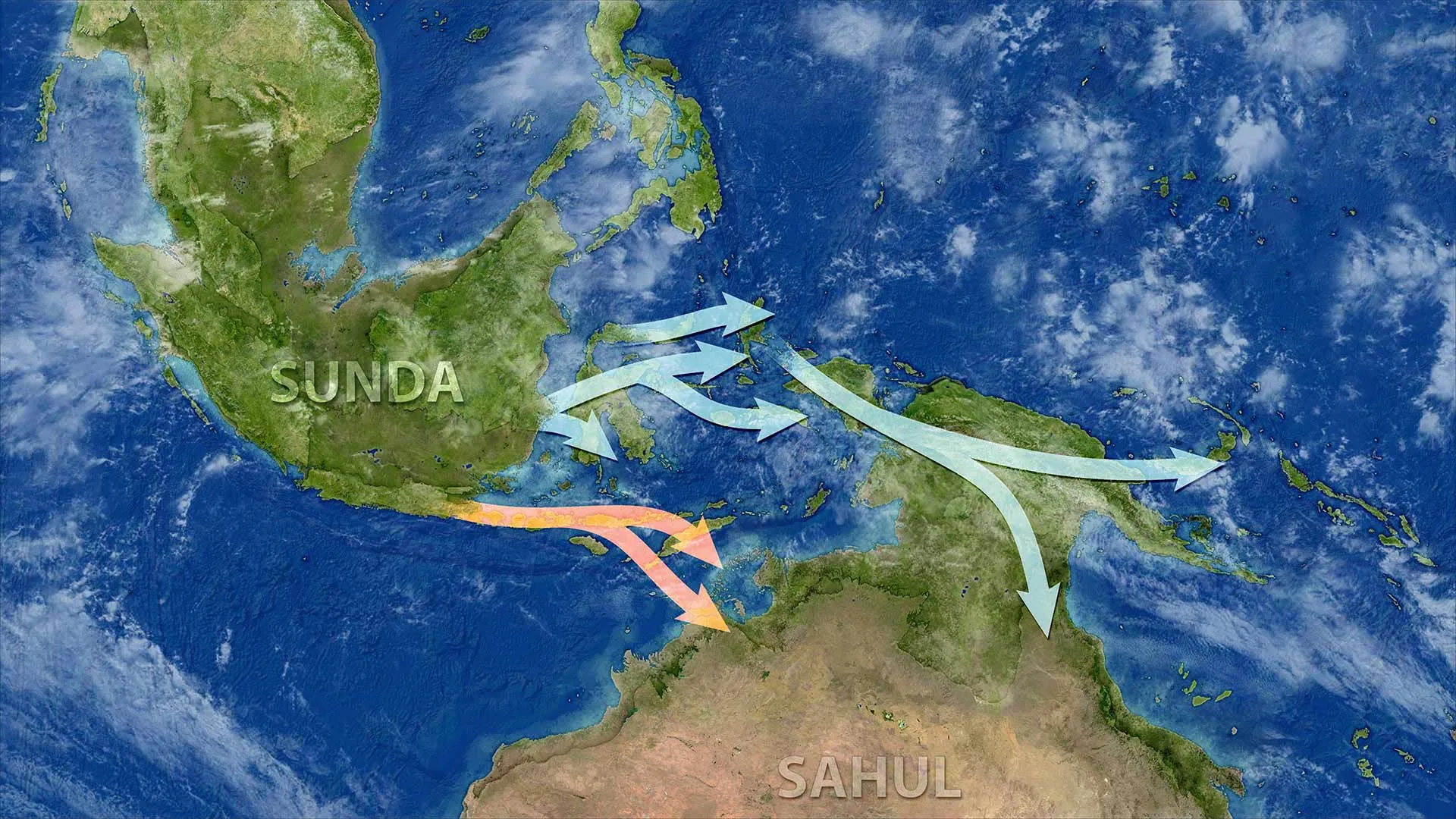
Diverse Migration Paths: Genetic evidence indicates that early populations entered Sahul from multiple regions in Southeast Asia, suggesting at least two distinct migration routes.
-
Future Research Directions: Ongoing analysis of whole human genome sequences aims to validate these findings, enhancing our understanding of early human seafaring and Indigenous heritage.
Ancient Navigation and Human Migration
A recent DNA study reveals that modern humans reached Australia nearly 60,000 years ago. Researchers from the University of Huddersfield and the University of Southampton worked together, combining fields such as genetics and archaeology. Their findings shed light on how humans settled in New Guinea and Australia during the last Ice Age when sea levels were much lower. At that time, these regions formed a single landmass known as Sahul.
Experts had debated the timing of this migration for years. While some supported a long chronology of around 60,000 years, others advocated for a shorter timeline of 45,000 to 50,000 years. This research strengthens the long chronology by analyzing mitochondrial DNA. By examining approximately 2,500 DNA genomes, the scientists constructed a genetic family tree. This tree revealed that the oldest lineages found only in Aboriginal Australians and New Guineans date back to about 60,000 years ago.
Significance and Future Exploration
These findings matter not only for understanding human history but also for appreciating Indigenous culture in Australia. The research indicates that these early travelers likely took multiple migration routes from various locations in Southeast Asia. Therefore, the journey into Sahul was more complex than previously thought.
Moreover, this study aligns with archaeological evidence, emphasizing the importance of ongoing research. Future studies will utilize whole genome sequencing to gather even more data, potentially enriching our knowledge of early human migration. The ongoing collaboration between genetics and archaeology holds promise for uncovering new insights into our heritage. This research illustrates not just the capabilities of early human navigators, but also the deep connections Indigenous communities have with this ancient land.
Stay Ahead with the Latest Tech Trends
Learn how the Internet of Things (IoT) is transforming everyday life.
Stay inspired by the vast knowledge available on Wikipedia.
TechV1
