
Close Menu
    Facebook X (Twitter) Instagram
    Friday, June 5
    Top Stories:
    • Chunky Tablet Transforms Toy Clean-Up!
    • Unlocking Autism: Two Distinct Brain Types Revealed
    • Breakthrough Discovery Challenges 80-Year-Old Turbulence Theory
    Facebook X (Twitter) Instagram Pinterest Vimeo
    IO Tribune
    • Home
    • AI
    • Tech
      • Gadgets
      • Fashion Tech
    • Crypto
    • Smart Cities
      • IOT
    • Science
      • Space
      • Quantum
    • OPED
    IO Tribune
    Home » Voyager 1: The Timeless Journey of Humanity’s Most Daring Voyage
    Space

    Voyager 1: The Timeless Journey of Humanity’s Most Daring Voyage

    Staff ReporterBy Staff ReporterApril 19, 2026No Comments3 Mins Read
    Share Facebook Twitter Pinterest LinkedIn Tumblr Reddit Telegram Email
    Share
    Facebook Twitter LinkedIn Pinterest Email

    Quick Takeaways

    1. Longevity of Voyager 1: Launched in 1977 for a five-year mission, Voyager 1 has surpassed 49 years in operation, becoming the most distant human-made object, currently over 15 billion miles from Earth.

    2. Power Management: As Voyager 1’s power diminishes, engineers recently deactivated its Low-energy Charged Particles experiment to extend its operational life, prioritizing the longevity of more critical instruments.

    3. Scientific Milestones: Voyager 1 made groundbreaking discoveries, including observing volcanic activity on Io and crossing the heliopause in 2012, marking its entry into interstellar space.

    4. Future Prospects: Engineers are developing a “Big Bang” power conservation plan to potentially extend Voyager 1’s mission into the 2030s, aiming to maintain scientific operations as long as possible.

    Voyager 1’s Journey: A Glimpse into the Cosmos

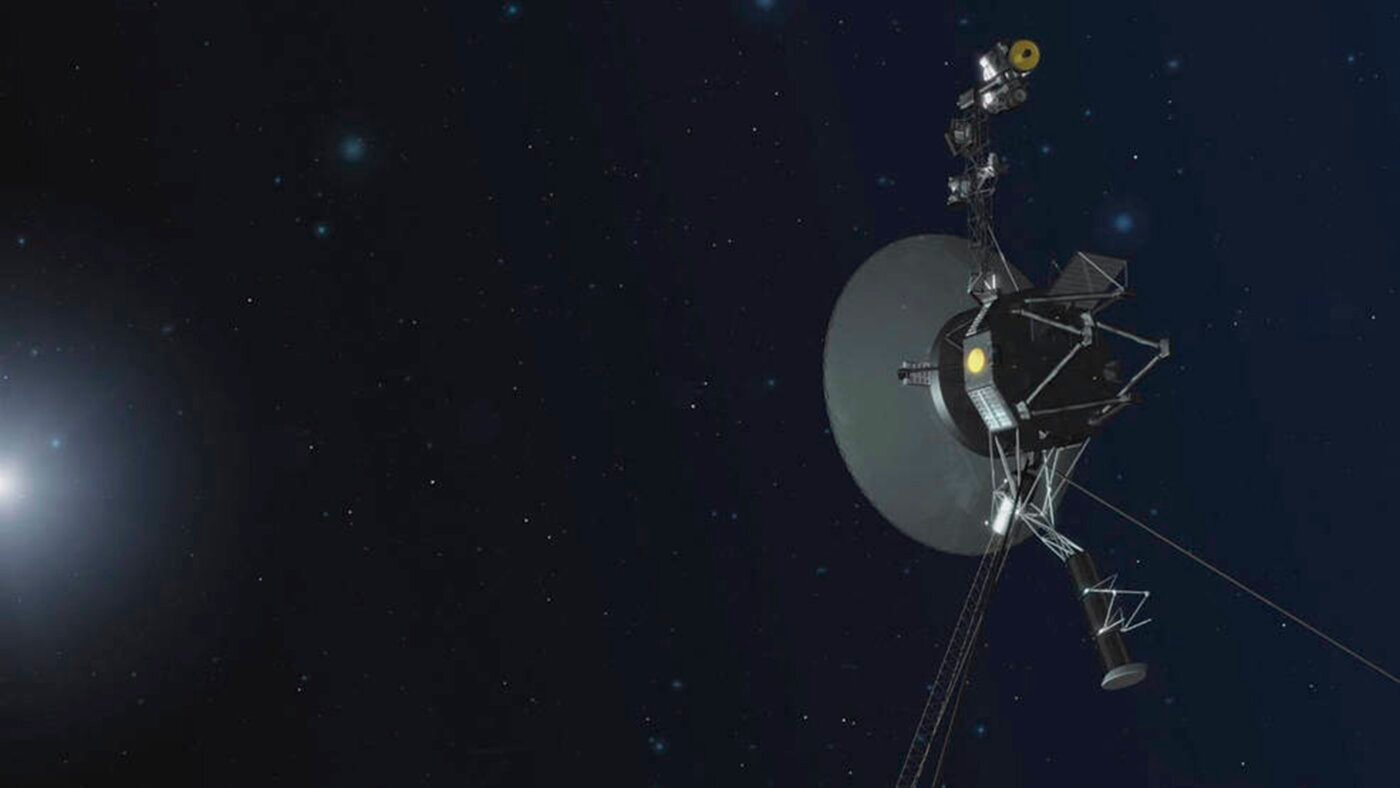
    Nearly 50 years ago, Voyager 1 launched from Cape Canaveral, Florida. It embarked on a mission designed to last just five years. Now, NASA has made a tough yet strategic decision: it turned off one of Voyager 1’s science instruments. This move doesn’t signal failure; instead, it aims to prolong the probe’s operational life.

    Voyager 1 carries significant weight — about 1,797 pounds. Equipped with a 12-foot-wide antenna, it remains connected to Earth, despite being more than 15 billion miles away. Each signal takes over 23 hours to travel one way. Its power source? A radioisotope thermoelectric generator. This method converts heat from decaying plutonium into electricity. Yet after decades of service, this power is waning, decreasing by about 4 watts annually.

    Engineers monitoring the probe faced a challenge earlier this year. Power levels dipped unexpectedly, threatening to trigger an automatic shutdown. So, they acted swiftly. On April 17, they turned off the Low-energy Charged Particles experiment. This instrument helped scientists study ions and cosmic rays, providing invaluable data about interstellar space.

    While it’s never easy to shut down a scientific tool, this decision allows Voyager 1 to continue operating longer. Now, it can still measure plasma waves and magnetic fields. NASA engineers believe this change could extend the mission for about a year. They are also exploring a larger power conservation strategy, affectionately dubbed “the Big Bang.” If successful on Voyager 2 next year, it could open new possibilities for Voyager 1.

    Voyager 1’s continuous operation since 1977 reflects remarkable human ingenuity. It has sent back groundbreaking discoveries, including the first observation of volcanic activity beyond Earth. As Voyager 1 pushes forward into uncharted territory, its mission represents not just exploration but also the advancement of technology. Each data transmission enriches our understanding of the universe and enhances our quest for knowledge.

    The hope persists that at least one instrument from each Voyager will remain functional into the 2030s. This would allow these historic probes to keep sending insights from regions never before explored. Voyager 1 embodies the spirit of exploration, proving that even from billions of miles away, humanity’s reach can still expand.

    Continue Your Tech Journey

    Stay informed on the revolutionary breakthroughs in Quantum Computing research.

    Stay inspired by the vast knowledge available on Wikipedia.

    SciV1

    Cosmos NASA Space Sustainability VT1
    Share. Facebook Twitter Pinterest LinkedIn Tumblr Email
    Previous ArticleJoin the SGP.32 Live AMA with emnify – Ask Your Questions!
    Next Article Are Chickens Truly Headless Runners?
    Avatar photo
    Staff Reporter
    • Website

    John Marcelli is a staff writer for IO Tribune, with a passion for exploring and writing about the ever-evolving world of technology. From emerging trends to in-depth reviews of the latest gadgets, John stays at the forefront of innovation, delivering engaging content that informs and inspires readers. When he's not writing, he enjoys experimenting with new tech tools and diving into the digital landscape.

    Related Posts

    Space

    Tomorrow’s Labs: When Humans and Robots Collaborate

    June 5, 2026
    AI

    Why Apple Could Embed Cameras in AirPods

    June 5, 2026
    Gadgets

    Skip the Hype: Galaxy Z Flip 8 Upgrade Shakedown

    June 5, 2026
    Add A Comment

    Comments are closed.

    Must Read

    Tomorrow’s Labs: When Humans and Robots Collaborate

    June 5, 2026

    Why Apple Could Embed Cameras in AirPods

    June 5, 2026

    Skip the Hype: Galaxy Z Flip 8 Upgrade Shakedown

    June 5, 2026

    Investors Stay Neutral Between OpenAI and Anthropic

    June 5, 2026

    Chunky Tablet Transforms Toy Clean-Up!

    June 5, 2026
    Categories
    • AI
    • Crypto
    • Fashion Tech
    • Gadgets
    • IOT
    • OPED
    • Quantum
    • Science
    • Smart Cities
    • Space
    • Tech
    • Technology
    Most Popular

    Intel’s Next-Gen Manufacturing Faces Challenges

    August 6, 2025

    BTC Hits $120K Support: Can Bulls Drive New All-Time High?

    October 3, 2025

    Strings of the Universe: Unraveling the Cosmic Symphony

    April 18, 2025
    Our Picks

    Google Home Lights Offline? Fix Incoming!

    January 22, 2026

    Google Cuts Battery Life for Some Pixel 6a to Combat Overheating

    June 12, 2025

    Fosun Brings Innovative Particle Therapy to Mainland China for Advanced Cancer Care

    November 7, 2025
    Categories
    • AI
    • Crypto
    • Fashion Tech
    • Gadgets
    • IOT
    • OPED
    • Quantum
    • Science
    • Smart Cities
    • Space
    • Tech
    • Technology
    • Privacy Policy
    • Disclaimer
    • Terms and Conditions
    • About Us
    • Contact us
    Copyright © 2025 Iotribune.comAll Rights Reserved.

    Type above and press Enter to search. Press Esc to cancel.