

Fast Facts
- NASA is developing materials for extreme temperatures in space exploration missions.
- The Lunar Environment Structural Test Rig (LESTR) tests materials at 40 Kelvin.
- LESTR eliminates the need for cryogenic liquids, improving safety and affordability.
- Researchers aim to create advanced materials for future spacesuits and rover tires.
New NASA Technology Mimics Extreme Cold of the Lunar Night
As NASA prepares for ambitious missions to the Moon, Mars, and beyond, the need for durable materials is crucial. Spacecraft and their components must withstand extreme temperatures. On the Moon, surface temperatures can drastically shift from blistering heat to frigid cold. Researchers are actively developing technologies to test materials under these conditions.
Testing at Extreme Temperatures
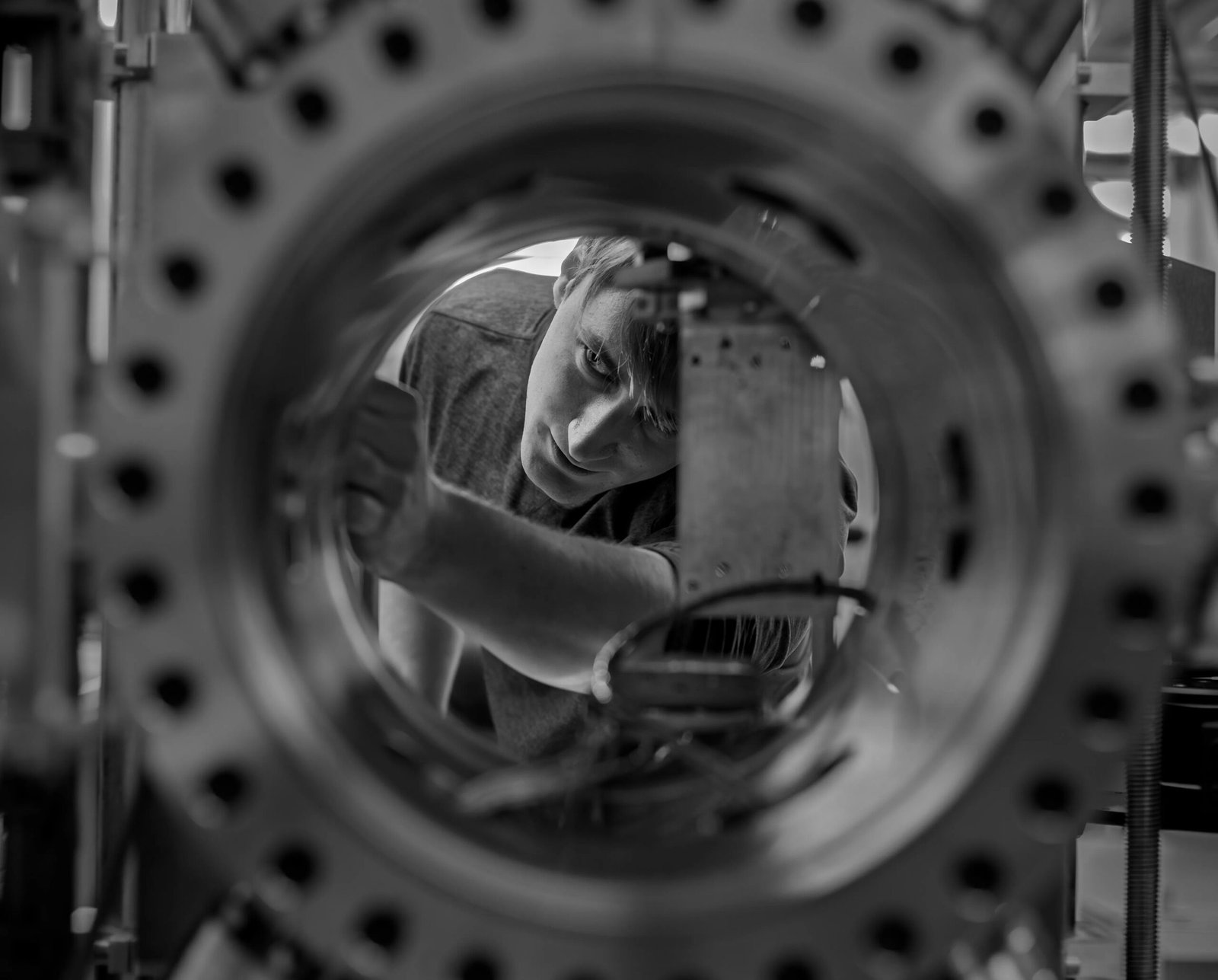
NASA’s Glenn Research Center in Cleveland has introduced an innovative testing method with the Lunar Environment Structural Test Rig (LESTR). This machine evaluates materials, electronics, and flight hardware at temperatures as low as 40 Kelvin, equivalent to approximately –388 degrees Fahrenheit.
Traditionally, NASA has relied on super-cold liquids—such as liquid nitrogen or helium—to simulate these extreme conditions. However, using these cryogenic fluids presents several challenges. The liquids must be stored in specialized tanks, requiring complex safety systems. Engineers must navigate layers of equipment, making the process time-consuming and expensive.
LESTR is revolutionary in that it operates within a completely dry vacuum without any liquids. “What makes LESTR special is that the entire rig operates in a completely dry vacuum: no liquid nitrogen, no liquid helium, no liquid anything,” explained Ariel Dimston, the technical lead for LESTR. This dry cryogenic environment simplifies testing while enhancing safety and affordability.
Applications and Future Developments
Dimston and his team are collaborating with various NASA programs to assess new materials using LESTR. They have already begun testing specialized yarns for next-generation spacesuits and exploring advanced materials for rover tires. One promising innovation is a shape memory alloy that can return to its original form after being bent, stretched, or heated. This could allow rovers to navigate lunar and Martian terrains without the risk of flat tires.
Research on LESTR began over two years ago, with the first version now operational. NASA is also developing a second iteration. LESTR 1 has been delivered to Fort Wayne Metals in Indiana, where experts will test shape memory alloys designed for the extreme temperatures of the Moon. “We are working to develop a next-generation shape memory alloy that is capable of functioning at temperatures down to 40 Kelvin,” said Dr. Santo Padula II, the principal investigator for LESTR at NASA Glenn.
Beyond LESTR, NASA Glenn continues to advance its approach to material testing and space technology. The center has facilities capable of mimicking conditions found in space, including the vacuum and microgravity of the International Space Station and the harsh environment of Venus.
Through such innovative technologies, NASA is laying the groundwork for future space exploration. The development of robust materials will ensure that equipment can endure the harsh lunar night and the extreme conditions on Mars, advancing our quest for knowledge beyond Earth. For more detailed information about LESTR, visit its dedicated web page.
Discover More Technology Insights
Explore the future of technology with our detailed insights on Artificial Intelligence.
Discover archived knowledge and digital history on the Internet Archive.
Space
