

Top Highlights
NASA’s Armstrong Flight Research Center has expanded its aircraft fleet significantly.
The center plays a vital role in conducting airborne science missions globally.
Armstrong’s rich history includes pioneering aircraft from the X-1 to modern jets.
The facility’s unique aircraft capabilities support diverse research and aeronautics testing.
Meet the Fleet: NASA Armstrong Continues Legacy of Flight Research
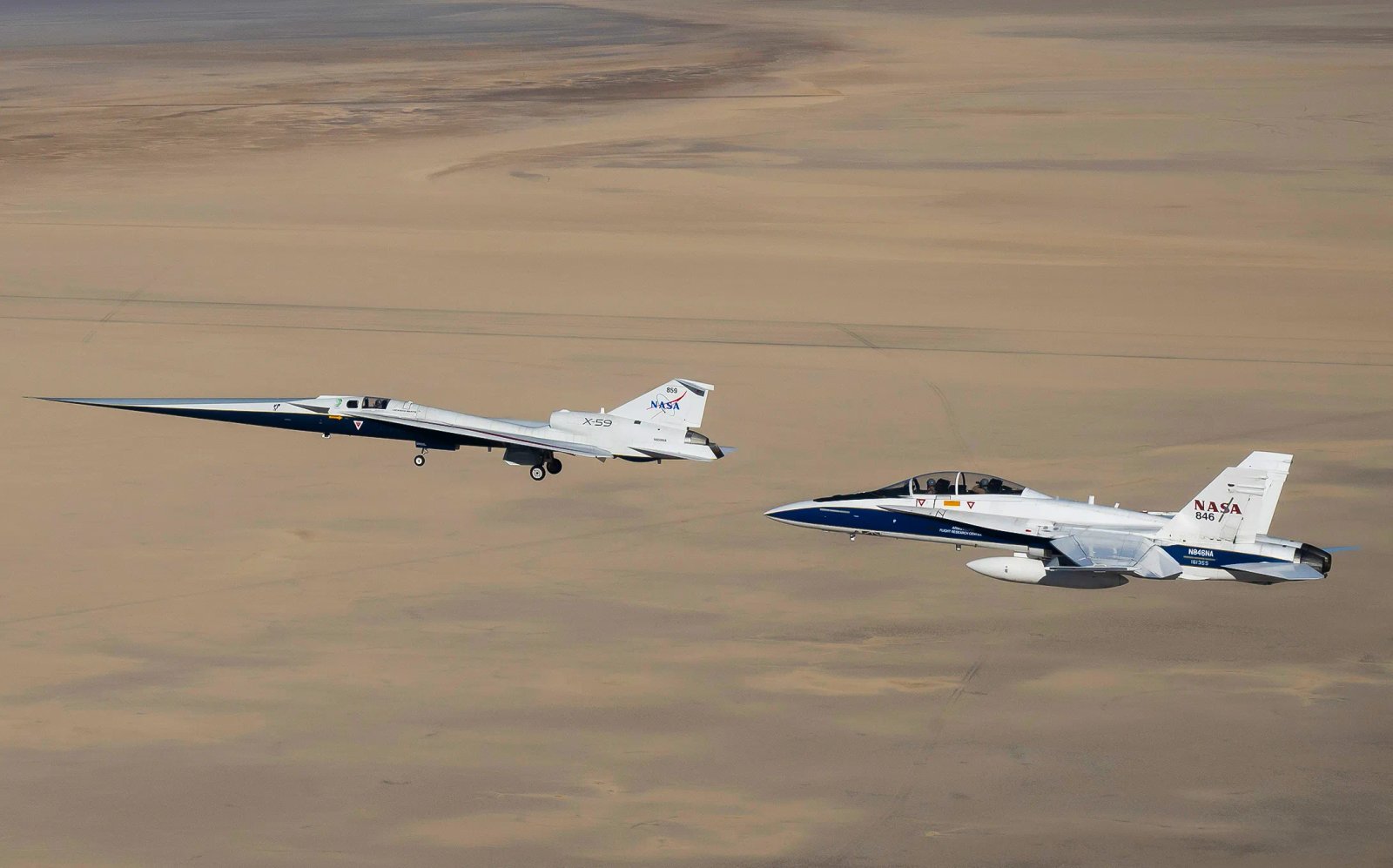
NASA’s Armstrong Flight Research Center in Edwards, California, stands as a pivotal institution in the world of experimental flight. This year, the center welcomed multiple new additions to its already impressive fleet, enhancing its capability to support aeronautics test missions. Among the newcomers are two F-15 supersonic jet fighters, a Pilatus PC-12 utility plane, and a T-34 turboprop trainer. These aircraft will further equip NASA to advance aerospace research while honoring the legacy of pioneers like Neil Armstrong.
The center’s rich history includes a mottled tapestry of aircraft, from the iconic 747 Shuttle Carrier Aircraft to rocket-powered wonders like the X-15. Over nearly eight decades of operational excellence, Armstrong has not only maintained but expanded its role at the cutting edge of flight research. The expertise of its staff—from pilots to engineers—plays a vital role in this mission. “It’s the multidimensional skills of the people we have here, and the knowledge they’ve built to handle very unique aircraft maintenance and modifications, that stands out,” said Darren Cole, capabilities manager at NASA Armstrong.
A Hub for Scientific Endeavors
Armstrong’s capabilities extend beyond sheer flight performance. The center supports critical worldwide airborne science missions. Its aircraft collect valuable data essential for understanding climate change, air quality, and environmental impacts. Flying laboratories like the NASA ER-2 allow scientists to manage experiments in real time, providing immediate data collection. The combination of Armstrong’s agile team and advanced technology fosters a collaborative environment for scientists and researchers.
Support for varied scientific disciplines is one of Armstrong’s key strengths. “We all come together to make the science happen,” said Matt Berry, airborne research platforms branch chief at NASA Armstrong. The center collaborates extensively with scientists from government agencies and academia, allowing them to deploy their equipment and gather data in targeted areas efficiently.
Located on the expansive Rogers Dry Lake, Armstrong is uniquely situated for aviation research and testing. The lakebed has hosted everything from historic space shuttle landings to emergency flight recoveries. Its role in current test missions highlights the ongoing importance of this site in aerospace innovation.
The legacy of flight research at Armstrong began with the Bell X-1, which made history when it became the first aircraft to break the sound barrier in 1947. Since then, the center has evolved and expanded, reflecting the ongoing commitment to pushing boundaries in flight. Its transformation from the Dryden Flight Research Center to NASA Armstrong in 2014 marked a new chapter while preserving its foundational mission.
With an unparalleled diversity of aircraft, Armstrong is equipped to tackle a wide array of research challenges. As Cole notes, “I don’t think there is another place in the world with a more diverse fleet of aircraft.” This variability ranges from low-altitude gliders to high-flying ER-2s. Such a comprehensive fleet allows NASA Armstrong to continue leading aeronautics testing and driving essential Earth science research alongside industry and government partners.
Discover More Technology Insights
Dive deeper into the world of Cryptocurrency and its impact on global finance.
Explore past and present digital transformations on the Internet Archive.
Space
