

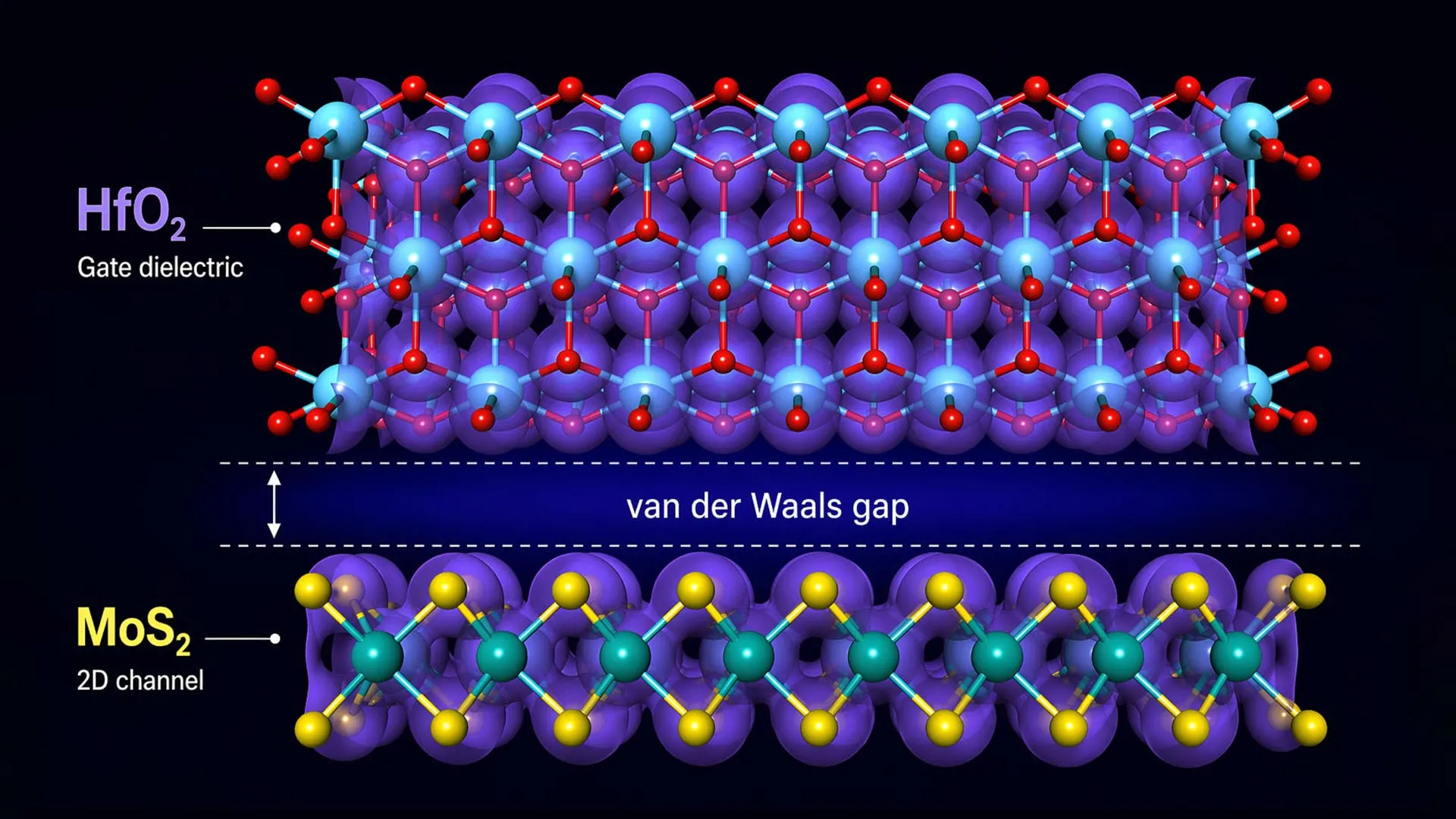
Essential Insights
- Researchers explore 2D materials for advances in tiny electronic devices.
- Insulating layers create a problematic gap affecting chip performance significantly.
- This atomic-scale separation limits further miniaturization of electronic devices.
- “Zipper materials” may bond better, potentially solving current semiconductor issues.
The Promise of 2D Materials
For decades, the technology sector has thrived on the miniaturization of components. Smaller transistors drive powerful advancements in computing. Researchers now aim to harness 2D materials like graphene and molybdenum disulfide for next-generation computer chips. These ultrathin materials offer the potential to create even tinier and more efficient electronic devices.
However, excitement over these materials faces significant challenges. Recent findings from TU Wien reveal that integrating 2D materials with insulating layers poses unexpected problems. A minuscule atomic-scale gap forms between them. Although this space measures just 0.14 nanometers—thinner than a single sulfur atom—it influences electronic performance considerably. This gap weakens capacitive coupling, creating a barrier to effective miniaturization. As a result, researchers must scrutinize layer interactions, not just the intrinsic properties of 2D materials.
Rethinking Semiconductor Design
The semiconductor industry must pivot its focus. It can no longer treat 2D materials and insulating layers as separate entities. The creation of “zipper materials” represents a promising avenue. These materials bond strongly, eliminating the problematic gap. By designing both layers together from the outset, manufacturers could overcome the limitations presented by traditional insulating materials.
The stakes are high. Investing billions into 2D materials without considering their real-world applications risks wasted resources. The industry must recognize that technology adoption is not solely about exciting new materials. Practicality and functionality must drive innovation. Understanding the atomic relationships between layers will dictate the next chapter in chip design and ensure sustainable technological growth.
Discover More Technology Insights
Explore the future of technology with our detailed insights on Artificial Intelligence.
Discover archived knowledge and digital history on the Internet Archive.
TechV1
