

Fast Facts
- NASA’s Armstrong Flight Research Center relies on skilled maintenance crews for aircraft.
- New additions to the fleet include two F-15s and a Pilatus PC-12.
- Maintenance teams adapt to rapid changes, ensuring aircraft remain mission-ready.
- Each aircraft supports unique missions, requiring continuous and diverse maintenance efforts.
Maintenance Crew: The Backbone of NASA’s Aircraft Operations
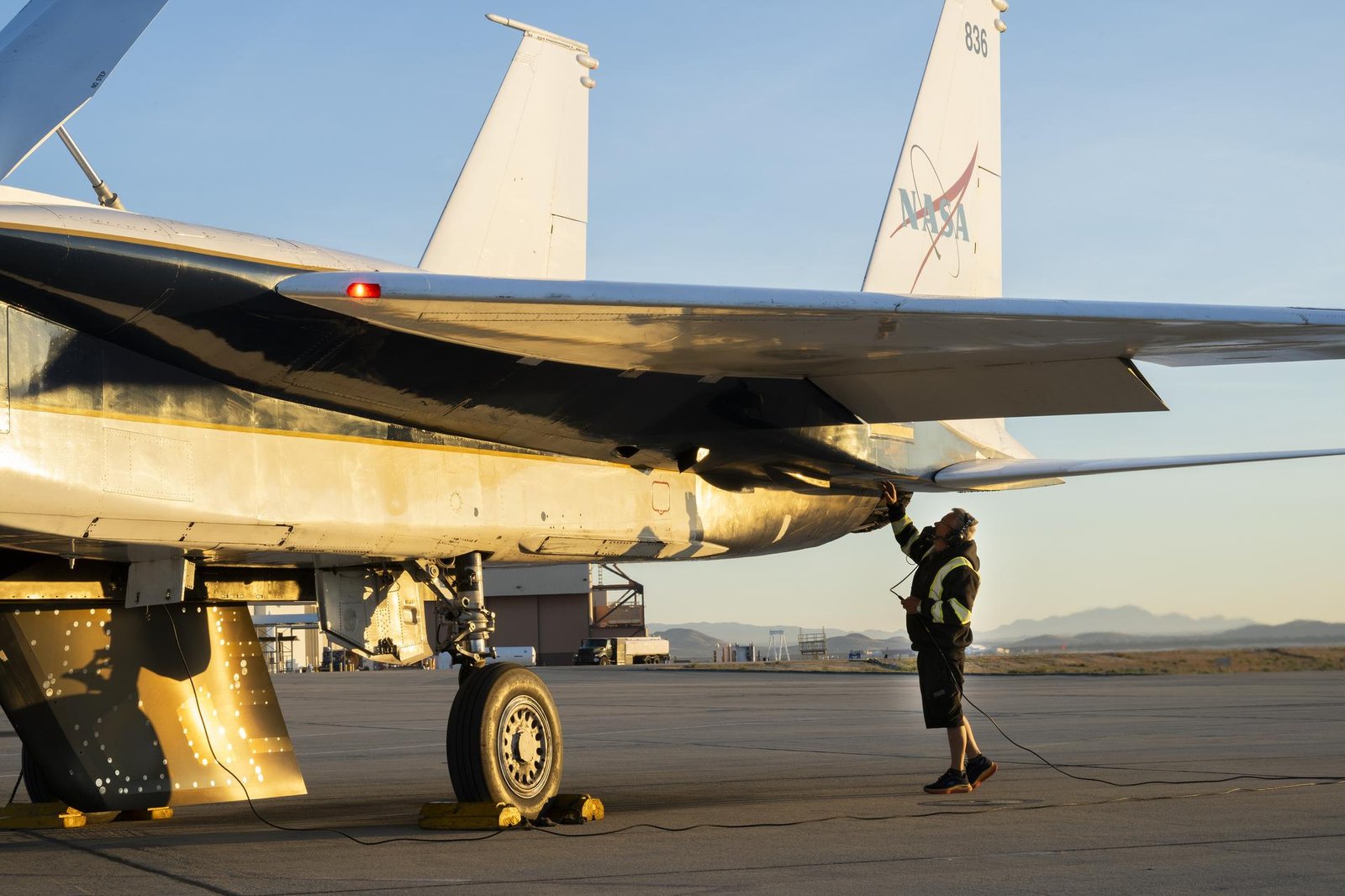
From high-speed research flights to high-altitude science campaigns, NASA relies heavily on its aircraft. The ability to conduct groundbreaking research depends on these aircraft performing at their best. At NASA’s Armstrong Flight Research Center in Edwards, California, specially trained maintenance crews play a crucial role in ensuring that each aircraft remains mission-ready.
This year, NASA expanded its fleet with two F-15s and a Pilatus PC-12. These aircraft join other advanced platforms like the high-altitude ER-2s and the innovative X-59. Each aircraft serves a specific purpose, whether it is conducting scientific research, acting as a support or chase plane, or assisting in rocket launches. They vary widely in capabilities, speeds, and technological requirements. As a result, maintenance crews must navigate a constantly changing environment.
Jose “Manny” Rodriguez, a crew chief at Armstrong, emphasizes the adaptability of the maintenance teams. “One day, you could have an instrument being loaded, and the next, it may be aircraft reconfiguration,” he explains. This flexibility is essential as maintenance teams address various challenges, ensuring that aircraft stay safe and reliable. Ground crews are responsible for regular checks on critical systems, including ejection seats, fuel tanks, brakes, and wiring. The wear and tear of each flight demand continuous attention.
On any given day, several aircraft may be in operation simultaneously. Monitoring this activity requires diligent coordination. Currently, the center’s C-20A is flying missions in Peru and Panama, while the X-59 often conducts two flights a day accompanied by a chase plane. Meanwhile, the ER-2 is engaged in the Geological Earth Mapping Experiment in Colorado. The maintenance teams operate behind the scenes, preparing and repairing aircraft as needed.
The composition of the maintenance team is diverse, featuring professionals from both military and civilian backgrounds. The structure includes a crew chief, an avionics technician, quality assurance personnel, and additional mechanics. Each member plays a vital role in the maintenance process.
Once the team ensures that an aircraft is in optimal condition, it is towed to the flightline for operations. The assigned NASA pilot completes a final safety check with the crew chief. This collaborative effort is critical for mission success. Rodriguez notes, “The crew chief is responsible for the integrity of that aircraft,” and together with the pilot’s endorsement, they certify that the aircraft is safe for flight.
Maintenance crews meticulously track each flight to prevent premature returns to base. If an aircraft does land early, the crew is ready to assist immediately. They work tirelessly to address any issues, ensuring that the aircraft remains operational for its next mission. Rodriguez reflects, “It’s difficult at times to work with different airplanes from both the civilian and military sides, but it’s very rewarding.”
Ensuring Readiness for Flight: The Process and Challenges
The commitment to keeping NASA’s aircraft in prime condition is a formidable task. Daily operations can encompass routine maintenance, urgent repairs, and modifications. Each aircraft presents unique challenges. The variety of systems and technologies requires ongoing learning and skill adaptation for maintenance personnel.
Crew chiefs maintain extensive documentation of flight logs and maintenance records. This record-keeping provides invaluable data that influences future operations. It exemplifies the meticulous nature of the work involved. A thorough understanding of each aircraft’s technical requirements is fundamental to maximizing its performance.
Training is an ongoing process. Many maintenance technicians gain experience through hands-on work, learning from seasoned professionals in the field. This dynamic environment fosters both growth and collaboration among staff members, enhancing overall operational efficiency.
Ground crews often work under pressure. The need for quick turnaround times can lead to a challenging atmosphere. However, the rewards of ensuring aircraft readiness for critical missions make the efforts worthwhile. Ground teams not only support flight operations but also contribute to the advancement of aeronautics and science. Their vital role can’t be overstated; they keep NASA flying, propelling innovation and discovery.
Discover More Technology Insights
Learn how the Internet of Things (IoT) is transforming everyday life.
Stay inspired by the vast knowledge available on Wikipedia.
Space
