

Essential Insights
- Silicon chips are evolving from computing to groundbreaking biotechnology applications.
- A new chip synthesizes 64 DNA sequences simultaneously using water-based methods.
- This cleaner approach eliminates hazardous solvents, enabling safer DNA production.
- Future applications may include DNA data storage and improved enzymatic synthesis.
A Silicon Revolution in Biotechnology
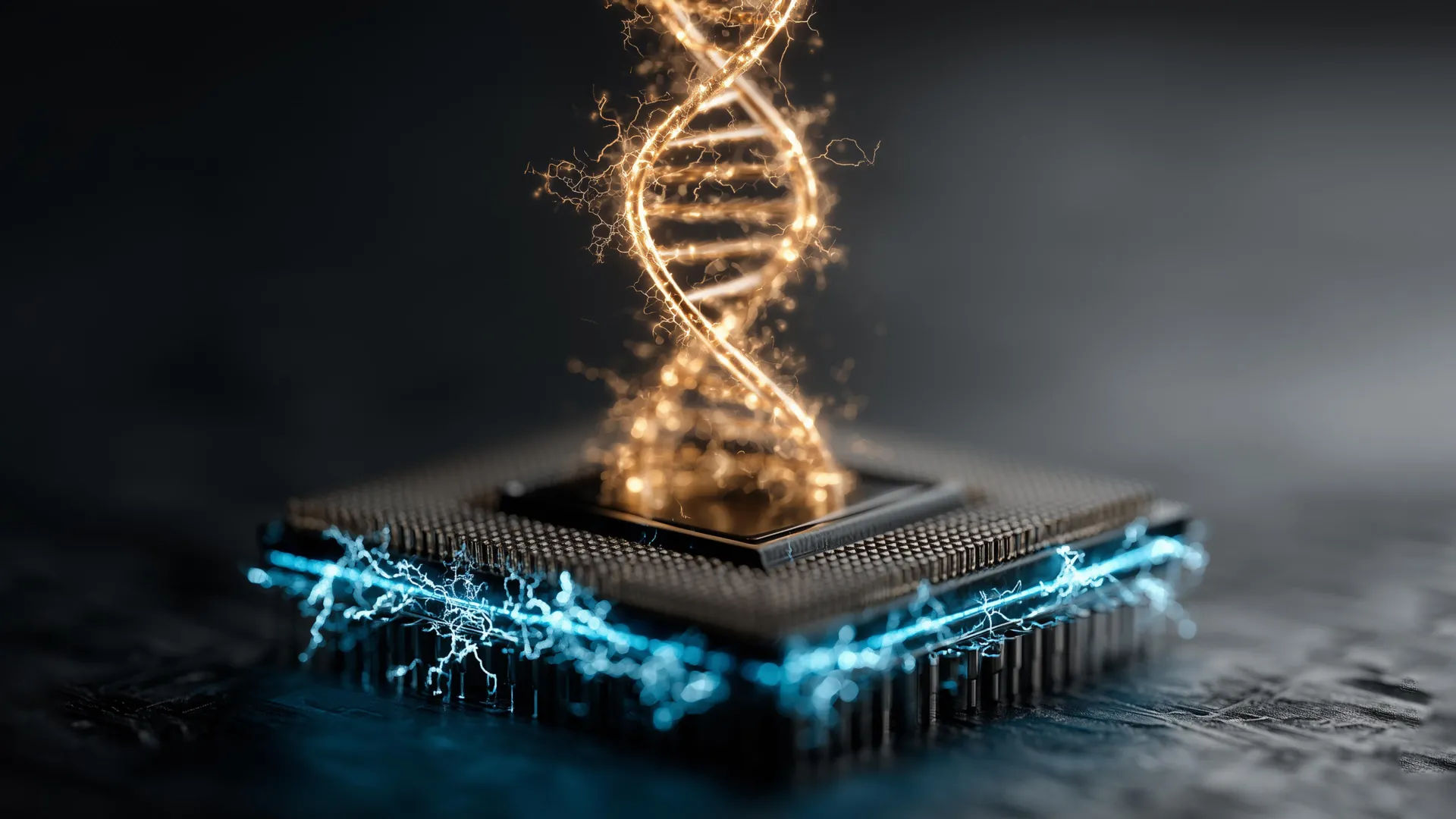
Silicon chips have been the heart of computing for decades. Now, they take on an extraordinary role in biotechnology. Researchers from Harvard recently revealed a silicon chip that can synthesize 64 different DNA sequences at once. This innovation marks a significant leap in how we create synthetic DNA, a crucial component in various scientific fields like diagnostics, genome engineering, and cancer research.
Current methods for DNA production rely heavily on chemical processes that involve hazardous organic solvents. These processes require specialized facilities and often lead to significant environmental impacts. The new Harvard chip uses a cleaner water-based approach. By employing carefully controlled electrical currents, it enables precise DNA synthesis where conventional methods have fallen short. The chip triggers reactions at specific sites, allowing for controlled growth of DNA strands.
Enzymatic DNA synthesis has lagged behind traditional methods. Previous efforts managed only a handful of sequences at a time, but this chip breaks that barrier. Each synthesis site on the chip utilizes concentric ring electrodes to generate the acidic conditions necessary for DNA growth. This design not only streamlines the synthesis process but also aligns more closely with how living cells produce DNA. Researchers envision a future where DNA synthesis systems are smaller, safer, and more accessible.
Beyond Synthesis: Future Applications and Challenges
This research doesn’t just stop at DNA synthesis. The team has explored the potential for using these synthesized sequences in data storage. By encoding information in DNA, we could radically change how we think about data storage. While this approach requires scaling production, the preliminary results are promising. If researchers can increase parallel synthesis beyond 64 sequences, the environment would benefit greatly from reduced solvent use in DNA manufacturing.
Challenges remain, notably in the chemistry of the synthesis process. The chip successfully confines low pH to specific sites, but the deprotection chemistry has limitations. This chemistry generates intermediate molecules that can interfere with neighboring synthesis sites. Researchers now face the task of developing more efficient acid-driven deprotection methods.
This advancement in silicon chip technology paves the way for revolutionary shifts in both biotechnology and data storage. As researchers address these challenges, they open new doors for applications that extend far beyond our current capabilities. The intersection of silicon and biology holds great promise, transforming not just medicine but how we approach data itself.
Continue Your Tech Journey
Stay informed on the revolutionary breakthroughs in Quantum Computing research.
Access comprehensive resources on technology by visiting Wikipedia.
TechV1
