
Close Menu
    Facebook X (Twitter) Instagram
    Sunday, August 23
    Top Stories:
    • China’s AI and Chip Firms Lead in Rewards to Secure Talent
    • How Trauma Alters Memory and Our Conscious Experience
    • China Telecoms Boost Revenue with AI-Driven Token Factories
    Facebook X (Twitter) Instagram Pinterest Vimeo
    IO Tribune
    • Home
    • AI
    • Tech
      • Gadgets
      • Fashion Tech
    • Crypto
    • Smart Cities
      • IOT
    • Science
      • Space
      • Quantum
    • OPED
    IO Tribune
    Home » MIT Scientists Master Qubit Entanglement Engineering
    Quantum

    MIT Scientists Master Qubit Entanglement Engineering

    Staff ReporterBy Staff ReporterJuly 9, 2026No Comments2 Mins Read
    Share Facebook Twitter Pinterest LinkedIn Tumblr Reddit Telegram Email
    Share
    Facebook Twitter LinkedIn Pinterest Email

    Summary Points

    1. MIT researchers control and measure entanglement in superconducting qubits.
    2. They demonstrate transition from volume-law to area-law entanglement states.
    3. Techniques help understand quantum information sharing and potential quantum speed-up.
    4. Future work may explore complex systems beyond classical computing capabilities.

    MIT Researchers Control Quantum Entanglement in Qubit Arrays

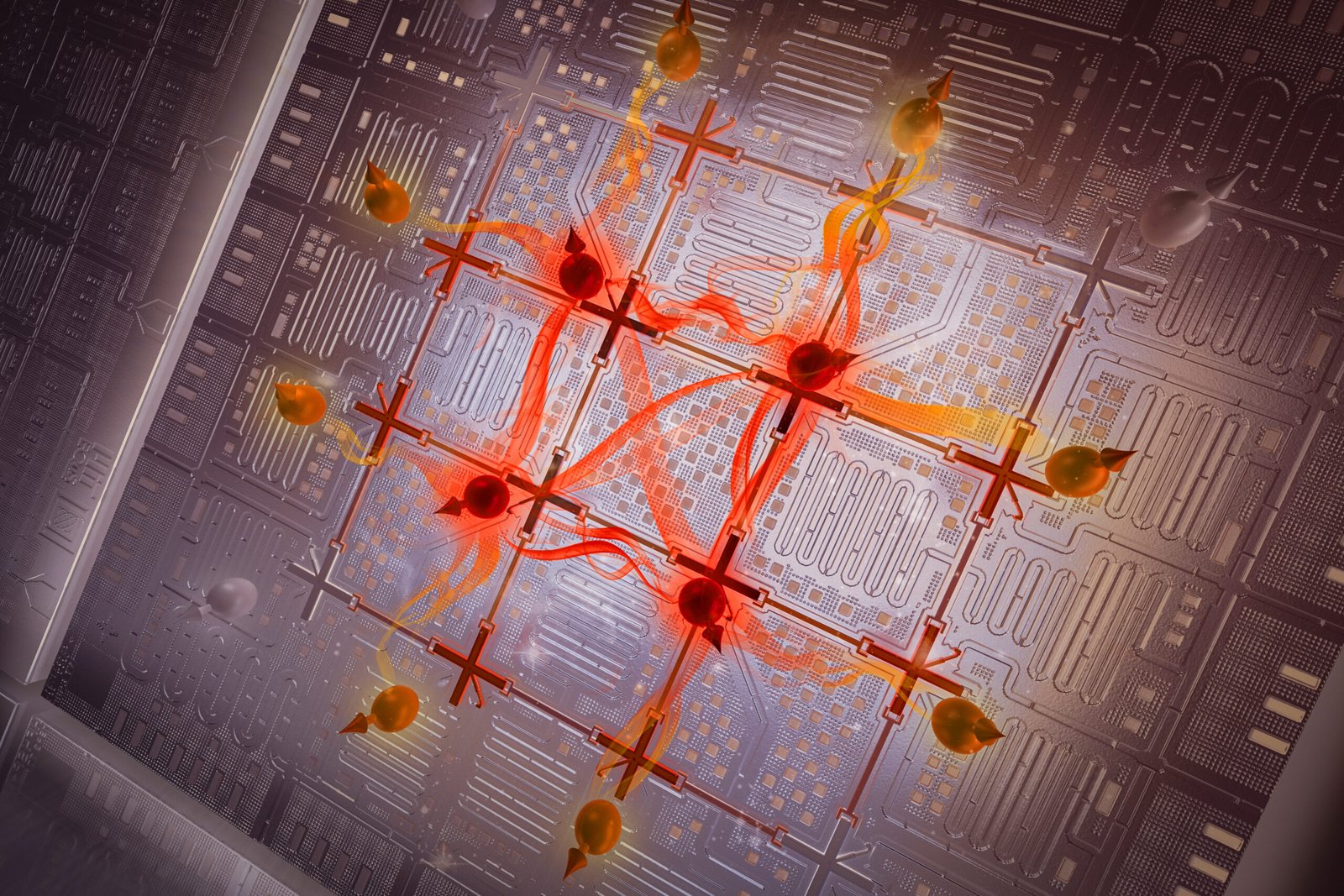
    MIT scientists have found a way to control entanglement in quantum computers more efficiently. They used superconducting circuits with 16 qubits arranged in a grid. By applying microwave signals at different frequencies, they could generate two main types of entanglement: volume-law and area-law. Volume-law entanglement involves strong connections across many qubits, which is key for powerful quantum computing. Area-law entanglement involves fewer connections, making the system simpler to understand and simulate. The researchers adjusted microwave frequencies to switch between these two states. This breakthrough helps scientists understand how entanglement works and offers a new way to test large quantum systems.

    Implications for Future Quantum Technology

    This research shows that quantum processors can be used to explore complex physics phenomena like entanglement. The ability to measure and control entanglement types opens up possibilities for developing more advanced quantum devices. It could also aid in tackling problems that are impossible to simulate on regular computers. As quantum processors grow larger, their entanglement patterns will become more complex. The methods demonstrated provide a way to benchmark and improve these systems. While the technology remains in early stages, it offers a promising path toward more powerful and practical quantum computers.

    Discover More Technology Insights

    Learn how the Internet of Things (IoT) is transforming everyday life.

    Access comprehensive resources on technology by visiting Wikipedia.

    QuantumV1

    Amir Karamlou entanglement HPC Innovation Quantum quantum computing Quantum processor VT1 William Oliver
    Share. Facebook Twitter Pinterest LinkedIn Tumblr Email
    Previous ArticleBuild Your Own Self-Improving AI Today
    Next Article Unlock Seamless Living: Google Home’s New Automation Update!
    Avatar photo
    Staff Reporter
    • Website

    John Marcelli is a staff writer for IO Tribune, with a passion for exploring and writing about the ever-evolving world of technology. From emerging trends to in-depth reviews of the latest gadgets, John stays at the forefront of innovation, delivering engaging content that informs and inspires readers. When he's not writing, he enjoys experimenting with new tech tools and diving into the digital landscape.

    Related Posts

    Space

    Revolutionizing Space Prep: The Future of Astronaut Training with Commercial Stations

    August 23, 2026
    Quantum

    MIT Engineers Create Smarter Digger Controllers

    August 23, 2026
    OPED

    How Many Dimensions Do We Really Need? Exploring the Ideal Number

    August 23, 2026
    Add A Comment

    Comments are closed.

    Must Read

    Revolutionizing Space Prep: The Future of Astronaut Training with Commercial Stations

    August 23, 2026

    MIT Engineers Create Smarter Digger Controllers

    August 23, 2026

    How Many Dimensions Do We Really Need? Exploring the Ideal Number

    August 23, 2026

    Reimagining Innovation: Insights from MIT News

    August 23, 2026

    IT Acquisitions Overlook Critical IoT Security Layer

    August 23, 2026
    Categories
    • AI
    • Crypto
    • Fashion Tech
    • Gadgets
    • IOT
    • OPED
    • Quantum
    • Science
    • Smart Cities
    • Space
    • Tech
    Most Popular

    Lovense Security Flaw: Account Takeover Possible Without Password

    July 29, 2025

    Future Innovators: Students Engineer Solutions at NASA JPL

    December 7, 2025

    Is ETH’s $3K Dream Over?

    January 29, 2026
    Our Picks

    Call of Duty Shifts Strategy: No More Back-to-Back Releases!

    December 10, 2025

    Why I’ll Never Ride Public Transit Again Without Pixel’s New Transit Mode

    April 1, 2026

    OnePlus Dismisses Shutdown Rumors as ‘False’

    January 21, 2026
    Categories
    • AI
    • Crypto
    • Fashion Tech
    • Gadgets
    • IOT
    • OPED
    • Quantum
    • Science
    • Smart Cities
    • Space
    • Tech
    • Privacy Policy
    • Disclaimer
    • Terms and Conditions
    • About Us
    • Contact us
    Copyright © 2025 Iotribune.comAll Rights Reserved.

    Type above and press Enter to search. Press Esc to cancel.