

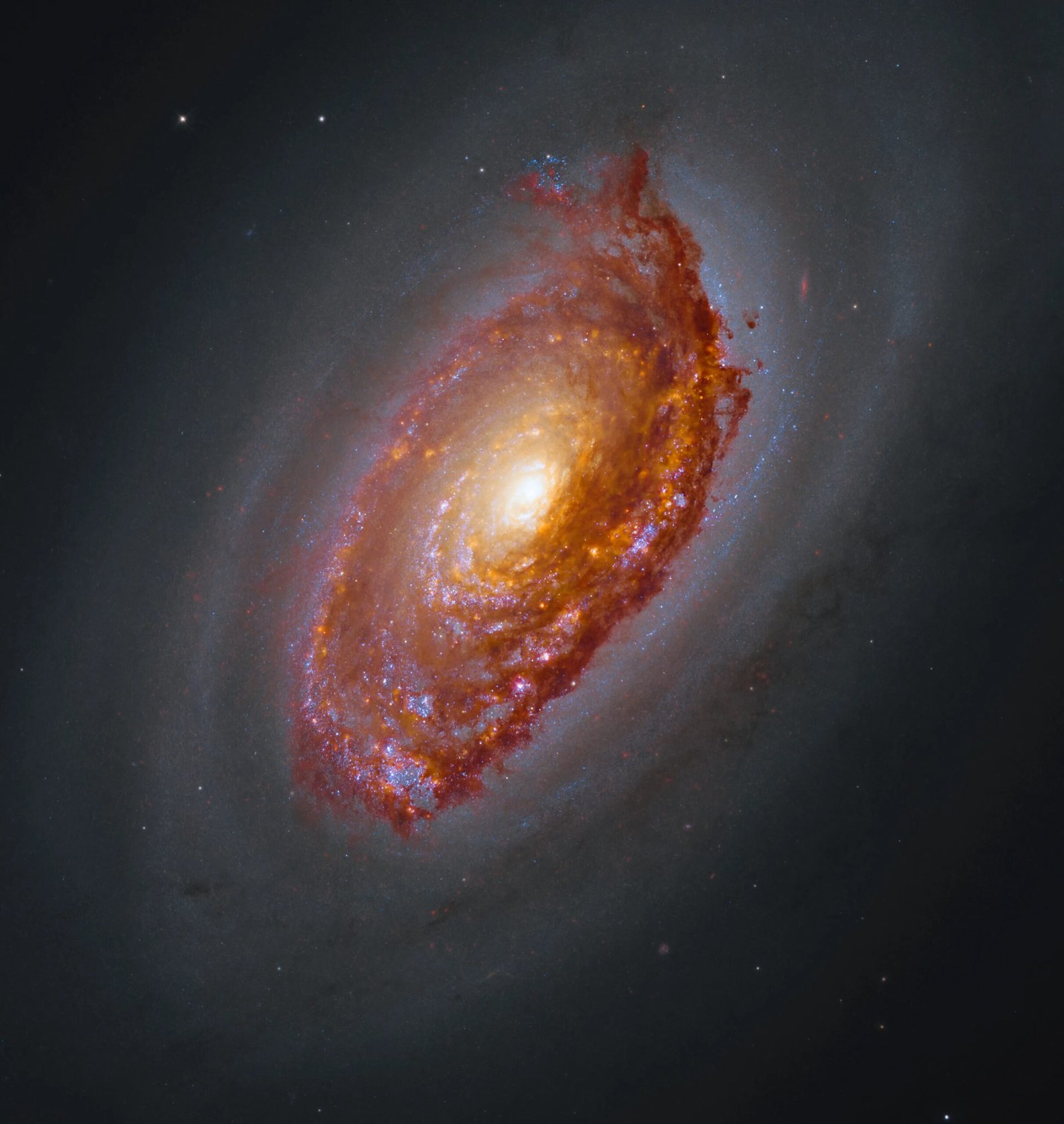
Quick Takeaways
- Messier 64 is also known as the Black Eye Galaxy.
- Its distinct dark dust band partially obscures a bright core.
- The galaxy exhibits unusual internal motion patterns.
- The image was captured and processed by various scientific institutions.
The Distinctive Features of the Black Eye Galaxy
Messier 64, popularly known as the Black Eye Galaxy, presents a striking visual spectacle. Easily identified by its dramatic band of dark dust, the galaxy partially obscures its bright core. This dark feature gives it the distinctive name and draws the attention of both amateur astronomers and professional scientists alike.
The Black Eye Galaxy resides approximately 17 million light-years away in the constellation Coma Berenices. Its striking structure is the result of complex gravitational interactions over billions of years. The dust lane surrounding the galaxy is not merely ornamental; it is rich in gas and stars. This zone of cold gas is where new stars are born, highlighting an ongoing cycle of stellar creation.
The internal motion within this galaxy is particularly fascinating. Unlike many spiral galaxies that rotate uniformly, the Black Eye Galaxy exhibits peculiar internal dynamics. There are discrepancies in the velocities of its stars, suggesting a history of significant interactions. These motions hint at a possible past encounter with another galaxy. Observing these movements helps astronomers learn about galaxy formation and the nature of dark matter.
The Role of Technology in Understanding the Black Eye Galaxy
NASA and several international partners utilize advanced telescopes and imaging technology to capture the beauty of the Black Eye Galaxy. Instruments like the Hubble Space Telescope have provided detailed images that reveal the intricacies of this cosmic structure. Each observation adds layers of understanding to the galaxy’s composition and behavior.
The continued exploration of Messier 64 illustrates the importance of technology in modern astronomy. New tools and methodologies enhance the detail in images, allowing scientists to analyze phenomena that were once invisible. Advanced software processes these images, enabling clearer representations of cosmic features. These developments contribute significantly to our understanding of the universe.
As scientific investigation progresses, ongoing technological advancements promise to yield even more insights. The balance between technology adoption and practical application serves as a hallmark of contemporary astronomical research. The study of the Black Eye Galaxy exemplifies how innovation drives our quest to understand the cosmos, marking a pivotal moment in our exploration of galactic phenomena.
Stay Ahead with the Latest Tech Trends
Learn how the Internet of Things (IoT) is transforming everyday life.
Stay inspired by the vast knowledge available on Wikipedia.
Space
