

Fast Facts
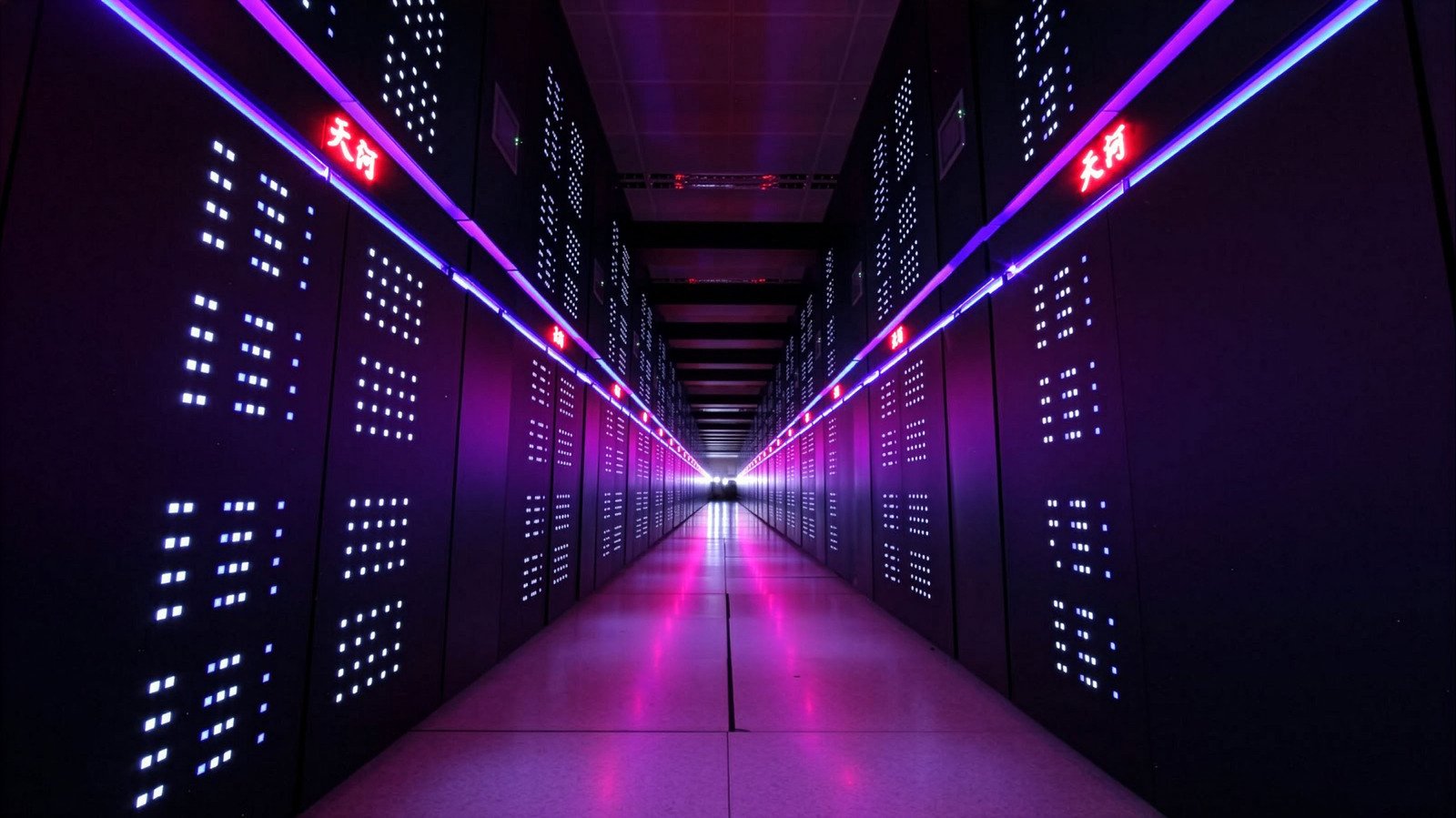
- China reclaims the fastest supercomputer title after six years with LineShine.
- LineShine achieves 2.198 Exaflops, surpassing the US’s El Capitan’s 1.809 Exaflops.
- This supercomputer uses a custom CPU design, avoiding GPU reliance entirely.
- Top500 highlights diverse architectures among leading supercomputers, showcasing various technologies.
China’s LineShine: A New Era of Supercomputing
China has reclaimed its position as the leader in supercomputing with the launch of LineShine. This new supercomputer achieved an astonishing performance of 2.198 exaflops, surpassing the United States’ El Capitan, which operates at 1.809 exaflops. LineShine, developed by the National Supercomputer Center, is the first machine to exceed the two exaflops mark purely through CPU-based architecture. It accomplishes this feat using a custom-designed 304-core processor, incorporating 13.79 million cores clocked at 1.55 GHz, all without the reliance on GPUs.
The implications are significant. LineShine’s design prioritizes efficiency, drawing about 42.2 megawatts of power while delivering a remarkable 52.07 gigaflops per watt. Top500 organizer Dr. Jack Dongarra notes that this innovative approach carves a path independent of GPU dependency, which has dominated high-performance computing. The technological landscape is changing; the emergence of such a system underscores increased diversity in supercomputer architectures.
Global Impact on Supercomputing Landscape
Despite the challenges posed by ongoing technology embargoes, China’s engineering prowess shines through. LineShine’s development came without public funding, allowing its designers to navigate around government restrictions often associated with technology transfers. However, the lack of transparency regarding the specific CPU manufacturer and chip technology introduces questions about the future of international collaboration in supercomputing and innovation.
The Top500 list shows a rise in exascale capabilities, featuring systems from China, the United States, and Germany. This year, five systems crossed the exascale threshold, illustrating a broader competition. Frontier in the U.S. secured the third spot with 1.353 exaflops, while Aurora and Jupiter Booster followed closely. The diversity of technologies represented highlights a crucial shift: there is no single path to achieving leadership-class computing.
As nations continue to develop supercomputers, the focus will shift to how these systems can address global challenges such as climate change, healthcare, and complex simulations. LineShine’s emergence illustrates not just technological advancement, but a reshaping of geopolitical dynamics tied to technological innovation. The race for supercomputing supremacy will shape the future—both in capabilities and in the power dynamics of the tech landscape.
Stay Ahead with the Latest Tech Trends
Dive deeper into the world of Cryptocurrency and its impact on global finance.
Discover archived knowledge and digital history on the Internet Archive.
TechV1
